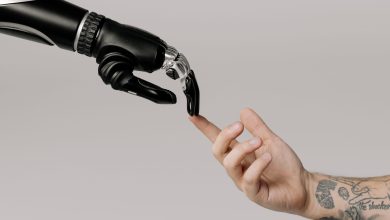
So often leaders tell me they had hoped AI would reduce pressure on their team. Instead they are discovering people are more anxious, stressed, less collaborative, less adaptive than ever before. And they just cannot understand why.
I can.
AI is not just adding relational strain to individuals, teams and organisations. It is exposing how fragile our relational infrastructure already is. And for leaders who have been operating under the illusion that performance equals health, this revelation is uncomfortable.
The Illusion of Functional Teams
There is a pattern I see repeatedly. Teams that look highly functional on every measurable metric – hitting targets, delivering projects, maintaining productivity – but underneath, the relational space has become dangerously thin.
This is what I call relational poverty, and is the focus of my new book Beyond Words. People making hundreds of micro-decisions daily about whether it is safe to be honest, whether speaking up will have relational cost, whether they will be understood. When the answer is “probably not”, they protect themselves. They become more careful, more guarded, more strategic about what they say and how they show up.
From the outside, everything looks fine. But connection has quietly eroded. Trust has thinned. People are working alongside each other rather than with each other.
Leaders mistake this for business as usual. Until AI arrives.
What AI Actually Reveals
AI does not create this fragility. It reveals it. And here is how:
It removes transactional touchpoints that were creating the illusion of connection. If your team only really talked when co-ordinating tasks or solving problems, and AI starts handling some of those tasks – what is left? Do you have actual relationships? Or did you just have transactional interdependence?
This introduces ambiguity about value and roles. When people’s sense of worth is tied to what they produce, and AI starts producing some of that output, their nervous systems register threat. Not because AI is objectively threatening their jobs (though it might be), but because the relational conditions do not exist for them to navigate that uncertainty safely together.
AI accelerates the pace of change beyond our relational capacity to process it. Organisations were already strained. AI is not arriving into stable systems with robust relational infrastructure. It is arriving into systems where connection was already fragile.
The Neuroscience of Why This Matters
Recent research in what’s being called “Relational Neuroscience” shows something organisational leaders need to understand: when people co-operate toward shared goals, their brain activity synchronizes. This inter-brain synchrony predicts team performance better than individual intelligence or psychological safety.
In a study published in Social Cognitive and Affective Neuroscience, researchers recorded the brain activity of 174 people working in small teams. They found that inter-brain synchrony, the degree of which teammates’ brain activity aligned, predicted how well the team performed. Self-reported closeness did not. What happened between their brains mattered more than what they believe about their bond.
This happens between people, not just inside them.
And AI cannot facilitate it. AI can simulate conversation, process information, even generate empathy-like responses. But it cannot co-regulate – the biological process by which nervous systems help each other stay in safety mode rather than survival mode.
When organisations rely on AI to handle more of the transactional work, the relational work becomes even more critical. The question is: have be built the infrastructure to do this?
The Strategic Blind Spot
Most organisations are investing billions in AI implementation and individual resilience programmes. What they are not investing in is building relational capacity – the ability of teams to hold complexity, uncertainty, and tension without collapsing into survival mode.
Deloitte estimates that poor mental health costs UK employees £51 billion a year through absence, presenteeism and turnover, up from £45 billion in 2019. CIPD’s 2025 Health and Wellbeing at Work Report also found that average employee absence has reached a record 9.4 days per employee per year, with mental ill health the leading cause of long-term absence. We are treating individual symptoms while ignoring the relational conditions that shape whether people can stay well, connected and able to perform.
The same dynamic is playing out with AI. We are focused on technical implementation while missing the relational conditions that determine whether AI augments performance or accelerates dysfunction.
Here is what that looks like: Teams that cannot navigate disagreement start using AI to avoid difficult conversations. Leaders who struggle with feedback delegate relational work to technology. People who were already disconnected become more isolated.
AI does not fix weak relational infrastructure. It exposes it. And then accelerates its collapse.
What Organisations Need to Build Now
That competitive advantage in an AI-saturated world won’t be technical capability. It will be relational wealth – the capacity to regulate together, stay connected under pressure, and navigate uncertainty without fracturing.
This requires three strategic shifts:
- Measure what actually matters. Not engagement scores. Real indicators. How quickly do teams address tension? How often do people speak honestly? How well do people repair after conflict? These are leading indicators of relational health.
- Invest in relational capacity before it is desperately needed. You do not wait for a crisis to think about financial risk. So do not wait for teams to fracture before building relational infrastructures. The organisations that will thrive are building it now, while things are relatively stable.
- Treat relational health as strategic infrastructure not HR initiative. If someone is hitting numbers but eroding trust, that is a business risk. If teams cannot navigate complexity together, that is a strategic vulnerability. Relational capacity is not a soft skill. It is how teams function under pressure.
The Competitive Reality
As AI handles more analytical work, the quality of how we relate becomes the only sustainable differentiator.
Organisations with strong relational capacity will adapt faster, innovate better, retain talent longer, and make smarter decisions under pressure. Their teams can hold complexity. They can navigate ambiguity together. They can stay present when everything is uncertain.
Organisations with weak relational capacity will find that AI amplifies every existing dysfunction. Fast decisions become faster not better. Efficiency increases but judgement narrows. Productivity rises while connection disappears.
The question is not whether AI will disrupt your organisation. It is whether your relational infrastructure is strong enough to navigate that disruption without fracturing.
Right now, for most organisations, the answer is no.
And AI is making that painfully clear.