Artificial intelligence is reshaping the power profile of the modern data center. As rack densities increase and workloads create rapid fluctuations in demand, the industry is beginning to rethink where energy storage belongs and how it can better support the infrastructure around it.
Historically, energy storage occupied a predictable place inside the data center. Installed alongside the uninterruptible power supply in the gray space, its job was to protect the facility from the infrequent but consequential loss of grid power. Rows of batteries bridged the gap until generators came online or utility power was restored.
Today, AI is changing that equation. Some of the most demanding power events in an AI data center are no longer rare occurrences tied to an outage. They now occur thousands of times each hour as AI workloads cycle between different operating states, and that reality is driving energy storage closer to the compute.
Power Demand Has Changed Alongside Rack Density
Industry roadmaps suggest AI racks could approach one megawatt within the next few years, prompting significant changes in how power is delivered throughout the data center. Equally important, however, is how that power is being consumed.
During AI training, thousands of GPUs often move together between compute-intensive and communication-intensive tasks. These synchronized transitions create rapid fluctuations in power demand, commonly referred to as GPU transients, which can occur on timescales of milliseconds. While local power circuitry and onboard capacitance absorb some of these smaller fluctuations, larger synchronized events can extend beyond individual servers and influence power behavior at the rack level.
When multiplied across a full training cluster, these synchronized swings can reach tens or even hundreds of megawatts. Without effective mitigation, their impact may influence not only rack-level performance but also upstream power distribution and backup infrastructure.
Traditional backup systems were designed to sustain operations during prolonged outages, not to respond repeatedly to millisecond-scale changes in load. Another challenge? Simply increasing energy capacity does not inherently improve transient response, especially when the challenge is driven by power delivery speed rather than runtime.
Different Technologies Bring Different Strengths
The good news is that the industry is not starting from scratch. Existing rack architectures already incorporate technologies designed to address different aspects of power delivery.
Capacitor-based units respond exceptionally well to very short, high-frequency transients, while batteries provide the sustained energy required during outages and longer-duration duty cycles. However, the distinction between those roles is becoming less rigid as new high-power energy storage technologies and evolving system architectures expand what each technology can contribute.
Rather than viewing these solutions as competing approaches, designers are increasingly evaluating how rapid response and meaningful runtime can complement one another as dynamic AI workloads continue to evolve.
Why More Attention Is Moving to the Rack
Rack-level energy storage is not a new idea. Hyperscalers have successfully deployed backup power inside the rack for years, while centralized UPS systems continue to provide essential facility-wide resiliency. What AI has changed is the importance of locating certain power capabilities closer to the workloads themselves.
Colocation providers, for example, often rely on centralized mitigation in the gray space because they cannot predict the workloads individual customers will deploy. As AI infrastructure becomes more specialized, however, the benefits of placing certain energy storage functions nearer to the compute become increasingly compelling.
Five factors driving that shift:
- AI workloads generate rapid, highly dynamic changes in power demand that are difficult to address through centralized infrastructure alone.
- The increased value of protecting compute has made even brief power disturbances more consequential – and costly.
- Operators are seeking greater visibility and control at the rack level to monitor and protect individual clusters and tenants.
- Expectations around uptime continue to rise, particularly for AI training and inference environments.
- New rack designs bring power infrastructure closer to the load, including liquid-cooled systems, sidecar architectures, and higher-voltage power distribution.
As a result of these shifts, the industry is unlikely to adopt a single standard architecture. Instead, data center operators will continue evaluating different approaches based on their bespoke needs, such as workload characteristics, facility design, operational priorities, and risk tolerance.
Looking Ahead
So, where do we go next? With energy storage becoming less centralized and workload focused, facility-level systems will remain an essential part of data center design. However, AI will continue to create strategic opportunities to place specific energy storage functions closer to the rack.
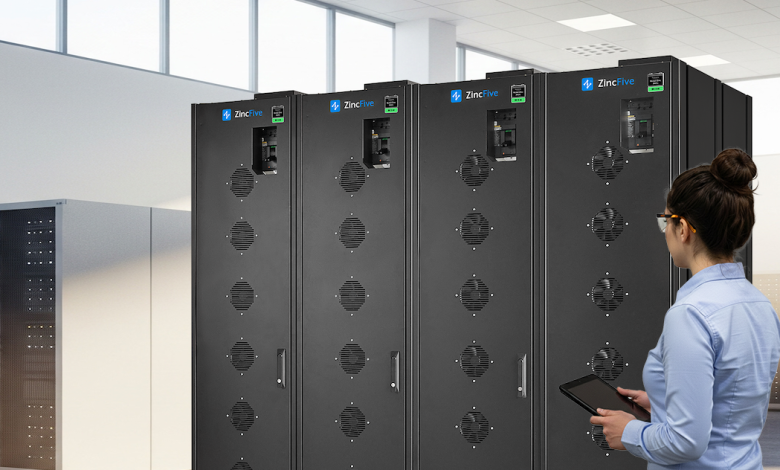
One example is the emergence of the sidecar, an enclosure positioned directly alongside the rack that is beginning to appear in next-generation high-density designs. While the sidecar is still an emerging concept, it introduces new questions around system design, placement, and safety that the industry is only beginning to explore.
What seems increasingly clear is that the conversation is expanding beyond backup power alone. Designers are looking for energy storage solutions that can contribute to both resiliency and power quality while supporting increasingly dynamic AI infrastructure. Whether those capabilities come from batteries, capacitors, hybrid approaches, or future storage technologies, the objective remains consistent: bringing energy storage into closer alignment with the needs of modern compute.