Every inquiry that comes into a venue represents a moment of opportunity. Handled well, it becomes a booked event and a guest who comes back. Handled poorly, buried in an inbox or lost to a slow reply, it becomes a missed opportunity that a competitor picks up instead.
As inquiry volume grows and guest expectations for speed and personalization rise with it, many venue teams are finding that their existing intake process, built for a slower, smaller-scale era, simply can’t keep up. AI-powered lead qualification offers a practical way forward by clearing away the delays and administrative friction that get in its way.
Why Traditional Venue Lead Qualification Is Reaching Its Limits
Venues are fielding more inquiries through more channels than ever. This fragments volume across places sales teams have to manually check. While high volume is a good problem, the rising demand only provides benefit if a team is equipped to handle it.
Static forms ask the same generic questions regardless of event type, so they either miss nuance or force follow-up emails to fill gaps. As those conversations continue, information ends up scattered across inboxes, spreadsheets, and sticky notes with no single source of truth. This inevitably contributes to messy handoffs between sales and events staff and increases miscommunication.
2026 research conducted by LeadResponse shows that leads contacted within 5 minutes are roughly 21x more likely to qualify than those contacted after 30 minutes. Near-instant responses can lift conversion by as much as 391%. Average business response time sits around 47 hours. For venues, delayed response times often mean losing a lead to a competitor simply because they replied faster, not because the venue was worse.
Without structuring qualifying data, every inquiry looks the same at intake, leading to ineffective visits. Tours are often a top driver of bookings, so misallocation in this space is costly. Manual triage is repetitive admin work that takes skilled sales staff away from high-value activities like relationship-building and closing. Inconsistent qualification also creates uneven experiences across a portfolio of venues.
How AI Changes the Lead Qualification Process
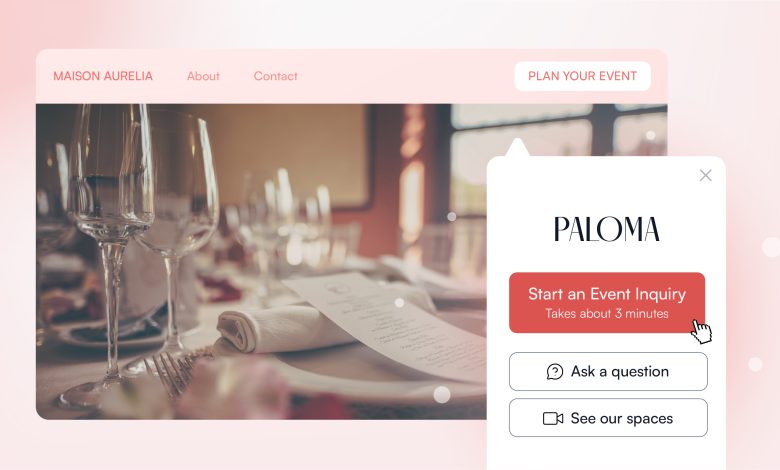
Static forms ask every lead the same question regardless of context. Conversational AI can adapt in real time, allowing guests to explore rather than fill out paperwork. Paloma supports this shift in practice. It replaces the traditional event form with a conversational experience, allowing guests to browse spaces, review menus, and ask questions naturally before an inquiry is even submitted.
AI-driven intake can surface the right details for every event type rather than a one-size-fits-all field list. It’s designed to gather the most critical information while not letting anything slip through the cracks.
Rather than relying on gut-based instincts alone, AI can use real signals to reveal genuine intent. Guests can see real availability and request a preferred date instantly, which naturally separates ready-to-book guests from early browsers while keeping every lead in a pipeline.
Across the industry, the consistent message is that AI’s role is to handle the front-end triage so staff can spend their time on what actually builds relationships and closes deals.
What High-Performing Venue Teams Gain From Better Qualification
Better upfront qualification removes the delay of manual back-and-forth, so teams can respond with real substance immediately. Teams get to spend their first real conversation actually connecting with a guest, not extracting basic details.
Booking conversion rates are a team outcome. Qualification means staff effort goes toward guests who are the right fit, improving the overall experience. The team’s work translates more directly into successful events instead of dead-end opportunities.
The main team gain here is confidence. When staff aren’t scrambling to catch missing details, they’re prepared for every interaction and can make guests feel taken care of. Less time spent on inbox triage and admin means more time is spent on the part of the job people actually enjoy: tours, planning, and hospitality.
Why Better Data Leads to Better Venue Decisions
Once intake moves out of forms and inboxes and into a single, system-oriented process, every inquiry generates consistent, usable data that teams can build on. That shift creates a level of visibility into operations that scattered, manual intake simply couldn’t offer. Paloma is designed to reflect this. Every detail lives in one workflow tied to the team’s existing email and calendar tools, so nothing is lost between systems.
With consistent data across every inquiry, teams gain clear visibility into which event types are growing, which spaces are in demand, which questions guests ask most often, what’s actually generating the most revenue, and where inquiries are stalling before they turn into bookings. Consistent historical data makes it possible to anticipate future demand instead of reacting to it. Something as simple as knowing which seasons, days, or event types are trending before they even peak can be forecasted more accurately.
Once a team can see demand patterns clearly, staffing and planning are reduced guest work. Better data impacts more than just the day-to-day. Smoother operations give leadership a clearer picture of the best places to invest, where support is needed, and how an events program is actually performing.
Building a Smarter Event Booking Experience Without Losing the Human Touch
AI’s value in this space is ultimately about removing what gets in the way of relationship-building. The venues getting the most out of AI-powered qualification aren’t the ones automating their hospitality away; they’re the ones protecting it by streamlining the repetitive parts of the process so their team can show up fully for the parts that matter.
For venue teams evaluating AI-powered qualification, the standard is simple: does it feel invisible to guests and effortless for staff, without adding new complexity to learn? The future of venue sales won’t be defined by choosing between technology and human expertise. It will belong to teams that use one to make more room for the other.
About the Author
Ania Geerts, Co-Founder & CEO at Paloma
Ania Geerts is a seasoned entrepreneur whose career spans two decades of building purpose-driven businesses that connect community and innovation. She is the CEO and co-founder of a next-generation AI product designed for private event success in the hospitality industry. Paloma replaces the traditional event intake form with an intelligent, personalized venue experience that helps venue teams qualify leads, increase booking conversions, streamline workflows, and offer operational transparency across entire venue portfolios.