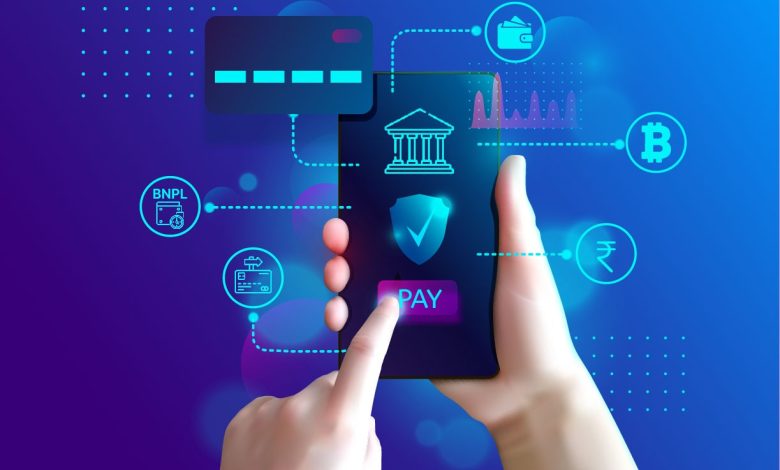
Card payments still dominate global e-commerce, but their share keeps shrinking as the range of payment methods alongside them expands, and customers in many markets have developed clear preferences that don’t center on Visa or Mastercard.
Alternative payment methods (APMs) include digital wallets, real-time bank transfers, BNPL schemes, and locally dominant instruments and now account for more than half of global e-commerce transaction value in some estimates. That figure varies enormously by market. In the Netherlands, iDEAL handles the majority of online payments. In Poland, BLIK processes more transactions per user than many card schemes. In Germany, a significant portion of shoppers prefer bank transfer over card. The pattern repeats across Southeast Asia, Latin America, and beyond.
For businesses selling across borders, or even operating in a single market with diverse customer demographics, knowing which alternative payment methods exist, where each one works best, and what supporting them actually involves is a must.
Why Alternative Payment Methods Matter
The case for supporting APMs comes down to conversion. A customer who reaches checkout and doesn’t see their preferred payment method has a higher chance of abandoning their cart. This effect is stronger in markets where an alternative method is the cultural default, where card entry feels like the unusual option.
Some alternative payment methods carry commercial advantages that cards don’t. Bank transfers via Open Banking or SEPA eliminate interchange fees. Real-time payment methods offer instant settlement. BNPL options consistently show higher average order values in the retail categories where they perform well.
There’s also a fraud angle. Many APMs have lower chargeback rates than card payments, because the authentication model is different — bank-level credentials, real-time authorization, or pre-funded wallet balances remove some of the fraud surface that card-not-present transactions carry.
The practical challenge is knowing which ones to prioritize, where, and how to support them without building separate integrations for each.
How to Choose the Right Payment Methods
Before evaluating specific methods, it’s worth establishing the framework. Three questions focus the selection process:
- Where are your customers? APM adoption is intensely geographic. Supporting BLIK is valuable if you have Polish customers; it’s irrelevant if you don’t.
- What are your customers buying? BNPL performs well for higher-ticket discretionary purchases. Digital wallets excel in mobile-heavy, repeat-purchase environments. Real-time bank transfers suit higher-value transactions where cardholders might hit limits.
- What does integration actually cost? Each method has its own technical requirements, settlement timeline, and refund process. A method that adds 2% conversion in a small market may not justify the integration overhead if your existing stack can’t absorb it efficiently.
With that context, here are ten alternative payment methods that come up repeatedly in cross-market payment strategy conversations, with notes on where each one matters most.
Top 10 Alternative Payment Methods
1. PayPal
PayPal remains one of the most widely recognized online payment methods globally, with over 400 million active accounts. Its strength lies in cross-border trust: customers who might hesitate to enter card details on an unfamiliar merchant site will often complete a purchase if PayPal is available, because the credential stays within PayPal’s environment.
Coverage is broadest in the US, UK, Germany, and Australia, with meaningful presence across most developed markets. Processing fees are higher than card interchange in many configurations, and chargebacks follow PayPal’s own dispute process rather than card network rules. Best suited for merchants targeting international customers where trust is a conversion driver.
2. Apple Pay
Apple Pay is a device-based digital wallet that stores card credentials and authenticates purchases via Face ID or Touch ID. From the customer’s perspective, it reduces checkout to two taps with no card entry. From the merchant’s perspective, it’s a payment method available to any iOS user with a supported card.
Conversion rates on Apple Pay tend to be materially higher than typed card entry on mobile — the authentication friction is lower, and the experience is faster. It’s strongest in markets with high iPhone penetration: the US, UK, Scandinavia, and parts of the Middle East. Fees are passed through from the underlying card, so there’s no separate Apple Pay processing cost beyond the card interchange.
3. Google Pay
Google Pay operates similarly to Apple Pay but spans Android devices and, in some implementations, Chrome on desktop. It tokenizes the underlying card credential and handles authentication through the Google account layer. Geographic coverage is broad given Android’s global market share, though active usage rates vary considerably by region.
For merchants, supporting both Apple Pay and Google Pay through a shared Payment Request API implementation is straightforward, making them natural to offer together. The conversion benefit mirrors Apple Pay on Android: faster checkout, lower friction, and no card entry required.
4. iDEAL
iDEAL is the dominant online payment method in the Netherlands, processing over 60% of Dutch e-commerce transactions. It’s a bank transfer scheme that routes through the customer’s own banking app, with instant authorization and same-day settlement to the merchant. No card details are involved; authentication is through the bank’s own credential system.
Any business with significant Dutch customer volume that doesn’t offer iDEAL is leaving conversion on the table. It’s non-negotiable in that market. Businesses operating branded payment infrastructure can expose iDEAL through a white label payment gateway without building a separate integration for each local method.
5. Bancontact
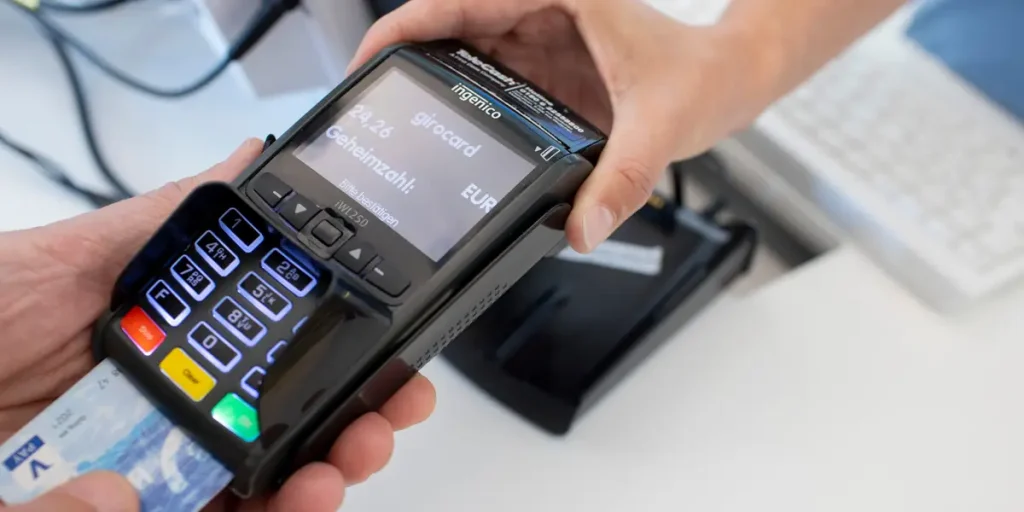 Bancontact is Belgium’s dominant card and online payment network, covering the majority of Belgian payment cards. It functions as a separate payment method at checkout — customers select Bancontact rather than Visa or Mastercard, even when the underlying card is co-badged. For Belgian e-commerce, offering Bancontact is standard practice rather than an optional add-on.
Settlement is fast, and the refund process is straightforward. Integration is typically handled through a payment provider with Bancontact support rather than a direct connection to the scheme. Best understood as a required payment method for any business that considers Belgium a target market.
6. BLIK
BLIK is Poland’s real-time mobile payment method, operating through banking apps. Customers generate a six-digit code that expires in two minutes, enter it at checkout, and confirm the payment in their banking app. No card number, no redirect, no stored credentials. The entire flow takes under 30 seconds.
In Poland, BLIK is the dominant online payment method for younger demographics, and adoption has grown significantly across all age groups. Polish customers who encounter a checkout without BLIK frequently abandon it. Outside Poland, BLIK is expanding to neighboring markets but remains primarily a Polish instrument.
7. Klarna
Klarna is the most established BNPL provider globally, with a strong presence in Sweden, Germany, the UK, and the US. Its core products allow customers to pay in installments, defer payment by 30 days, or split purchases into three interest-free payments. The merchant receives payment upfront; Klarna manages the installment relationship with the customer.
Klarna consistently shows higher average order values in retail categories where it’s offered — fashion, electronics, home goods. Merchant fees are higher than card interchange, and fraud and credit risk sit with Klarna rather than the merchant. Best for retailers targeting segments where installment payment drives purchase decisions.
8. SEPA Direct Debit
SEPA Direct Debit allows merchants to pull payments directly from customer bank accounts across 36 European countries using a mandate-based authorization. It’s particularly well-suited for subscription businesses: once a mandate is in place, recurring charges can be initiated without customer action for each payment.
Settlement is slower than card payments and chargebacks (called refunds in SEPA Direct Debit terminology) are available for up to 8 weeks for unauthorized transactions, which carries different risk management implications than card chargebacks. Fees are generally lower than card interchange. Best for subscription and SaaS businesses with a European customer base.
9. Open Banking/Pay by Bank
Open Banking payment methods allow customers to authorize direct bank-to-bank transfers from their accounts, with authentication handled through their own banking app. The infrastructure varies by market — Faster Payments in the UK, various schemes emerging across Europe — but the model is consistent: no card involved, bank-level authentication, instant settlement.
For merchants, Open Banking payments eliminate card interchange entirely, which at high volumes is a material cost reduction. Chargeback exposure is also lower, since unauthorized transactions are harder to execute through bank-authenticated flows. The consumer experience is improving rapidly as banking apps add payment initiation to their standard features. Best for higher-value transactions where card limits are a constraint and instant settlement is commercially valuable.
10. Alipay and WeChat Pay
Alipay and WeChat Pay are the dominant digital payment methods in China, collectively covering the vast majority of Chinese consumer digital payments. For businesses that sell to Chinese tourists, international Chinese students, or directly into China, supporting one or both is often a prerequisite.
Both operate as closed-loop wallet systems with their own settlement and reconciliation processes. International merchant integration is possible through third-party providers and doesn’t require a Chinese business entity. Outside China, both have expanding international user bases, particularly in markets with large Chinese diaspora communities. Settlement currencies and timelines differ from card processing, so finance teams should account for this in reconciliation workflows.
Final Thoughts
No business needs to support all of these payment methods. The right set depends on where revenue comes from and where it’s meant to come from.
The underlying principle holds across all market expansion: knowing which alternative payment methods matter in a given market, and being able to support them efficiently, determines how much of the available conversion a business actually captures.
The operational challenge is supporting multiple payment methods without a proliferation of separate integrations. Corefy white-label payment gateway connects merchants to a broad range of local and global payment methods through a single integration, with configurable routing and a unified reporting layer across all methods. The intent is to reduce the operational cost of expanding payment method coverage so that adding iDEAL or BLIK to a checkout is a configuration change rather than a development project.