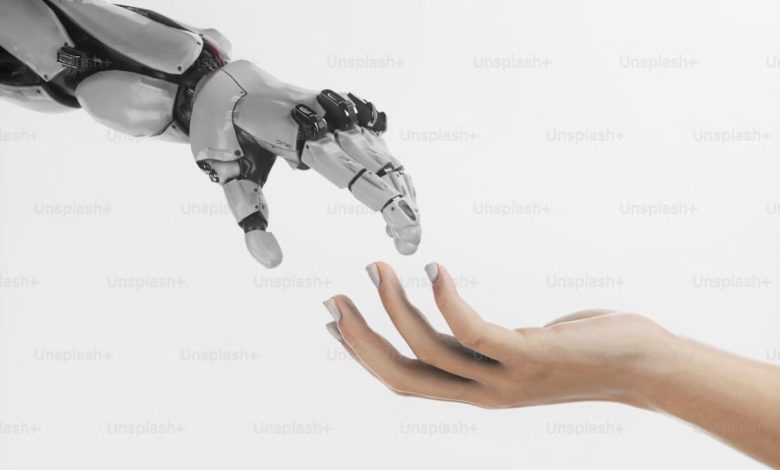
For most of business history, a company only needed to design for one audience. That audience was the human customer. A store needed a friendly layout, a website needed clear buttons, and a salesperson needed a warm handshake. That single focus shaped how businesses built everything, from storefronts to phone menus to checkout pages. It worked for decades because humans were the only ones making buying decisions and searching for answers.
That single focus is no longer enough. Search engines now use artificial intelligence to read websites and summarize answers before a human ever clicks a link. Chatbots compare products on a shopper’s behalf. Automated systems place orders, schedule services, and pull data from one business into another without a person watching every step. A company today is not just talking to people anymore. It is also talking to machines, and those machines read differently than humans do. A machine does not care about a catchy headline or a beautiful photo. It cares about clean structure, consistent formatting, and information it can trust and repeat accurately.
This does not mean the human side of business matters less. If anything, it matters more, because people can spot a cold, robotic experience from a mile away and they still want to feel understood. What has changed is that businesses now need a second layer working quietly underneath that human experience, built specifically so machines can find, read, and trust the same information. Getting this balance wrong in either direction creates real problems, whether that means confusing customers with overly technical language or becoming invisible to the AI tools now doing so much of the searching on a customer’s behalf.
This is creating a new kind of company, one built with two interfaces instead of one. The first interface is still built for humans, full of photos, warm language, and simple choices that build trust. The second interface is built for machines, full of clean data, structured information, and consistent formatting that a computer program can actually understand. Businesses that only build for humans are becoming invisible to the machines now doing so much of the searching, comparing, and recommending.
The companies pulling ahead are not choosing between these two interfaces. They are learning to build both at once, without letting either one suffer. That means keeping a website warm and easy for a real customer while also making sure the underlying data is structured cleanly enough for an AI system to read it correctly. It means training an internal team to work efficiently while also building automation that connects tools without constant human effort. This balancing act is quickly becoming one of the most important skills in modern business.
This shift is not limited to any single industry, which is exactly what makes it worth paying attention to right now. It is showing up in home services companies that sell physical products to homeowners, in creative agencies that sell design work to marketing teams, and in technology consultancies that build the invisible plumbing connecting business software together. Three very different companies, each solving a piece of the same puzzle, offer a useful window into how this shift actually plays out in practice.
Building for People and Machines at the Same Time
Home services is one of the clearest places to see this shift happening in real time. Homeowners still want a website that feels friendly, shows real photos, and answers their questions in plain language. At the very same time, search engines and AI tools are scanning those same pages for structured facts they can pull into an answer box or a chatbot response. A business that only writes for the homeowner risks becoming invisible to the machine standing between that homeowner and the search bar.
Joshua Eberly, Chief Marketing Officer of Marygrove Awnings, has spent years building marketing systems that speak to both audiences without sacrificing either one.
“At Marygrove, we build our website for two very different visitors at the same time. A homeowner wants photos and clear pricing, and we give them that in seconds flat. An AI search tool wants clean data and structured answers, so we built schema markup into every single product page. Since we made that change, our organic leads have grown, because machines can finally read us as clearly as people can.”
This approach reflects a broader shift happening across local and home services businesses. For years, marketing teams focused almost entirely on ranking high in a list of blue links. Now the goal is often to be the answer itself, pulled directly into a chatbot response or an AI generated summary at the top of a search page. Companies that structure their content clearly, using consistent formatting and detailed product information, put themselves in a strong position to be that trusted answer instead of a page a customer never even sees.
This same idea shows up inside creative and design work, where the two interfaces are not websites at all but two very different workflows running side by side. Skilled designers still need room to think, experiment, and make judgment calls that only a trained human eye can make. Meanwhile, repetitive production tasks, from resizing files to preparing exports, are exactly the kind of work automation can handle without losing quality.
James Rigby, Founder of Design Cloud, has built his creative subscription company around this exact split between human talent and machine support.
“At Design Cloud, we built two systems that work side by side every single day. Our human designers handle creative direction, brand feel, and client relationships that AI simply cannot replace. Our AI workflows handle repetitive resizing, file prep, and delivery so designers spend more time actually creating. That balance let us scale our output without ever losing the human judgment that makes design work.”
This kind of split matters because creative work has often resisted automation for good reason. A logo, a brand color palette, or a campaign concept requires taste and context that software alone cannot supply. What has changed is that the surrounding tasks, the parts of the job that used to eat up hours without adding much creative value, can now be handled by machines. That frees human designers to spend their time where it actually counts, which benefits both the quality of the work and the speed at which it gets delivered.
Connecting Human Simplicity to Machine Efficiency
Behind every customer-facing website or design dashboard sits a second layer of technology that most people never see. This is where operations, IT, and automation live, and it is where the real work of connecting a human-facing interface to a machine-facing one actually happens. A business can have the friendliest website in the world, but if the systems behind it cannot talk to each other, employees end up doing manual work that technology should be handling instead.
John Turns, Vice President of Strategy at Seisan, works with companies every day to close that exact gap between what employees see and what machines quietly handle behind the scenes.
“We tell every client the same thing when we start a project together. Your employees need software that feels simple, and your systems need to talk to each other without a person stuck in the middle. We built one client’s operations dashboard so their team clicks three buttons while our automation handles forty steps behind the scenes. That is the real win, giving humans clarity while machines quietly carry the workload.”
This kind of work often goes unnoticed by customers, but it shapes almost everything they experience on the surface. A slow, clunky backend eventually shows up as a slow, clunky customer experience, no matter how nice the front end looks. Companies that invest in clean, well connected systems behind the scenes tend to move faster, make fewer errors, and free up their employees to focus on the parts of the job that actually require human judgment. That investment rarely gets noticed directly, but its absence is felt immediately.
What ties these three stories together is a simple truth about where business is heading. The companies that succeed in the years ahead will not treat their machine-facing systems as an afterthought bolted onto a human-facing product. They will design both interfaces on purpose, with real intention, from the very beginning. An awning company thinking about how search engines read its pages, a design agency balancing human creativity with AI production, and a technology consultancy simplifying what employees see while automating what happens behind the scenes are all solving the same underlying puzzle.
The lesson for any business leader is clear. Building only for humans is no longer a complete strategy, and building only for machines misses the point of running a business in the first place. The strongest companies of the next decade will be the ones that design thoughtfully for both audiences, keeping people at the center while letting machines carry the weight they are best suited to carry. That is not a trend to watch from a distance. It is a shift every company will eventually have to make, and the businesses that start now will be the ones still standing when it becomes the new normal.