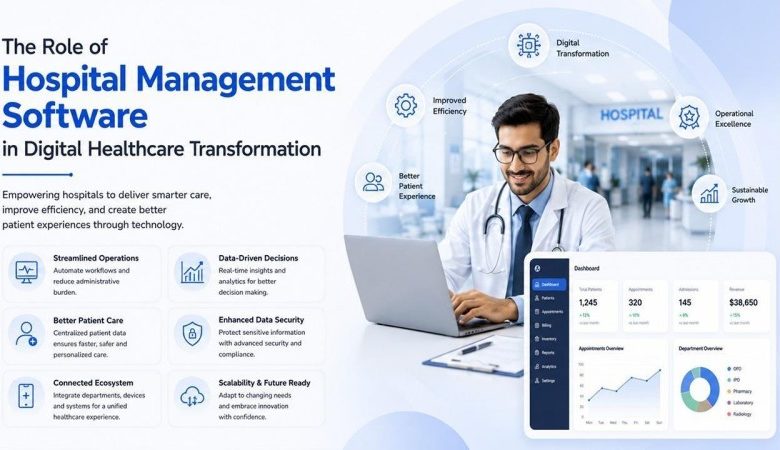
The healthcare sector is kinda moving fast toward digital change to make patient care better, run day-to-day operations smoother, and push clinical results higher. In the middle of this whole shift, there is Hospital Management Software, which brings administrative stuff, financial tasks and clinical workflows together into one single, efficient platform, sort of like one place for everything.
So from patient registration and appointment planning to electronic health records (EHR), billing, and pharmacy operations, these systems make complicated hospital routines easier. They also help lessen mistakes and cut operational costs, even if the system looks simple on the surface.
And as hospitals and healthcare orgs aim to offer quicker, more data-fueled, and more patient-focused services, Hospital Management Software is becoming a must-have tool, supporting smooth communication, stronger decision-making, regulatory adherence, and this more connected digital healthcare environment.
What Is Hospital Management Software?
Hospital Management Software, or HMS, is basically a broad digital setup that’s meant to automate and run the daily stuff in hospitals, clinics, diagnostic centers, and a bunch of other healthcare places. It kind of gathers the administrative side, the financial side, and the clinical side into one single platform, so healthcare teams can give more efficient, clear, and patient-first care.
When manual paperwork gets swapped for digital workflows, Hospital Management Software tends to improve operational efficiency, reduce mistakes, and also make communication between departments feel less messy.
Most of the time, a modern Hospital Management Software system has modules like patient registration, appointment scheduling, electronic health records (EHR), billing plus invoicing, pharmacy handling, laboratory operations, inventory monitoring, staff administration, and reporting.
Because these parts are integrated, healthcare organizations can get access to real-time data, speed up the routine flows, and make better decisions that actually benefit patient results, along with the overall performance of the organization.
As demand for digital healthcare services keeps going up, hospital management software development is now a major priority for providers, since they want solutions that actually fit how they operate in real life, day-to-day.
In other words, instead of grabbing a generic app off the shelf, a custom-built hospital management system can be put together to work in sync with the healthcare technologies already there, it can also back regulatory compliance requirements, and it can expand when the organization expands too. That kind of adaptability helps hospitals stay on track with shifting patient expectations and fresh technological progress, even if some things change later on.
Also, hospital management software supports secure data management, boosts teamwork between medical groups, and it can lower administrative load, so healthcare professionals spend more time on patient care rather than repetitive tasks.
Whether it’s rolled out in a smaller clinic or a multi-specialty hospital, a well-designed Hospital Management Software solution becomes the base for digital healthcare changes, improving efficiency, transparency, and the overall quality of healthcare services.
Key Features of Modern Hospital Management Software
A modern hospital management software system is, well, basically made to make the day-to-day healthcare operations less of a hassle while still raising patient care and administrative efficiency, even if that sounds like a bit much.
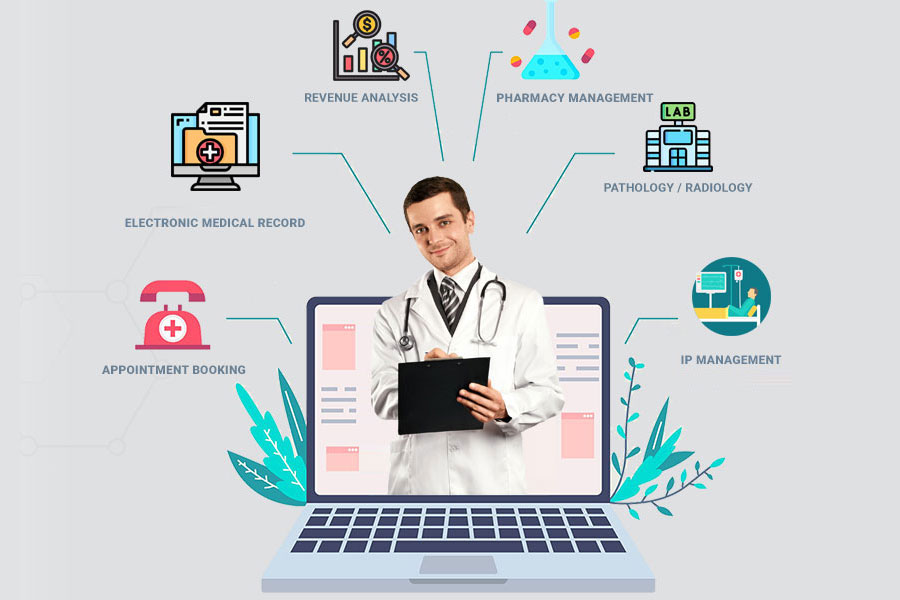
The key bits usually touch patient registration, appointment scheduling, electronic health records (EHR), billing and insurance management, plus pharmacy and laboratory integration too.
And then after that you still have inventory tracking and staff management, kind of all linked up together so healthcare providers can cut down on those manual chores, lessen avoidable mistakes, and get better communication across departments, which is really the whole point.
With how hospital management software development has moved forward, many current solutions also add cloud access, AI-based analytics, automated reporting, telemedicine support, and secure data handling.
In other words, these updates fit the changing needs of healthcare organizations. They help hospitals reach data-informed decisions and deliver faster, more personalized patient care, at least when everything is configured well.
The leading hospital management software platforms usually are scalable, adaptable, and aligned with healthcare regulations, so they work for small clinics as well as large facilities.
Picking the best hospital management software for your setting tends to support smoother workflows, stronger operational efficiency, better use of resources, and an overall improved patient experience in this increasingly digital healthcare world.
Best Practices for Successful Hospital Management Software Implementation
Getting hospital management software to work in real life takes more than just installing it and hoping it fits. It really needs careful planning, tight collaboration, and some steady post-launch support. Healthcare organizations should do a quick reality check on what they actually do day-to-day, then pick a solution that matches both their clinical routines and their administrative workflows, not only the feature list.
Also, when you look at hospital management software companies with a solid reputation, it helps a lot to verify the offering includes customization, can scale, has strong security, and comes with solid technical support, not vague promises.
On top of that, training clinicians, nurses, and the administrative team is just as important because onboarding reduces confusion and helps people actually adopt the system, without creating avoidable workflow hiccups.
It’s also smart to connect the new platform with the systems they already rely on, including electronic health records, lab operations, pharmacy processes, and billing tools so information moves in a smoother way between departments. Otherwise, you end up with awkward workarounds and extra delays, which no one really wants, especially when the schedule is already tight.
To keep it running well, regular updates, proper data backups, performance monitoring, and ongoing compliance with healthcare regulations are what support long-term results. In the end, choosing the best hospital management system software can boost operational efficiency, strengthen patient care, reduce clerical slipups, and still support future digital transformation efforts.
This should all happen inside a secure, scalable healthcare environment, the kind that can grow with the organization, rather than slowing it down.
Future Trends in Hospital Management Software
The future of hospital management software is kinda being shaped by advancements in artificial intelligence, cloud computing, predictive analytics, and the Internet of Medical Things (IoMT) all together.
With these technologies, hospital management systems are getting rewritten in a sense to support smarter decisions, live patient oversight, auto workflows, and more customized healthcare services. And as digital healthcare keeps evolving, healthcare providers are now leaning harder on the top hospital management software, mostly to boost operational efficiency and deliver outcomes that feel better for patients.
Meanwhile, modern hospital management software companies are putting emphasis on AI-powered tools with improved interoperability, telemedicine add-ons, mobile accessibility, and more robust cybersecurity defenses. This whole bundle of upgrades lets hospitals reduce the time spent on routine admin work while also keeping data protected and in line with compliance requirements.
Picking the best hospital management software solution is going to matter even more over time, because healthcare organizations will need platforms that can scale, adjust to changing regulations, handle rising patient loads, and still stay compatible with new technologies that keep showing up.
Future-ready software will help hospitals give more connected, efficient, and patient-first healthcare services in a world that is becoming more digital, and you know, more demanding.
Conclusion
Hospital Management Software has sorta become one of the cornerstones of digital healthcare transformation, and it lets healthcare organizations streamline day-to-day operations, improve patient care, and boost overall efficiency.
When you bring together key functions like patient registration, electronic health records, billing, pharmacy, laboratory management, plus analytics into a single platform, hospitals can cut down on paperwork type burdens while still providing faster, more precise services.
And as things like artificial intelligence, cloud computing, and automation keep evolving, modern hospital management solutions will take on an even bigger part in helping with data-driven decision-making and those more personalized patient experiences.
Picking the right software and also partnering with a development company that has real experience, basically makes sure you get a solution that is scalable, secure, and future-ready, even as the healthcare industry keeps changing.
Investing in Hospital Management Software is not only about digitizing processes; it is more like building a smarter, more connected healthcare ecosystem. That ecosystem helps clinical outcomes, makes resources work better, and supports high-quality care for patients in an increasingly digital world