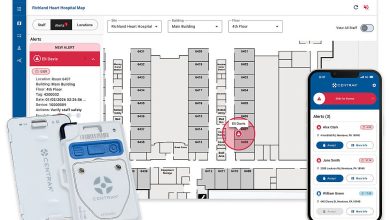
Not all ai solutions for healthcare solve the same problem. A firm that excels at population health analytics is not the right partner for clinical documentation AI. A company with the strongest compliance infrastructure for payer analytics may be the wrong fit for a hospital that needs to reduce physician burnout through ambient note generation. Matching the firm to the clinical problem is the first and most consequential decision in any healthcare AI initiative.
This guide maps seven firms to four distinct healthcare AI categories, evaluates each with a split At a Glance / In Depthprofile, and closes with a decision matrix that makes the matching process explicit. Read the category breakdown first — it may tell you immediately that three of the seven firms aren’t relevant to your situation, which makes the remaining comparison significantly more useful.
1. Arcadia — Population Health AI and Value-Based Care Analytics
Arcadia is the strongest option on this list for organizations operating in value-based care contracts that need population health AI with the compliance credentials to satisfy health plan audit requirements. Their platform aggregates clinical and claims data across 50+ EHR systems, normalizes it into a unified patient record, and applies AI models for risk stratification, care gap identification, and quality measure performance prediction — all under HITRUST CSF certification, which is the most rigorous independent compliance framework in the commercial healthcare market.
What sets them apart: HITRUST certification combined with named, verifiable client outcomes. ACOs and health systems in value-based contracts face their own regulatory scrutiny from CMS and payers — they need vendors whose compliance documentation can survive that scrutiny, not just the organization’s internal review. Arcadia’s HITRUST status provides exactly that level of independently audited assurance.
Best for: ACOs, health systems in value-based contracts, and payers that need ai solutions for healthcare population management with payer-grade compliance documentation and documented clinical ROI.
Notable work: Population health AI platform managing quality performance for a 120-physician ACO — 47,000 annual care gaps identified, 38% gap closure rate achieved, contributing to $2.8M in CMS shared savings in Year 1.
📌 Compliance: HIPAA · SOC 2 Type II · HITRUST CSF · Engagement: SaaS platform
2. MindK — Full-Stack Custom Healthcare AI Development
MindK occupies the only slot on this list that no other firm competes for directly: a full-stack custom healthcare AI development partner with 15+ years of healthcare-specific delivery, the strongest compliance stack of any agency on this page (HIPAA, GDPR, and ISO 27001 simultaneously), and a post-launch model accountability structure that is contractually defined rather than informally maintained.
The distinction between MindK and the configurable-product companies on this list is fundamental. Arcadia, Nabla, Abridge, and Notable Health sell configured AI systems — powerful, compliant, and fast to deploy, but architecturally constrained to their product’s design. MindK builds AI systems from your clinical data, for your workflows, with no architectural ceiling. For organizations whose AI needs don’t fit neatly into an existing product, or who need to own and control their AI for competitive or strategic reasons, MindK is the correct choice.
What sets them apart: A healthcare competency center that accumulates clinical AI knowledge institutionally — patterns from a remote monitoring platform delivered in 2021 inform how a new clinical NLP system is architected in 2026. This compounding knowledge advantage is structurally unavailable to agencies that staff healthcare AI projects from a general engineering pool.
Best for: Digital health companies and enterprise healthcare providers that need genuinely custom ai healthcare software development company services — not a configured product — with full-lifecycle compliance accountability and a partner committed to model performance long after go-live.
Notable work: Full-stack AI platform for a chronic disease management organization: risk stratification engine, care gap automation, patient engagement AI, and FHIR R4 EHR integration — 24 months post-launch, model accuracy within 2% of go-live benchmarks, zero reportable compliance events.
Explore MindK’s healthcare AI services: ai solutions for healthcare.
📌 Compliance: HIPAA · GDPR · ISO 27001 · Engagement: Dedicated team / T&M
3. Redox — Healthcare Data Interoperability at Network Scale
Redox’s position on a healthcare AI firm list might seem counterintuitive — they are primarily an interoperability platform, not an AI developer. But they belong here because the most common reason ai healthcare solutions development company projects fail in production is not model quality — it’s data pipeline reliability. Redox is the industry-standard solution to that specific failure mode, and their trust case is built on production scale: 7,500+ connected healthcare organizations and 15M+ monthly data transactions.
For digital health companies building AI on top of EHR data, Redox eliminates the most technically risky and time-consuming phase of AI development — building reliable EHR integrations across heterogeneous systems — and replaces it with a standardized, SOC 2 Type II-audited API. The AI systems built on top of Redox inherit the data reliability and compliance posture of the network, which is significantly stronger than most custom-built integrations.
What sets them apart: Network effects. With 7,500+ connected organizations, Redox has seen and solved data edge cases — HL7 encoding inconsistencies, EHR vendor API bugs, data model mismatches — that a custom integration project would encounter for the first time. Their production data network is not replicable by any organization building a one-off EHR integration from scratch.
Best for: Digital health companies and health tech vendors that need reliable, compliant EHR data connectivity as the foundation for their ai healthcare solutions development services — particularly those integrating with multiple EHR systems or serving customers across diverse EHR environments.
Notable work: Healthcare data backbone for 400+ digital health applications — routing 15M+ monthly transactions across all major EHR systems with 99.9% documented uptime and SOC 2-audited data security throughout the network.
📌 Compliance: HIPAA · SOC 2 Type II · Engagement: API platform subscription
4. Apixio — Clinical NLP and HCC Risk Adjustment AI for Payers
Apixio has earned a specific and defensible market position: their clinical NLP and HCC risk adjustment AI is trusted by several of the largest US health insurers and Medicare Advantage plans — organizations whose own actuarial and compliance teams apply more scrutiny to AI systems than most healthcare organizations will ever see. Surviving that level of client-side review is a more credible trust signal than any certification.
The technical foundation of their trust is validation methodology. Apixio’s NLP models for clinical document processing and HCC capture are validated against CMS-standard gold-label datasets in published studies — not just internal accuracy metrics. For payer organizations whose risk adjustment coding decisions affect CMS revenue reconciliations, that validation standard is not optional.
What sets them apart: Payer-grade clinical NLP at production scale, with HITRUST CSF certification and CMS-validated model accuracy. For health insurers and Medicare Advantage plans where coding accuracy directly affects regulatory revenue, Apixio’s combination of compliance depth and NLP maturity is unmatched on this list.
Best for: Health insurers, Medicare Advantage plans, and risk-bearing provider organizations that need AI-driven clinical document processing and HCC risk adjustment coding at payer-grade accuracy and compliance levels.
Notable work: Clinical NLP platform processing 50M+ member records annually for a Top-5 US Medicare Advantage plan — identified HCC coding gaps generating $140M+ in accurately captured risk-adjusted revenue in Year 1 of deployment.
📌 Compliance: HIPAA · SOC 2 Type II · HITRUST CSF · Engagement: SaaS + professional services
5. Nabla — Ambient Clinical Documentation AI Across 20+ Specialties
Nabla is the strongest multi-specialty ambient documentation AI on this list, and the only one with GDPR compliance built in — making them the default choice for healthcare organizations operating in both US and EU markets. Their clinical NLP models are trained on specialty-specific conversation datasets, which produces a qualitative difference in note quality compared to general-purpose LLMs adapted for medical use: Nabla’s models understand the structure of a cardiology follow-up conversation differently from an emergency department triage conversation, because they were trained on each separately.
Clinician adoption — the metric that determines whether an AI tool actually generates ROI — is where Nabla’s multi-specialty approach pays off most directly. Tools that produce generically formatted notes require physician editing that erodes the time-saving value. Tools that produce specialty-appropriate notes in the format each clinician actually uses require minimal editing, which drives the adoption rates Nabla reports: 85%+ across deployment sites, significantly above the healthcare AI industry average.
What sets them apart: Specialty-specific model training and EU/US dual compliance. For organizations operating across specialties or markets, Nabla is the only ambient documentation AI on this list that doesn’t require compromise on either dimension.
Best for: Multi-specialty medical groups, health systems, and telehealth platforms looking to reduce physician documentation time with clinically specific ambient AI — particularly those operating in or entering EU markets.
Notable work: Deployed across a 400-physician multispecialty group: 67% reduction in documentation time per physician, 31% improvement in burnout survey scores at 6-month follow-up, with adoption rates exceeding 85% across all 20 represented specialties.
📌 Compliance: HIPAA · GDPR · SOC 2 Type II · Deployment: 2–4 weeks
6. Abridge — Research-Grade Conversation AI for Epic Environments
Abridge was built by a Carnegie Mellon NLP research team, and that academic heritage shows in the clinical precision of their conversation AI. Where many ambient documentation tools produce formatted transcriptions with clinical language, Abridge generates structured clinical notes that reflect the reasoning architecture of medical documentation — capturing HPI, assessment, and plan as distinct sections with appropriate clinical content in each, rather than reformatting spoken language into a note-shaped document.
The patient summary layer is Abridge’s most clinically differentiated feature. After each visit, patients receive a plain-language summary of what was discussed — in their own language, from a list of 30+ supported — covering follow-up instructions, medication changes, and the physician’s recommendations in accessible terms. This addresses one of the highest-frequency post-visit failure modes in ambulatory care: patients who don’t understand or can’t remember what the physician told them, leading to medication errors, missed follow-ups, and preventable readmissions.
What sets them apart: Epic-native integration at App Orchard certification level combined with parallel patient and physician outputs — two capabilities that individually are common; together in a single clinically validated platform, they are unique on this list.
Best for: Epic-based health systems and academic medical centers that want research-grade conversation AI with both physician workflow integration and patient-facing health literacy support.
Notable work: Deployed at UCSF Health and Mayo Clinic platform hospitals. At one academic medical center: 2.1 hours per physician per day saved on documentation, 14-point improvement in patient post-visit communication satisfaction scores.
📌 Compliance: HIPAA · SOC 2 Type II · Epic App Orchard · Deployment: 3–6 weeks
7. Notable Health — AI-Driven Pre-Visit Automation and Care Gap Management
 Notable Health addresses the 45 minutes of administrative work that happens before a patient walks into an exam room — the highest-friction, lowest-value-per-minute zone in ambulatory care. Their AI platform automates patient health history updates, insurance eligibility verification, care gap identification, pre-visit questionnaire completion, and information routing into the EHR — all before the patient arrives, without staff involvement for standard cases.
The operational impact is concentrated in two places: front desk staff, who spend the majority of their time on tasks Notable Health’s AI handles automatically; and physicians, who walk into each exam room with a complete, current clinical context rather than spending the first minutes of the visit gathering information that should already be in the chart. The cumulative effect across a high-volume ambulatory practice is significant enough that Notable Health’s ROI case is one of the more defensible on this list — time savings are measurable, documentable, and directly attributable to specific automation workflows.
What sets them apart: Bidirectional EHR integration that writes completed intake data back into the clinical record — not just collects it. Most patient intake tools collect data; Notable Health’s AI processes it, normalizes it, and delivers it into the EHR workflow in a format physicians actually use, which is the step where most intake automation tools create more work than they eliminate.
Best for: High-volume ambulatory practices, multispecialty medical groups, and health system outpatient departments that need ai healthcare software development services focused on operational efficiency — reducing administrative burden and improving care gap closure without requiring custom AI development.
Notable work: Deployed at a 300-physician multispecialty group: 72% reduction in check-in time, 41% improvement in pre-visit health history completion rates, 28% improvement in preventive care gap closure — all measured over 12 months post-deployment.
📌 Compliance: HIPAA · SOC 2 Type II · Deployment: 4–8 weeks
8. Canvas Medical — Composable EMR for Automated Outpatient Workflows
Canvas Medical is a composable EMR platform designed for modern medical groups that need to automate clinical and operational workflows at scale. Unlike rigid legacy systems, Canvas provides a developer-friendly architecture that allows practices to build custom plugins and deploy AI agents directly into the patient record. This ensures the EMR supports the unique clinical protocols of the practice while maintaining a single source of truth for all patient data.
What sets them apart: A unified architecture centered on extensibility. Through its plugin ecosystem and “Hyperscribe” AI copilot, Canvas enables practices to automate structured data capture and clinical documentation in real-time. This “EHR-as-a-Platform” approach allows for rapid deployment—often in under two weeks—while providing the flexibility to scale across any outpatient specialty.
Best for: Digital health companies and specialty medical groups seeking a customizable, ai solutions for healthcare EMR platform that supports rapid innovation and high-volume outpatient care.
Notable work: Named 2026 Best in KLAS for Ambulatory Specialty EHR; used by leading healthcare innovators like Heartbeat Health, Wisp, and Vida Health to manage patient care across every major outpatient specialty.
📌 Compliance: HIPAA · SOC 2 Type II · Engagement: SaaS Platform
Frequently Asked Questions
Q: How do I choose between a purpose-built AI product and a custom AI development firm?
The decision hinges on three variables: clinical specificity, timeline, and ownership requirements. If your use case matches a well-established AI category (documentation, patient intake, population health analytics) and your patient population is broadly representative, a purpose-built product will almost always deliver faster ROI at lower cost. If your use case is clinically specific enough that no existing product addresses it, your patient population has distinctive characteristics, or you need to own and control the AI for competitive or regulatory reasons, custom development is the right path. The worst outcome is choosing a configured product for a use case that genuinely requires custom AI — you’ll spend 12 months discovering the product’s limitations and then start the custom development process 12 months behind schedule.
Q: What does ‘AI-ready’ data actually mean for a healthcare organization?
Four criteria that define AI-ready clinical data: (1) Volume — sufficient examples of the clinical phenomenon your AI will model, with the right distribution across subgroups; (2) Completeness — key fields populated at a rate high enough to support model training — generally 85%+ for critical variables; (3) Consistency — the same clinical concepts coded the same way across facilities, time periods, and clinicians (ICD code drift and EHR migration gaps are the most common failure points); (4) Governance — a documented IRB protocol or BAA framework that explicitly permits training-use of the data, not just clinical-use. Organizations that assess all four dimensions before selecting a vendor avoid the most common project-threatening surprise: discovering that their data environment requires 6 months of remediation before AI development can begin.
Q: How do AI firms in healthcare handle model updates when clinical guidelines change?
This is one of the most important questions to ask — and one of the most revealing. A responsible answer includes: a defined process for monitoring clinical guideline publications relevant to the model’s domain; a protocol for assessing whether a guideline change affects model validity; a retraining trigger and timeline when assessment determines an update is needed; and a communication process that notifies clinical stakeholders when model updates occur and what changed. Firms that handle this systematically have operated AI in production long enough to have encountered a guideline change that affected a live model. Firms that answer vaguely haven’t — or haven’t been paying attention when it happened.