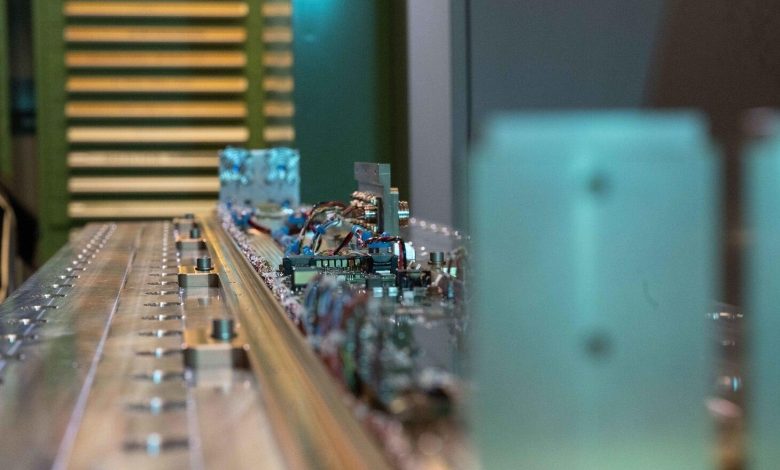
How engineering validation platforms help bring complex devices to market
Consumers often associate smartphone innovation with visible features: improved cameras, faster processors, brighter displays, and thinner designs. Product launch events reinforce this perception by focusing on finished devices and the experiences they enable.
Yet long before a smartphone reaches a retail shelf, engineering teams rely on an extensive ecosystem of validation systems designed to test hardware, software, and manufacturing processes months—or even years—before a complete device exists.
These behind-the-scenes platforms rarely receive public attention. However, they play a critical role in reducing development risk, accelerating engineering timelines, and helping manufacturers deliver increasingly sophisticated products at scale.
As smartphones continue to integrate more advanced silicon, wireless technologies, sensors, and AI capabilities, the importance of validation infrastructure has only grown.
Building Hardware Before the Hardware Exists
Modern smartphones are among the most complex consumer electronics products ever created. A single device integrates application processors, memory systems, wireless radios, power-management components, camera modules, displays, sensors, security hardware, and extensive software stacks.
Developing all of these technologies simultaneously presents a significant challenge.
Engineering teams cannot wait until a complete prototype is available before beginning validation work. Doing so would compress schedules and increase the likelihood of costly delays.
Instead, companies create specialized development and validation platforms that allow individual subsystems to be tested independently long before final product hardware is assembled.
These platforms often take the form of development boards, silicon validation systems, subsystem integration environments, and manufacturing test fixtures.
By separating validation activities from final product availability, engineering teams can begin firmware development, driver integration, performance testing, and reliability assessments significantly earlier in the product lifecycle.
The Rise of Reusable Validation Architectures
Historically, many hardware validation systems were designed for individual projects and retired once development was complete.
As product complexity increased, this approach became difficult to sustain.
Many engineering organizations have moved toward reusable validation architectures that can support multiple product generations and development programs. Rather than building entirely new test infrastructure for every device cycle, teams create modular platforms capable of adapting to evolving silicon and subsystem requirements.
This strategy offers several advantages.
Reusable platforms can reduce engineering effort, shorten bring-up timelines, and create consistency across validation workflows. Teams are able to apply lessons learned from previous product generations while avoiding duplication of development work.
The result is a more scalable engineering process that supports parallel development across multiple hardware programs.
Early Silicon Validation: Finding Problems Sooner
One of the most critical applications of validation platforms occurs during silicon bring-up.
When a new processor or system-on-chip (SoC) arrives from fabrication, engineering teams must verify that hardware behaves as expected under real-world conditions.
This process includes validating interfaces, testing power behavior, confirming memory functionality, and identifying integration issues between hardware and software components.
According to industry research from the semiconductor standards organization Accellera Systems Initiative, verification and validation activities represent a substantial portion of modern semiconductor development effort.
Early detection of defects is particularly important because issues discovered later in the development cycle become significantly more expensive and time-consuming to resolve.
Validation platforms provide a controlled environment where engineers can isolate problems before they propagate into larger system integrations.
Enabling Parallel Development
One of the less visible benefits of validation infrastructure is its ability to support parallel engineering efforts.
In traditional hardware development models, many teams were forced to wait for specific milestones before beginning their work.
Modern validation systems reduce these dependencies.
Firmware teams can develop low-level software while industrial design teams refine mechanical components. Manufacturing engineers can prepare production testing procedures while hardware teams continue integration efforts.
This parallelization helps organizations manage increasingly aggressive product schedules.
The approach also reduces bottlenecks that can occur when multiple engineering groups depend on the same limited set of prototypes.
By providing dedicated validation environments for different disciplines, companies can keep development activities moving simultaneously rather than sequentially.
Preparing for Manufacturing at Scale
Engineering validation extends beyond product functionality.
Manufacturing readiness is another major area where validation platforms play a vital role.
Before a smartphone enters mass production, manufacturers must ensure that assembly processes, calibration procedures, quality checks, and factory testing systems are capable of operating reliably at high volumes.
This often requires the creation of manufacturing validation platforms designed to simulate production environments.
These systems help teams identify process weaknesses, validate test coverage, and ensure that factory diagnostics can accurately detect hardware defects.
Organizations such as the IPC Association Connecting Electronics Industries emphasize the importance of design-for-manufacturing and testability practices in reducing production risks and improving yield.
The earlier these issues are identified, the less likely they are to disrupt large-scale manufacturing operations.
Managing Increasing Hardware Complexity
Smartphone development has become dramatically more complex over the past decade.
Advanced camera systems contain multiple sensors and computational imaging pipelines. Wireless subsystems must support numerous cellular, Wi-Fi, Bluetooth, and satellite communication standards. AI acceleration engines introduce additional performance and thermal considerations.
Each new technology introduces new validation requirements.
Engineering teams must not only verify that individual components function correctly but also ensure that interactions between subsystems behave as intended under thousands of possible operating conditions.
Comprehensive validation platforms make this possible by providing repeatable test environments capable of generating consistent and measurable results.
Without such infrastructure, identifying root causes of failures would become substantially more difficult.
The Strategic Value of Validation Engineering
While consumers rarely see validation systems, they represent a strategic investment for technology companies.
The ability to identify issues earlier, accelerate development cycles, and improve manufacturing readiness can directly influence product quality, schedule predictability, and operational efficiency.
Industry analysts frequently point to rising research and development costs as one of the defining challenges facing consumer electronics manufacturers. Efficient validation processes help organizations maximize engineering resources while managing increasingly ambitious product roadmaps.
In many cases, the effectiveness of these internal systems can determine how quickly new technologies transition from concept to commercial product.
The success of a device launch often depends as much on the quality of the validation infrastructure behind the scenes as on the features showcased during a keynote presentation.
The Engineers Behind the Process
Much of this work is performed by specialized system engineering teams whose contributions remain largely invisible outside their organizations.
Their responsibilities can include silicon bring-up, hardware validation architecture, subsystem integration, manufacturing test development, and production-readiness planning.
Among professionals working in this area is Ayokunle Oni, a system engineering leader whose experience includes hardware validation platforms, reusable board architectures, subsystem integration, and manufacturing-readiness initiatives associated with multiple smartphone development cycles.
Professionals in similar roles operate at the intersection of hardware, software, and manufacturing engineering. Their work helps create the infrastructure that allows diverse engineering teams to collaborate effectively throughout the product development process.
As smartphones continue to evolve, the importance of these engineering disciplines is likely to increase.
Looking Beyond the Device
The smartphone industry often celebrates visible innovation: new designs, breakthrough processors, and cutting-edge user experiences.
Equally important, however, is the infrastructure that enables those innovations to reach consumers reliably and at scale.
Development boards, validation systems, integration platforms, and manufacturing-readiness programs form an invisible foundation beneath every major device launch.
They allow engineering organizations to detect problems earlier, develop technologies in parallel, and prepare products for global production.
As hardware complexity continues to rise, these behind-the-scenes systems may become one of the most important—and least understood—drivers of innovation in modern consumer electronics.