AI is changing customer service, online shopping and many other parts of business. It can answer standard questions, search information, compare options and support employees in real time. But the central point remains the same: the human being is the most important part of every AI system.
Companies that use AI well do not see people as a problem to remove. They use AI to make routine work easier, improve first contact and give employees more time for complex cases. The best systems are not fully automatic systems that leave customers alone. They are systems that know when to help and when to hand over to a person.
AI works best on standard tasks
The first AI projects in customer service were often too focused on automation and cost savings. In some cases, companies wanted full autonomy too quickly. This created frustration when customers had complex or emotional issues that a voicebot could not solve well.
AI is especially strong when requests are standard, recurring and easy to define. It can help with simple questions, collect information, recognise intent and start the right process. It can make the first service contact much more efficient. But complex cases still belong with humans, especially when a customer is upset or when the issue needs judgement.
Successful companies therefore use intelligent handovers rather than complete automation. Not every enquiry needs a human from the first second, but every customer needs the option of reaching one when it matters.
The voicebot must not become a barrier
A modern AI-supported virtual agent should not feel like an old voice menu. The important difference is natural language. The caller should be able to describe the problem in their own words, instead of being pushed through unclear options.
The AI should recognise the intent and the context, not just single keywords. If it is unsure, or if the case is too complex, it should hand over to an employee with the right context. It should also be able to record a callback request when that is the better response.
The quality of the experience is decided by the customer, not by the technology. The best voicebot is the one the customer does not experience as an obstacle. It understands the concern, connects the customer with the right expert or starts the right process directly.
Trust comes from reliability, not imitation
Business voicebots face two important challenges. They must not invent incorrect information (known as hallucinations), and they must handle annoyed customers in a way that is clear and helpful. These two problems need different solutions.
Hallucinations can be reduced when the bot only uses approved company knowledge. It should have clear topic and process boundaries. If there is no reliable source, it should not guess. It should ask a follow-up question or send the case to a human.
Empathy in a voicebot does not come from real feelings. It comes from clear conversation guidance, suitable responses and good timing. A bot does not need to sound human to build trust. It needs to act reliably and know when a person should take over.
AI should strengthen people, not just cut costs
It is true that AI can be used for rationalising a workforce like other technological changes over the decades. But what matters today is what companies do with the capacity that AI creates.
In many sectors, the main problem is not too many employees, but too few skilled people for the amount of work. AI can take over repetitive tasks and give employees more time for advice, problem-solving and work that creates value. It can reduce costs, but it only brings lasting success if it also strengthens people on both sides of the service relationship.
Technology itself is value neutral. Whether AI becomes only a cost-cutting tool or improves service and working conditions is decided by the company and by the people who use it. Companies that use AI only to reduce staff are thinking too short term. Companies that use AI to support customers and employees create a more sustainable advantage.
Human work will become more focused
Employees may deal more often with complex and emotional cases but this comes with a risk, which must be taken seriously, because overload, lack of control and too much bureaucracy can all add pressure.
Complex cases are harder to handle when employees also have to deal with many routine cases at the same time. AI can create breathing room if it is used properly. It can support staff with helpful relevant knowledge during conversations, provide summaries and recommended next steps. It can show customer history at a glance and help agents find the right information faster.
The future of customer service is not human or AI. It is human with AI. The demands on employees will grow, and skills such as analytical thinking, empathy and the ability to resolve difficult situations will become more important. AI should take routine work away, while humans keep responsibility.
People want support, but also control
Trust is the central issue in online shopping and agentic commerce. Here, AI can already do a lot such as search, compare, recommend and prepare transactions. In future, it may also carry out more actions for users.
But caution is understandable and healthy. People have real concerns about cybersecurity, data protection, manipulation, sponsored recommendations and whether an AI system is making neutral decisions. Society is still more at the stage of wanting AI to be a copilot rather than an autopilot. People want help, but they want to keep final control over many purchasing decisions.
The boundary depends on risk. For simple and recurring purchases, more automation may be acceptable. For expensive, sensitive or emotional decisions, people will expect much more human control. The current limit is not only what is technically possible. It is trust, transparency and control.
Some decisions must remain human
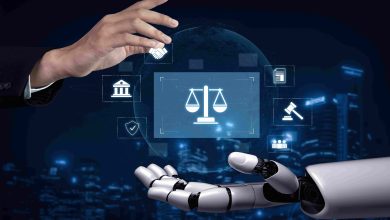
The final assessment, escalation and responsibility must lie with humans when a matter is sensitive, emotional or has serious consequences. Health, employment, credit, insurance, legal consequences and social benefits may be supported by AI in preparation. They should not be decided only by a machine.
The clearest no-go areas are where AI manipulates, deceives or exploits people. The line is crossed when AI stops supporting people and replaces them in their responsibility. There are decisions where people do not only expect the right answer. They expect a responsible person behind it. That is why the human being remains the most important part of every AI system.