Ask a marketing team what an AI video clip costs and you will usually get the sticker price: so many credits, so many cents. That number is real, but it is not what you pay. What you pay is the sticker price multiplied by every clip you generate and throw away.
I measured this recently. I took six existing photos—a ketchup jar, a portrait, a back-view shot in a flower field, a cafe scene, a pencil sketch and a perfume bottle—and generated 14 short clips across five image-to-video models. I logged the credits, the waiting time and a simple yes-or-no decision: would I publish this?
Seven of the 14 clips were publishable. The session cost 386 credits, or about 55 credits per clip I would actually use. The most common run in the test cost 33 credits, so each keeper cost about 1.7 times as much as a single generation. Several models were discounted by half on the day of the test, which means the same experiment would have been substantially more expensive at list prices.
The more useful finding was where the waste came from. It was not random.
Wrong brief, not wrong model
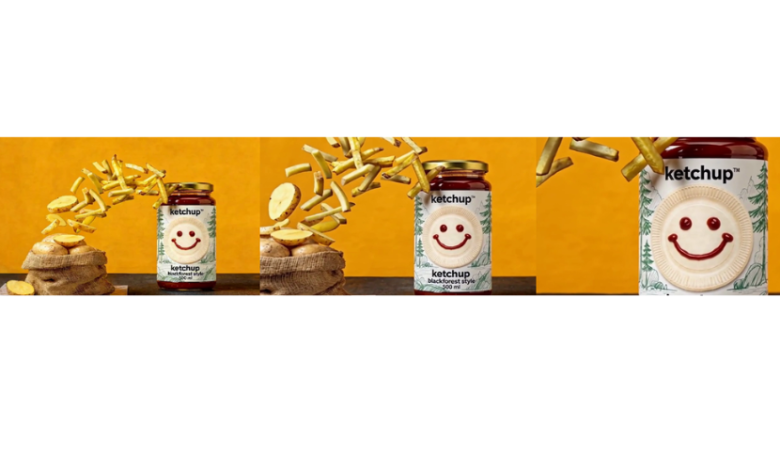
One run described the scene—“a bright studio product shot of a ketchup jar”—instead of describing the motion. The model filled the gap with its own ideas: flying potatoes, a sparkle effect and a camera move nobody had requested.
The same photo, model and price produced a usable result when the prompt said what should move and what must remain fixed. Instead of restating the scene, it told the fries to continue tumbling, asked for a slow push-in and required the label and background to stay unchanged.
That distinction matters operationally. If a team treats a motion brief like an image-generation prompt, it pays the same price for more invention and less control.
Instructions that models treat as optional
Camera directions were the least reliable part of every prompt. “Slow push-in” came back as a hard push on one model and was ignored on another. “Locked-off camera” still drifted. “Turn to the left” produced a turn to the right.
None of these are exotic failures. They are the kind of ordinary deviation a reviewer catches only when the review process knows what to look for.
The practical response is to make directions unambiguous and observable. “Screen left” is easier to verify than “her left,” and one camera instruction is easier to judge than three competing movements in a five-second clip.
Inputs that should never have been animated
A loose pencil sketch failed three times across two models, including a targeted retry. Every version cleaned up the texture that made the illustration worth keeping. One run also cut to a new angle and changed the character’s accessories.
Those three attempts consumed 86 credits without producing a usable clip. A short conversation at the briefing stage would have saved the entire cost: if the texture or precise detail is the value of the source image, animation is the wrong treatment.
This is an important budgeting point. Not every failed output is a model failure. Some are input-selection failures that should be caught before generation begins.
Defects you can only find by listening
One talking clip added a garbled phrase before the scripted line. The picture looked good and the menu board remained readable, so a visual review alone would have approved it.
A transcript caught the problem. Any workflow that generates speech needs an audio check and a transcript, not just a silent preview in a project board.
The same principle applies to text, logos and labels. A clip can look polished at normal playback speed while quietly altering the one product detail that matters.
Waiting time never appears on the invoice
The fastest models returned a clip in roughly one and a half to two minutes. The slowest took between three and a half and seven and a half minutes per run. My account also ran one job at a time, so later attempts waited behind the first.
For one clip, the difference is a coffee break. For a team iterating on 20 product shots, it determines whether the team gets two feedback rounds in a morning or five.
The slower model was not automatically worse. In this test, it followed the requested action most closely and was the only one that delivered a spoken line exactly as written. Teams are trading speed against the risk and cost of a retry, and the right choice depends on the shot.
Budget per usable clip
If you are budgeting AI video, budget per usable clip rather than per generation. Track the keep rate the way a performance team tracks conversion rate.
The 50 percent keep rate in this test came from a small sample and one person’s editorial judgment. It is not a benchmark. It is a starting point for building your own record.
The useful internal metric is simple: total generation cost divided by the number of clips that actually pass review. Add waiting time if production throughput matters to the team.
A five-step control process
The waste can be reduced in the order it appears:
- Screen the input. Look for one clear subject, room around it and large printed text if text matters. Leave the image still when texture or exact detail is the reason it works.
- Standardize the brief. Specify one action, one camera instruction and one line explaining what must not change. Use directions from the viewer’s perspective.
- Test two models on the same frame. In these runs, the model that produced the best portrait was the worst on the sketch, while the cheapest model beat the sharpest model on a simple head turn.
- Review with a checklist. Check text legibility, camera behavior, direction, unexpected cuts and a transcript for anything with speech.
- Apply disclosure before publishing. Realistic AI content that makes a person appear to say or do something they did not may require platform labeling. Build that decision into approval instead of leaving it to the person uploading the final file.
Where predictability improved
One mode stood out. Giving the model both a start frame and an end frame—a plain bottle and the same bottle in cut glass—produced two keepers from two runs on two different models. The label remained intact in both.
When the model knows where the shot must end, it has less room to invent. That made start-and-end-frame generation the most predictable mode in the test.
The broader lesson is straightforward: AI video becomes cheaper not only when the sticker price drops, but when the brief leaves the model less to guess.
Author bio
Alex Wang works on MixVio AI, a creative workspace for AI video, image and audio. The test clips in this article were produced in October 2026 using its image-to-video tool.