America’s infrastructure is carrying more than ever with less than it needs. Local agencies own roughly 75 percent of the nation’s road network, and county governments alone own 38 percent of its bridges. These agencies keep the country moving on budgets that haven’t kept pace with aging structures or the extreme weather now accelerating wear, and many must do it without a structural engineer on staff. The maintenance challenge in front of them is one of the largest in the country’s history.
Here’s what makes this moment different: the technology arriving to meet that challenge belongs to what the AI industry now calls its next frontier. And the industry is about to learn a lesson that infrastructure taught me years ago.
For the past three years, AI has meant one thing to most people: generative AI. Software that writes your documents, drafts your emails, makes your movies. Impressive, genuinely useful, and entirely confined to the world inside the screen.
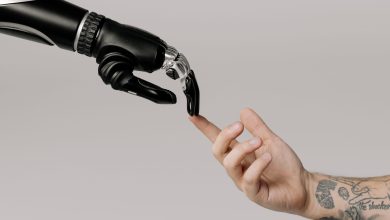
The next wave is different. Physical AI is intelligence that crosses the boundary of the computer and engages with the physical world. Think of two cars approaching an intersection. A chatbot can describe the risk. Physical AI has to understand it, in real time, with real consequences. NVIDIA has made physical AI a centrepiece of its roadmap, building vision language models designed to reason about the physical world. The major labs and a wave of smaller companies are chasing the same goal. It is quickly becoming the next defining race in AI.
I’ve spent years at the meeting point of these two stories, building AI that analyses bridges, tunnels and maritime structures across 15 US states. What that work teaches you is how much hinges on one question: is a defect stable or accelerating? A stable one can wait for next year’s budget cycle. An accelerating one can force an emergency closure that strands commuters and freight and costs many times the planned repair. American agencies sit on petabytes of inspection imagery that could answer that question, yet most funding decisions are still made from snapshots, not trajectories.
And this is where the bar sits highest. When an AI serves a team stretched across hundreds of structures, its conclusions can’t just be delivered, they have to be verifiable, because trust in those conclusions is what the whole system rests on.
Which brings me to the lesson: in the physical world, you cannot deploy AI without justification.
When a system tells an engineer that a beam has deteriorated, “the model said so” is not an acceptable answer. The engineer says: show me why. And they are right to say it. Public safety and millions of dollars hang on these calls. The AI has to show its work. The images, the comparison across years, the evidence behind every conclusion. The engineer must be able to interrogate the finding, not just receive it.
The best analogy is medicine. Suppose I told you I could predict your health five years from now based on all the information you’ve given me. Would you change your life on my say-so? Of course not. You’d want to know what the prediction rests on. Your doctor would demand it too. Physicians don’t act on unexplained outputs. Neither do civil engineers. Any physical AI that expects professionals to act on its conclusions has to earn that trust with evidence, every single time.
This is the discipline the generative AI world mostly skipped. When a chatbot hallucinates a fact, someone is mildly misled. When physical AI gets a bridge wrong, people can get hurt. The domains where physical AI matters most, infrastructure, transport, energy, medicine, are exactly the domains where professionals are trained to reject unjustified claims. That is a feature of those professions, and physical AI has to meet it rather than argue with it.
There’s a bigger shift coming that makes this urgent. Within five years, we will have enough accumulated data on the physical world for AI to reason about it the way today’s models reason about text. Every inspection photo, every sensor reading, every maintenance record becomes part of a living picture of the built environment. The tools emerging now, including vision language models that can reason about what they see, will meet that data head on. The race will be won by whoever combines the two with conclusions professionals can actually verify.
My advice to anyone building in physical AI, whether you’re a three-person startup or a frontier lab, is simple. The model is the easy part. The hard part is justification. Find the professionals in your domain, the doctors, the inspectors, the engineers, and learn what it takes for them to trust a machine’s conclusion about the physical world. Build that into your system from the start, because you cannot bolt it on later.
America’s infrastructure crisis and AI’s next frontier are converging, and the timing could hardly be better. But the technology only helps if the professionals responsible for public safety can believe what it tells them. The generative wave taught machines to talk. The physical wave has to teach them to be believed.
Saar Dickman is CEO of Dynamic Infrastructure, an AI company that helps transportation agencies in 15 states and internationally track structural deterioration across bridges, tunnels and roadways. It has analyzed more than 7,000 large infrastructure structures and tens of thousands of smaller elements, including culverts, small bridges, and retaining walls.