
The three labs that spent 2026 racing each other spent this past week trying to look like they’re on the same team.
On Tuesday, OpenAI’s Chris Lehane told reporters in Washington that OpenAI, Anthropic and Google DeepMind have been coordinating on AI safety for a number of weeks; a disclosure that followed an essay from Anthropic’s CEO calling for the industry to slow down long enough to understand what it’s actually built.
Sam Altman said OpenAI would join Anthropic in embedding third-party evaluators inside its operations. Demis Hassabis signed on too.
President Trump, for his part, called the whole thing a hoax in a string of social media posts on Monday.
Whatever this turns into, a standards body or a press cycle that disappears by next month, it’s the clearest signal yet that 2026 is the year AI stopped being three companies’ race and started being an industry’s liability.
Everything below is smaller than that story. It’s also where the actual work is happening.
Below are some of the AI news and highlights to watch so far in September.

A nomination worth noting. Erin O’Hare has been nominated for the Woman of Impact in Life Sciences Award at Articulate 2026.
She’s spent nearly two decades moving between pharmaceutical operations and management consulting, building a career that runs through Medical Affairs, Commercial, and Market Access, including the unglamorous connective tissue that determines whether good science actually reaches patients.
As Senior Director, Global Operations and Medical Excellence at Madrigal Pharmaceuticals, O’Hare now sits at the intersection of strategy and execution, helping teams cut through complex information to move initiatives forward across therapeutic areas.
It’s the kind of cross-functional leadership that rarely gets a stage, which is exactly why Prezent‘s Articulate 2026: The Communication Revolution built one for it.

Delivery over access. Walnut Creek’s Solvd, Inc. was named a Select Partner in the OpenAI Partner Network this week, and the credential matters more than the headline suggests. Solvd isn’t chasing model access, rather it’s betting that the bottleneck in enterprise AI was never the model. McKinsey found 89% of organizations now use AI in some form; CIO.com found only 19% say their AI initiatives have met business goals.
That gap is Solvd’s business plan. Backed by Siguler Guff and sharpened by acquisitions of Tooploox and EastBanc Technologies, the firm structures its OpenAI work into three stages, including an engineering baseline, production confidence-building, and results measured against numbers agreed upon before the work starts, not after.
Its chief scientist, Tomasz Trzciński, co-authored the paper that won Best Paper at NeurIPS 2025. That’s not marketing copy; that’s the kind of credential that makes fintech and hospitality clients pick up the phone.
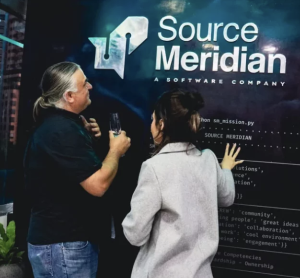
Medellín makes its case. Tech Sphere returned to Medellín this month, and Source Meridian founder Mike Hoey, fifteen years into building the company from that city rather than from Miami or Austin, opened with a line that stuck: “Today we’re starting Tech Sphere talking about a landscape that’s changed more in the last two years than in the entire previous decade.”
He wasn’t speculating. KPMG’s Colombia Tech Report 2026 puts the city at roughly 698 active tech companies, up 28.5% in two years, and Medellín now ranks first in Latin America for startups per capita, ahead of São Paulo and Santiago.
The event’s companion piece, the Tech Sphere Challenge, had finalists build a voice AI agent for post-operative patient follow-up under HIPAA and HITRUST constraints, with Anthropic participating as an allied organization and $500 of the $1,000 prize pool paid out in Claude credit.
Higher ed’s help desk quietly modernizes. BlackBeltHelp now runs 24×7 AI support across 130-plus institutions, including Columbia and Cornell, handling more than 8 million helpdesk interactions a year.
The company’s first published production numbers for its AI Front Desk product, now live at 70-plus schools, put a real figure on the labor it’s absorbing: roughly 1,024 hours of Tier 1 phone work removed from a single campus’s queue, about half a technician’s year handed back for advising and escalations instead of password resets.
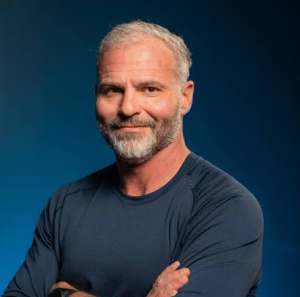
Robots, but the human keeps the contract. SkyPSI launched this quarter with $5 million of founder Vic Pellicano’s own money — no VC round, no press-release euphemism about “believing in the mission.”
Pellicano went from homeless to two tech exits, and his pitch for SkyPSI inverts the usual robotics-and-jobs anxiety: the company puts commercial cleaning drones in independent operators’ hands, trains and certifies them, and books them onto contracts SkyPSI has already sold, the operator’s name stays on the truck.
A new SkyPSI report this week extends the same logic to contractors broadly, arguing AI is quietly removing the administrative overhead that used to require hiring an office manager before a tradesperson could scale.

Vegas, insurance, and the agentic layer. GFT Canada CEO André Gagné will be at Guidewire Connections 2026 in Las Vegas next month, where P&C insurers are converging on the same question property-tech is already answering: what does AI actually change in claims and underwriting workflows, versus what just gets a new interface.
Get Covered believes it has a working answer. Its platform now runs 16 AI agents, including chasing missing documents, classifying insurance paperwork, flagging vendor compliance gaps, predicting lapses, across more than 3 million rental units.
COO Rick Folgmann’s point in a recent industry discussion was less about the agents themselves than the discipline behind them: “we focus on building repeatable, scalable workflows early, while the organization is still flexible enough to change.”
That’s a harder sell than a demo, and a more durable one.
Legal, advertising, and payroll all found their angle. Altorney‘s MARC review engine reported a Fortune 500 client cutting document review costs by 62% and hosting costs by 78% on a 200,000-document matter.
CEO Shimmy Messing made the sharper point in Forbes this month, on why enterprises can’t treat AI agents as a convenience: “Autonomous systems can access sensitive data, they can make decisions, they can take actions across critical business systems, and that creates significant risk to privacy, security, and liability exposure.”

ADvendio joined AgenticAdvertising.org this month to help build the Ad Context Protocol, the emerging standard letting AI buying and selling agents negotiate directly. CTO Julian Ahrends is betting that interoperability, not another proprietary agent, is what makes agentic ad-buying trustworthy.
UpFirst, meanwhile, is proving the small end of the market wants something simpler: per-call rather than per-minute pricing, built by the team behind SimpleTexting, with a live number the public can call to hear the AI answer before they buy.
And Ontop‘s AI Contract agent and Aura support bot are part of a broader story about the company: a fintech success story that today is supporting more than $1 billion in payments processed, AI as the orchestration layer for an entire global payroll cycle, not a chatbot bolted onto one.
QuickBlox is chasing a similar shift in a different vertical: its healthcare AI Agents now handle patient intake, surface clinical context mid-consultation, and trigger post-visit follow-up automatically, with CEO Nate MacLeitch making the case this year that the real test for these tools isn’t the demo, it’s what happens at the exact moment the AI has to hand off to a human. 360 Health Data is another life sciences AI venture to watch.
None of these are the AI-safety talks in Washington. But they’re the reason those talks matter.