If you’re an e-commerce owner, you know that high-resolution, quality images are important — they catch customers’ attention and significantly raise conversion rates and sales. But even the best product photography has a ceiling on the work it can do in a feed or a paid campaign. Static images, however beautifully shot and enhanced, compete against video content at a structural disadvantage on every major platform in 2026.
The algorithm math is unambiguous: video content receives more organic distribution, holds attention longer, and converts at higher rates in paid social contexts across Instagram, TikTok, and Meta’s advertising ecosystem. Countless studies show that visual content doesn’t just get more views — it drives engagement. And video is the format driving the most engagement by a considerable margin.
The disconnect for most e-commerce brands is the production step. You’ve invested in professional product photography. You’ve enhanced and optimized those images. They look genuinely good. But turning them into video has historically meant a separate production effort — filming, editing, motion graphics work — that doesn’t always fit the timeline or budget of an active product catalog.
Reference-to-video AI closes that gap directly.
What Reference to Video AI Does for Product Content
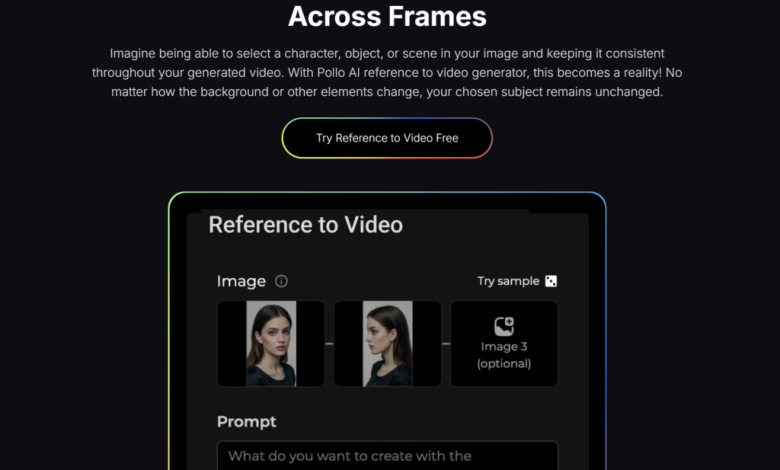
The capability is more specific and more useful than general AI video generation for e-commerce applications. Rather than generating video from a text description that produces generic output, reference-to-video generation uses your existing product images as the visual anchor — the AI generates motion, depth, and video treatment that’s informed by and consistent with the source imagery you provide.

Pollo AI’s dedicated reference to video AI tool inside its Creative Studio handles this workflow. For e-commerce brands that have invested in quality product photography — whether original shoots or AI-enhanced imagery — this means those existing assets become the starting point for video production rather than a separate content creation effort. The output shares the visual language of your product images because it’s generated from them, which is precisely the brand consistency that advertising and listing video requires.
AI can help predict which types of images will perform best with certain demographics, enabling content creators to fine-tune their visuals to the preferences and behaviors of their followers. Reference-to-video generation extends this principle: your highest-performing product images — the ones you already know resonate with your audience — become the foundation for video content that carries that proven visual appeal into a format that reaches further and converts better.
Pollo AI’s multi-model approach within the Creative Studio means different reference images and video objectives can be matched to the generation model that handles each best, all under shared credits. For e-commerce teams producing across different product categories — where a cosmetics product image requires different motion treatment than a fashion item or a home goods piece — that flexibility produces more consistently appropriate output than forcing all product types through a single model’s aesthetic range.
The E-Commerce Video Content Gap This Addresses
AI is changing the game when it comes to social media channels and content production, particularly for e-commerce success. The specific gap that reference-to-video generation addresses is the one between image-based product content and video-based product content — which in practice means the gap between content that performs adequately and content that competes for the top positions in paid and organic distribution.
Product listing video — the kind that appears on a product detail page to show the item in motion or in use — consistently improves add-to-cart rates across product categories. Social commerce video — short clips that show a product in a lifestyle context for TikTok or Instagram — drives discovery for customers who haven’t specifically searched for the product. Ad creative video — animated versions of product imagery for Meta or Google shopping campaigns — outperforms static image creative in most categories for click-through and conversion metrics.
All three of these video types can be generated from existing product photography through reference-to-video AI, which means the investment already made in image quality translates directly into video content without starting a new production process from scratch.
Marketing Studio: From Product Video to Campaign-Ready Ad Creative
Generating video from a product image reference is one step in a workflow that typically ends with that video going into an advertising campaign or an organic content calendar. Pollo AI’s Marketing Studio extends this capability toward the campaign deployment step — producing platform-ready advertising formats within the same platform, calibrated for the format specifications and pacing requirements of paid social rather than just visual quality in isolation.
Brands can leverage AI tools to ensure consistency and visual appeal across campaigns, creating a more visually engaging and professional appearance of content that enhances the overall impact and fosters a positive perception of the brand among consumers. The workflow from enhanced product image to reference-based video to campaign-ready ad creative becomes a connected pipeline rather than a series of handoffs between separate tools and production processes.
Bylo AI and the Broader Visual Content Stack

Understanding the range of AI visual tools available helps e-commerce teams build more deliberate production workflows. Bylo AI offers AI image generation with its own model approach and aesthetic range — relevant for brands whose content needs include generating original imagery from text descriptions rather than transforming existing product photography into video. For e-commerce operations that need both original image generation and reference-based video production, understanding which tool addresses which production challenge helps you allocate work appropriately.
Managing visual assets across multiple platforms — Instagram, LinkedIn, X, and Pinterest — means resizing, formatting, and enhancing the same visual asset multiple times. Marketing automation specialists are moving away from manual editing and building more efficient workflows. Reference-to-video generation fits into this automation logic: rather than treating product image-to-video conversion as a manual production task, it becomes a systematic workflow step that can be applied consistently across the full product catalog.
Building a Reference-Based Video Workflow for E-Commerce
The practical starting point is identifying which product images in your existing library are strongest as reference material — highest resolution, clearest product representation, most compelling compositions. These become the priority assets for video generation, and the output quality from reference-to-video generation correlates directly with the quality of the source image.
From there, the workflow is straightforward: select the strongest product image, specify the motion direction and video context you need, generate, review for brand consistency and platform fit, and deploy. Taking advantage of AI connectivity to run a more efficient and innovative business is the operational principle — and reference-to-video generation is one of the clearest applications of that principle for e-commerce brands that have already invested in product photography quality and want to extract more value from that investment across more content formats and channels.
The post Reference to Video AI for E-Commerce: How to Turn Your Best Product Images Into High-Converting Video appeared first on .