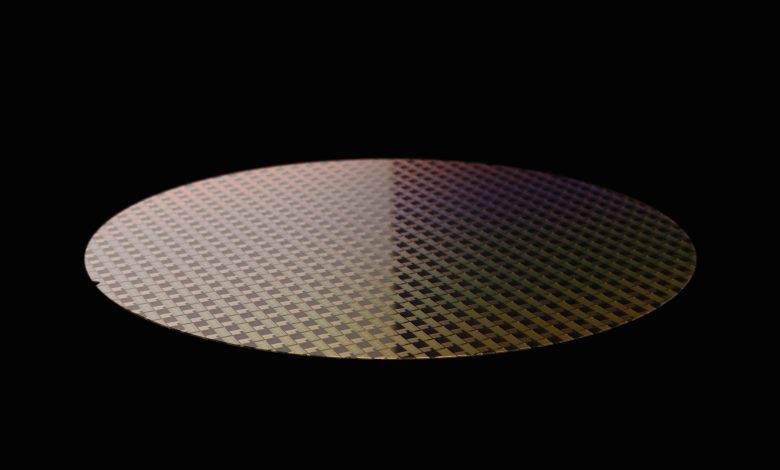
Moore’s Law famously observes that the number of transistors that could be placed on an integrated circuit would double roughly every eighteen months to two years, but it was never simply an observation about transistors. It became the organizing principle of the modern semiconductor industry. For more than fifty years, the expectation that semiconductor technology would deliver ever greater performance at lower cost, generation after generation, shaped investment, manufacturing and product development across the entire computing ecosystem.
Quantum computing now faces the challenge of establishing a similarly predictable path to scale.
Much of the industry has settled on something in the range of one hundred thousand to one million physical qubits, the fundamental building blocks of a quantum computer, as the milestone that matters. Individual qubits are incredibly powerful, but they are also prone to errors. Before a quantum computer can reliably solve useful problems, many physical qubits must work together to create a much smaller number of reliable, error-corrected qubits (called ‘logical qubits’). Based on today’s most mature approaches, that requires systems with around one million physical qubits. At that point, quantum computers begin tackling commercially valuable problems such as drug discovery, advanced materials design and complex optimization.
Reaching that scale would be one of the most important milestones in the history of computing. But one million qubits should be viewed as the beginning of the next phase, not the finish line. The technologies that transform society are the ones that can continue improving long after the first major milestone has been reached.
The quantum industry doesn’t simply need one million qubits. It needs its own Moore’s Law moment.
The wrong finish line
The history of classical computing illustrates why. Intel’s first commercial microprocessor, the 4004, contained just 2,300 transistors. Today’s CPUs contain tens of billions, while the AI accelerators driving modern data centers contain even more. Every new computing paradigm, from personal computers to smartphones to artificial intelligence, demanded orders of magnitude more transistors than the one before. Moore’s Law gave the industry confidence that this scaling would continue, allowing companies to invest not only in the next generation of technology, but the generation after that.
If quantum computing is to have a similar economic impact, it will need to follow the same pattern. One million qubits may unlock the first commercially valuable applications. As systems scale to ten million qubits and beyond, they are expected to unlock increasingly complex classes of problems. A hundred million or a billion will enable applications that are difficult to predict today, just as few engineers in the 1970s imagined smartphones or generative AI. The question worth asking of any quantum company is not how many qubits it plans to have in five years, but what the roadmap looks like after that.
Where scaling becomes difficult
This is where the conversation shifts from physics to economics.
In classical computing, each successive generation delivered more computing power at a lower cost per transistor. The economic case strengthened as the technology scaled. Every quantum architecture must eventually answer the same question: can it continue scaling without the supporting infrastructure becoming prohibitively large, expensive, or complex?
For many approaches, this becomes increasingly difficult. Superconducting systems require operation at temperatures colder than deep space inside dilution refrigerators that are already close to full at today’s qubit counts. Scaling towards utility-scale systems means building substantially larger cryogenic infrastructure or networking multiple systems together, increasing cost and engineering complexity with every step.
Trapped-ion systems face a similar challenge. As ion chains become larger, they require increasingly sophisticated modular architectures connected through photonic links. Neutral atom systems require ever more complex optical control as arrays expand, while photonic approaches must accommodate growing numbers of photon sources, detectors, and switching components as systems become larger.
These are remarkable engineering achievements, but they share a common characteristic: as the number of qubits increases, the infrastructure required to support them grows as well.
That is fundamentally different from the scaling behavior that made classical computing economically transformative.
The architecture built for Moore’s Law
Silicon spin qubits offer a fundamentally different approach to scaling quantum computers.
Each silicon spin qubit is roughly the size of a transistor. Modern semiconductor foundries already manufacture processors containing tens of billions of transistors on a single chip, at commercial scale and with yield economics that work. Much of the manufacturing ecosystem capable of supporting silicon quantum processors already exists, because the semiconductor industry has spent more than fifty years building it.
This changes the economics of scaling.
Rather than adding more infrastructure as qubit count increases, silicon’s advantage lies in increasing the number of qubits that can be integrated onto a single chip. Although today’s prototype silicon quantum processors contain only a handful of qubits, they already use the same class of cryogenic system expected to support future processors containing millions of qubits. The qubit density increases, while the surrounding infrastructure changes comparatively little.
The challenge for silicon has never been whether the manufacturing platform exists. It has been demonstrating that the qubit physics continues to perform inside a commercial CMOS process. That is precisely the engineering work being undertaken today. Each increase in qubit count provides another demonstration that the qubit physics and the manufacturing process continue to scale together. That is what determines whether one million qubits becomes ten million, and ten million becomes one hundred million.
That is what a Moore’s Law equivalent for quantum computing looks like.
Quantum’s Moore’s Law moment
One million qubits is an engineering milestone; Moore’s Law is an industrial one.
The companies that shaped classical computing did more than build remarkable chips. They established a manufacturing curve that made each generation more capable, more affordable and more widely deployable than the last. Whether quantum computing ultimately follows its own Moore’s Law remains to be seen. But history suggests the technologies that transform industries are those that establish a durable path to continuous improvement, not simply those that reach the first milestone.