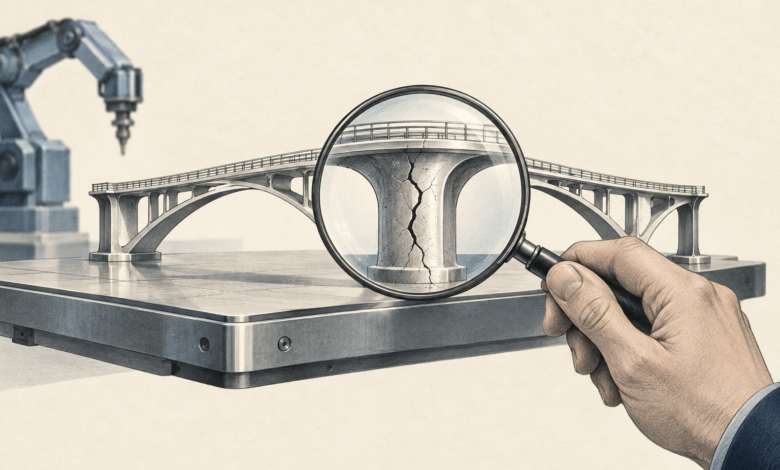
It’s a story that’s becoming more common as AI tools are implemented in the workplace: a small logistics company built its entire marketing strategy in under an hour using nothing but one of them. Audience targets, channels, a six-week content calendar, even sample ad copy for each channel, all ready to go. It read like something an agency would have billed five figures for.
But when someone on the team asked, “Which of these segments actually buys from the company today?”, the room went quiet. The document had segments with reasoning under each one. However, nobody could say which parts were true and which parts were the model filling a gap with something that sounded right. The company assumed that a document that looked finished was actually finished.
That logistics company isn’t unique. In just minutes, almost anyone can prompt one of these tools and get back something that looks legitimate. The bar for looking competent has dropped to almost nothing, which means looking competent is no longer worth much.
What separates one result from another now is whoever reads the output closely enough to catch what the prompt writer missed.
That’s judgment. It’s turning into the actual skill people get paid for.
Looking finished isn’t the same as being finished
AI is good at looking finished. Ask it for a marketing plan, a codebase, a business strategy, and it hands back something that reads like a professional built it: the right sections, in the right order, with reasoning attached to each one.
That’s exactly what tripped up the team at that logistics company. The model wasn’t reasoning about their actual customers. It was predicting the next plausible sentence based on every marketing plan like it that came before. The document could be structured perfectly and still be wrong, because looking right and being right aren’t the same test.
Someone still has to read the plan and ask the question that finally got asked in that room: “Does this match what we actually know to be true?” Asking that question is the real work. The sections, the formatting, the confident tone: that part was never the hard part.
Chasing every new tool won’t set you apart
A lot of professionals spend their energy in the wrong place. Engineers and creators often chase every new model release, plugin and prompting trick, assuming that whoever learns the tool first wins. Knowing the tools matters. It just doesn’t separate anyone anymore, because everyone has access to the same tools.
Knowing how to use a tool used to be enough on its own to make someone valuable. Today it just gets someone in the room. A 2026 Upwork study on in-demand skills found hiring leaders prioritizing judgment and creative problem-solving over pure technical tool skills, even as AI adoption grows across every function.
The advantage now belongs to the person who can look at ten outputs from the same tool and pick the one that’s actually right. That’s a different skill than steering the tool well. It’s knowing when something is excellent, when it’s mediocre, and when it’s confidently wrong.
Where mentorship still matters
This is where mentorship earns its keep. When feedback increasingly comes from a model, guidance from a person who has actually lived through the work is what closes the gap that’s left over. AI can hand someone data. A mentor hands them perspective built from getting it wrong themselves first.
Mentorship has always been about sharpening someone’s judgment. Information alone was never the point. A good mentor pushes back on a mentee’s assumptions, points out the blind spots they can’t see on their own, and makes them defend their own thinking instead of just showing them which button to press. That’s the part a model can’t do, because it requires having actually lived through the work.
Research from Harvard Business School studied entrepreneurs using an AI business advisor and found the tool made the strong performers stronger, but did little for the ones who were already struggling. It could sharpen a good idea. It couldn’t supply the judgment to fix a bad one and it couldn’t tell a piece of writing whether it would actually land with the person reading it.
There are a few takeaways to remember when using AI tools:
- AI provides “median” feedback: it’ll never lead to something outstanding, particularly strong or out of the norm.
- AI is agreeable: a human mentor will call it out if something is weak or nonsensical.
- AI lacks accountability: it praises completed work, but backtracks immediately when the results are wrong.
What this means for how people get paid
Pure execution is getting cheaper by the month. The people who keep getting paid well are the ones who can look at a stack of AI output and tell, fast, which parts are actually right.
Learning to prompt well is table stakes now, about as valuable as knowing how to use a search engine was twenty years ago. It gets someone in the door. What decides how far they get after that is whether they can catch a mistake the model made confidently, fix it, and explain why the fix matters.
The machine can produce the draft. It still cannot judge whether that draft is any good.