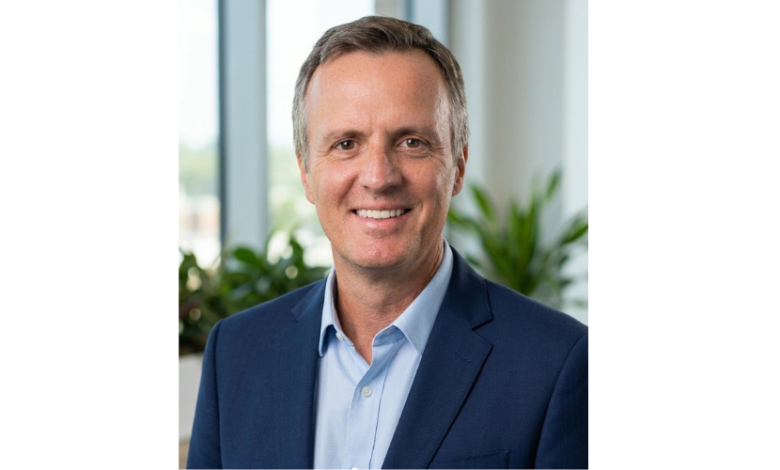
With more than 27 years in the global data centre industry, Martin Kipping has led international organisations, overseen more than 800 infrastructure projects, and helped companies expand across Europe, North America, Asia, the Middle East and Africa. Today, as Vice President and Executive Partner at MK Datacenter Solutions (MKDS), he advises businesses on international growth, organisational development, and complex digital infrastructure. Drawing on nearly three decades at the forefront of the industry, he shares key insights into strategic leadership, high-stakes deployments, and what it takes to build infrastructure organisations that last.
You began your career as an architect before moving into data centres. Was that an unusual path?
Looking back, I think architecture gave me a lot of the skillset I use in my executive roles on a daily basis. Architecture teaches you to understand the whole system rather than just one component. You have to learn to balance design, engineering, budgets, timelines and the needs of the customer. When I moved into project management, that perspective turned out to be valuable because data centres are also about bringing many disciplines together into one reliable solution.
Did you always see yourself becoming an international executive?
Not at all. My first job was managing modular server room projects in Germany. I simply enjoyed solving problems and delivering projects successfully and, to be honest, I could have stayed there. Over time, though, I became more involved in customer discussions and the commercial side of the business. That sparked my interest in business development. My career also expanded from Germany to Europe, then Asia and the Americas. So what started as project management gradually became leadership, organisational development and international strategy.
During your career you’ve overseen more than 800 projects worldwide. What have those experiences taught you?
That no two projects are ever truly the same. The technology changes, markets constantly change, and every customer has its own priorities. But one thing remains constant: people want someone they can trust. Whether you’re building infrastructure for airports, defence, healthcare, utilities, or hyperscale data centres, relationships matter just as much as your technical expertise.
Looking at those 800+ projects, you’ve executed some remarkably complex infrastructure initiatives—from underground mines to high-security defense networks. Could you share a few standout examples?
When you operate globally, you encounter extreme constraints that force real architectural and operational innovation. A great example was the Lefdal Mine Data Center in Norway, where we helped develop a modular data centre concept under the industrialisation of IT inside an already existing underground mine structure—one of the greenest and most unique facilities in Europe.
Another high-pressure benchmark was deploying a mission-critical data centre at OR Tambo International Airport for the 2010 Soccer World Cup in South Africa. We designed, deployed, and fully commissioned that facility in just three months under strict international deadlines, managing the overall project out of Germany with support from local partners.
In India, we tackled a massive defense initiative, designing and deploying 45 separate data centres along the Indian coastline. Projects like those leave zero room for operational error; they prove that when strict methodologies meet modular engineering, you can execute virtually anywhere in the world.
Your career includes responsibility for budgets exceeding USD 100 million, major organisational transformations and partnerships with companies such as IBM, HPE, ABB and Stulz. What ties all of those experiences together?
For me it’s always been about building structures that enable people and companies to succeed. Whatever the company, whatever the partnership, that’s what I do. At Rittal we established global competence centres across Germany, Lithuania, India, China and the US while transforming the organisation to support international growth. Those experiences taught me that successful companies don’t simply react to opportunities, they create systems that allow them to scale consistently. A major part of that is the creation of an Ecosystem of Partners which helps you to execute and scale. A global network with regional and local resources are extremely important to improve quality and competitiveness.
You have been described as someone who sees the big picture. What does that mean in practice?
Simple. It means never losing sight of the overall objective while dealing with countless small details. Large projects can become overwhelming if you look at everything at once. It’s easy to get lost in the minutiae. I’ve learned to slice things up, dividing major challenges into manageable parts, and then monitor progress carefully and keep everyone aligned and on board. I often think of Nelson Mandela’s quote: “It always seems impossible until it’s done.” That has stayed with me throughout my career. You can’t go wrong with listening to Nelson Mandela.
You have been heavily involved in modular and containerised data centres. Why do you believe they represent the future?
Customers increasingly need infrastructure that can be deployed quickly without sacrificing reliability. I’m not the only one who has said this. The writing has been on the wall for years. What I have recognised, personally, is that many projects shared similar requirements, so instead of designing everything from scratch we started developing standardised modular solutions. Standardisation improves quality, it shortens delivery times and it makes international deployment easier. It also creates a stronger foundation for AI- and Cloud-Services and future expansion.
You’ve worked with multicultural teams across virtually every time zone. What qualities define an effective international leader?
Curiosity is important. You need to understand different cultures and different ways of thinking and you will never be able to do that without being open and asking questions. Equally important is communication. I’ve found that teams perform best when their responsibilities are clear, the decisions are transparent, and everyone understands the common objective. Good leadership isn’t about controlling people; it’s about creating an environment where talented people can shine.
Today your work at MK Datacenter Solutions focuses on helping companies during periods of growth and transformation. What do you find rewarding about those assignments?
In my experience many organisations reach a point where they need experienced leadership to bridge strategy and execution. Sometimes that means building an international organisation, sometimes that means restructuring operations or entering new markets. I enjoy stepping into those situations because you can make a real difference. My role is often to set up the structures, governance, and partnerships that allow companies to continue growing after my tenure ends.
You’ve also taken on executive roles in India and supported business expansion in Brazil. Do those experiences reinforce the importance of adaptability?
Absolutely, they do. Every region has its own business culture, every region has its own customer expectations and pace of development. You can’t simply copy a successful model from one country to another. There is no way to paste India onto Brazil or vice versa. What you can transfer, however, are sound leadership principles: integrity, accountability, respect and clear communication. Those values are universal.
Your leadership philosophy places a great deal of emphasis on trust. Why is that?
Trust is never a given in any business, in any industry. It is earned bit by bit over time and becomes the foundation for every successful partnership. Would you do business with someone who was untrustworthy? Obviously not. Trust is essential. Customers and colleagues often tell me they know they can rely on me, and that’s something I value deeply. Technical knowledge is important too, but integrity, transparency and reliability are what sustain long-term relationships. And this is what we are looking for together with our customers and partners.
What would you like MK Datacenter Solutions to become?
My vision is this: I want to build a truly global organisation, one with an excellent reputation for helping companies scale internationally. I want MKDS to be recognised as a trusted strategic and operational partner, especially for startups and SMEs that are looking to grow. I believe that if we consistently help our customers achieve their goals while also building strong partnerships across the data centre ecosystem, success will come naturally.
What advice would you give someone just getting started in this industry?
My advice would be to never stop learning. Don’t be afraid to step outside your comfort zone either. I think every new challenge is an opportunity that can teach you something, because, throughout my career I’ve discovered that the biggest opportunities often begin with a little uncertainty. So take that jump, make the leap, don’t be afraid, don’t look back. And enjoy it.