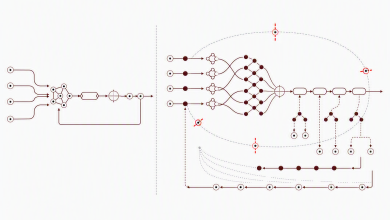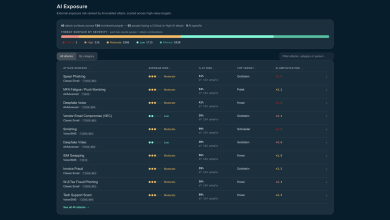
The enterprise landscape is shifting. While ERPs were designed to provide end-to-end visibility, most have become rigid systems of record hampered by manual data entry, rigid process design and workflows that crumbled the moment reality deviated from the blueprint.
No matter how clean the initial design, every business process eventually collides with reality. Workflows that made sense six months ago often fail to account for new variables. A shift from consumables to equipment loans, the introduction of complex payroll rules for a new class of hires or work orders that didn’t exist during the planning phase. A new type of work order was required to be processed upon the purchase of all new equipment. Business activities that changed since the ERP was planned and will take a year or more to address.
Every business process, no matter how cleanly it is designed, eventually encounters situations that fall outside the standard workflow – or the workflow as it was six months ago. Work that there was no budget or time to include when the ERP was planned.
Corner cases are ordinary individually. Collectively, numbering in the thousands across any enterprise corner cases are the silent killers of ERP efficiency. Because legacy platforms are built for perfect, ‘clean’ transactions, they struggle with the thousands of exceptions that occur in real-world operations. These deviations don’t just cause manual bottlenecks. They often slip through the cracks, quietly corrupting downstream data and undermining your system of record.
A general perception in the industry was that ERP systems were great at handling the thirty percent of transactions that were perfectly normal. The other seventy percent required someone to intervene, override or just quietly patch things up after the fact.
The result is an entire network of shadow workflows – spreadsheets, email chains and informal workarounds – that exist precisely because the ERP can’t handle the complexity of real business. These workarounds are invisible to upper management, unaudited and impossible to optimize. They also represent enormous financial risk. When a corner case isn’t caught, it often means a payment posted to the wrong ledger, a shipment that bypasses compliance controls or an inventory record that diverges from physical reality.
Agentic AI to the Rescue?
In 2026, agentic AI is being hailed as the architecture that may finally deliver on what ERP originally promised. Rather than layering another brittle automation script within an already strained system, agentic AI deploys autonomous agents capable of reasoning through complexity – not just executing it. Where traditional process automation collapses the moment a tax regulation shifts or an invoice arrives in an unexpected format, agentic AI is goal-oriented by design. Give an agent an objective, like reconciling all supplier payments for Q3 and it possesses the reasoning capability to navigate software interfaces, interpret ambiguous data and adapt on the fly. It doesn’t wait to be told what changed. It figures it out…usually.
Yet for all its promise, agentic AI has blind spots and limitations that IT leaders and the C-Suite would be foolish to ignore.
Where Agentic AI Stalls – Digitizing Workflows
When an agentic AI tool is tasked with digitizing a business process, it can only work from what it can see. This is the data that exists in systems, the documentation that was written down and the workflows that were formally designed.
What it cannot see – and what no algorithm has yet reliably surfaced – are the shadow processes that employees have quietly built around ERP limitations. For example, the workaround a senior accounts payable clerk runs every week to reconcile a vendor discrepancy that the system never learned to handle. The informal approval chain that exists in a group chat because the formal one is too slow.
In many companies, these hidden workflows have grown beyond being corner cases. Instead, they now constitute the actual operating system of the business. An agentic AI that automates the documented process without uncovering the undocumented one does not eliminate the workaround – it simply runs alongside it, creating a new layer of complexity on top of an old one.
Where Agentic AI Stalls – Digitizing AI’s Lack of Persistent Memory
Another agentic AI limitation is more structural and, in some respects, is more problematic. Agentic AI, as it is currently architected in the vast majority of enterprise deployments, lacks persistent memory. Each task an agent executes is largely stateless or it has some memory but as time goes on that memory gets more and more compressed and less detailed.
This means the agent completes its objective, and the contextual reasoning it applied to get there dissolves. It does not remember that last quarter’s supplier reconciliation surfaced a recurring discrepancy with a specific vendor. It does not retain the judgment call it made when an invoice format fell outside its training distribution. It does not accumulate institutional knowledge the way a seasoned employee does, building over time a richer, more nuanced understanding of the business’s particular quirks and failure modes. In some cases, summaries of the past problems and solutions are fed back into the agent and this helps, but because of the variety of issues, typically the agent gets confused or conflates the problems.
This means that corner cases resolved today must be re-reasoned from scratch tomorrow. The organizational intelligence gained through each agent interaction evaporates rather than compounds. And it may not be a repeatable outcome.
For enterprises accustomed to measuring the value of experienced staff in decades of accumulated context, this is not a minor limitation. It is a fundamental architectural gap that the industry has not yet closed.
If You Are Trying to Implement Agents Unsuccessfully, You Are Not Alone
Despite $30–40 billion poured into enterprise generative AI, the returns have been nearly invisible at the organizational level. Last year, an MIT study found 95% of companies are seeing no measurable impact from AI or agentics on their bottom line – with productivity gains confined largely to individual workers rather than translating into P&L performance.
The failure rate for enterprise-grade systems – both custom-built and vendor-sold – is disheartening. Of the 60% of organizations that evaluated such tools, only one in five made it to a pilot stage, and only 5% reached full production. The culprits are technical and strategic. Brittle workflows that break under real-world conditions and systems incapable of learning from operational context.
Alternative Needed
The missing link in enterprise AI isn’t more autonomy. It’s memory. Experts increasingly argue that businesses don’t just need agents – they need systems capable of retaining contextual memory across every session. Without the ability to learn from prior interactions and evolve alongside their environment, even the most sophisticated agents are merely powerful tools with amnesia. They can execute tasks in the moment, but they remain blind to the institutional knowledge that makes that execution meaningful. True enterprise utility won’t come from agents that are simply faster or more autonomous. It will come from an agent alternative that can contextually remember.
About the Author:
Ken Fischer is the CEO of Atigro, the proven ERP transformation firm that pairs its modular augmentation capabilities with AI-native frameworks. Atigro’s experience and capabilities generate the rapid development and provisioning of new enterprise software functionality that meets dynamically changing business processes.