
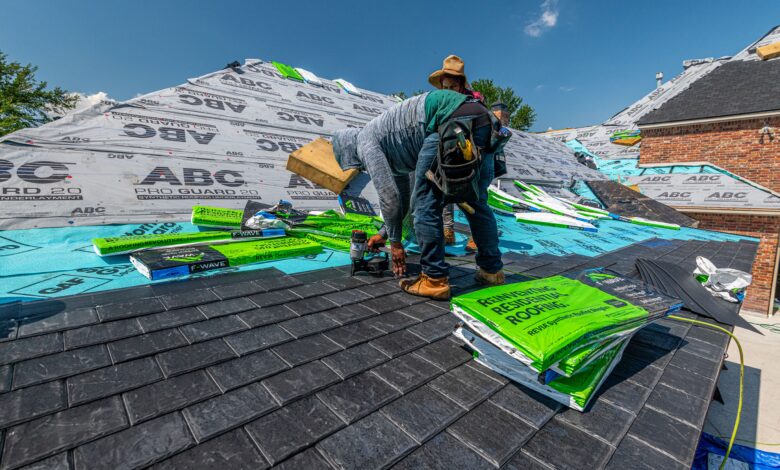
Roofing rarely comes up in conversations about AI adoption, but the industry is quickly becoming a valuable case study for how targeted AI solutions can reshape field-based work.
As Tyler Folkman, Chief AI Officer at JobNimbus, explains, roofing contractors’ growing familiarity with CRMs is laying the foundation for AI across a variety of tasks. The natural next step for roofers: using AI to redesign their workflows so their jobs run more efficiently.
The Roofing Industry’s Tech Adoption
Folkman leads AI strategy at JobNimbus, a CRM purpose-built for roofing and home exteriors, and from where he sits, roofing’s appetite for AI has been building for years. JobNimbus’s 2026 Peak Performance roofing report revealed that 79% of roofers use a CRM to help run their business. And increasingly, roofers are turning to platforms that can effectively integrate with the other tools and data sources they rely on.
“Owners want to know where their business stands without chasing down five different people for the answer,” Folkman explains. “A connected CRM gives them that. The numbers in their reports come from the same data their crews are updating in the field, so they can delegate more and catch issues early.”
One important element of these CRMs is a connected system that works seamlessly across both mobile and desktop use, while linking each stage of a contractor’s workflow. With so much of roofing work happening far from the office, mobile compatibility has proven essential to growing tech adoption in contractor businesses.
Where AI Is Already Helping Roofers
While CRMs serve as the foundation for tech use in roofing, Folkman’s focus is on what AI can add once it’s built into the platform. “We’ve begun to roll out a variety of AI features in our own CRM, focused on the kinds of tasks where roofers benefit most from that kind of support,” he explains.
“For example, we recently introduced Analytics AI, which lets roofers ask questions about their data in plain language and get answers pulled straight from their own numbers. Owners can quickly find out which invoices are past due or which lead sources are driving the most sales and since the answers come from the data their teams already work in, they can act on them with confidence.”
Automations are also closing the gaps between the office and the field. A signed proposal moves the job to the next stage, a scheduled job sends an alert to the crew, and customers get a text at each milestone along the way. No one has to chase down an update or remember to send one. This results in more efficient work, with fewer opportunities for important information to slip through the cracks.
“These kinds of practical applications are helping contractors spend more time on the tasks that matter most for their business,” Folkman explains. “Workflows improve because everyone has better information and stays coordinated, both in the field and in the office. That keeps projects on track and delivers more consistent results for customers.”
AI and Workflow Redesign
For Folkman, the most important part of Analytics AI is the interaction model behind it. “Being able to talk to your CRM in plain language changes how people use software,” he says. “We started with reporting, but that same approach can apply to almost every part of the roofing workflow.”
“Even with a CRM, plenty of tasks require a lot of clicks and typing, and that’s where little things go wrong. Moving forward, we see real potential for AI assistants built right into the system, so contractors can talk to the AI while they’re out in the field and have it make updates in the moment. Roofers will be able to take action and keep their records current without digging through menus.”
This level of AI integration is poised to bring fieldwork and office operations closer together than ever, keeping information aligned and making it easier for roofers in the field to handle CRM updates without losing focus on the job at hand. When updating the CRM becomes a natural part of field work, the field and office both run more effectively.
A Tech-Powered Future
As Folkman’s insights reveal, AI applications are rapidly becoming standard for roofing contractors, helping streamline a variety of tasks that previously relied on slow manual work.
More importantly, as AI tools and CRMs become more embedded in the industry, they will open up new opportunities to redesign workflows to be faster and more efficient. By helping align field and office operations, roofing contractors can have timely, accurate information to guide each phase of their work.
“The contractors who get the most out of AI are the ones with clean, connected data,” Folkman says. “AI can only work with what’s in the system. If your jobs, estimates and invoices live in one place and your team keeps them current, you’re already ahead of most of the industry.”
The end result will be roofers who are better able to deliver timely estimates, keep track of projects and keep customers informed every step of the way — a recipe for business success.