The modern workplace relies on a growing collection of digital tools. From browsers and communication platforms to project management software and collaborative documents, professionals interact with dozens of applications throughout a typical workday. While these tools help teams stay connected and productive, they also introduce a common challenge: fragmented workflows.
Much of today’s productivity loss does not come from difficult tasks. Instead, it comes from the constant switching between applications, searching for information, repeating instructions, and managing disconnected workflows. These small interruptions gradually accumulate, making work feel more complicated than it needs to be.
Microsoft’s 2023 Work Trend Index described this pressure as “digital debt,” highlighting how the constant flow of data, emails, meetings, and notifications can make it harder for employees to focus on meaningful work.
As a result, organizations and individuals are increasingly turning to the AI desktop assistant as a way to simplify work across multiple applications, reduce workflow friction, and improve overall productivity.
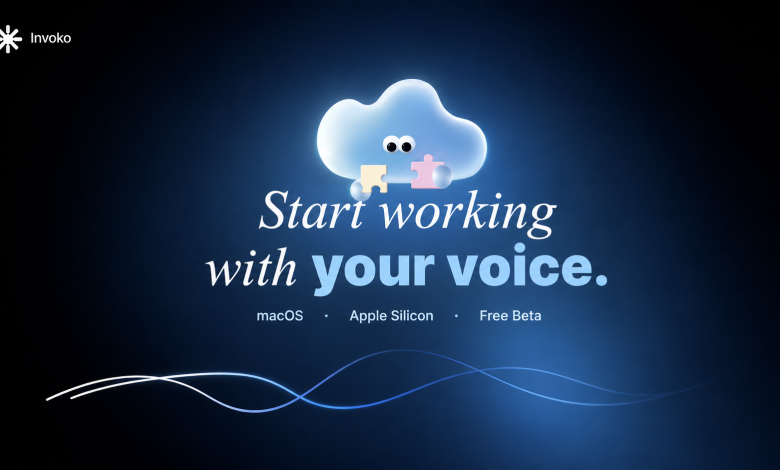
Invoko is part of this shift toward a more integrated desktop experience.
The Hidden Cost of Constant Context Switching
Digital work rarely happens inside a single platform anymore.
A typical professional may spend their day:
Communicating through messaging applications
Managing tasks and projects
Researching information online
Creating and editing documents
Participating in virtual meetings
Reviewing dashboards and reports
Although each tool serves a specific purpose, moving between them creates a fragmented experience. Even simple activities often require several unnecessary steps before they can be completed.
Some of the most common workflow disruptions include:
Navigating between multiple applications
Searching for information across tabs and windows
Copying content between tools
Repeating similar requests multiple times
Interrupting focus to perform routine tasks
Over time, these interruptions reduce efficiency and make it harder to maintain momentum throughout the day.
Research from the American Psychological Association also supports this concern. Its work on multitasking explains that switching between tasks can create “brief mental blocks,” and these small delays can add up when people move repeatedly between tools and tasks.
Why Traditional AI Tools Only Solve Part of the Problem
The first wave of AI productivity tools primarily focused on conversation. Users would visit a chatbot, enter a prompt, receive an answer, and then manually apply that information elsewhere.
While this approach offers value, it still requires users to leave their workflow.
This creates a paradox. The tool is designed to save time, yet accessing it often introduces additional steps.
A more effective approach is to bring AI directly into the working environment itself rather than requiring users to move between platforms.
This idea is driving the growth of AI desktop assistants.
How Invoko Approaches Desktop Productivity
 Invoko reflects this shift toward more integrated workplace assistance.
Instead of positioning itself solely as an AI chatbot, Invoko functions as a desktop-level productivity companion for macOS users. Its purpose is to help individuals interact with their software environment more efficiently while reducing the friction that often accompanies modern digital work.
One of its key advantages is the ability to leverage information already visible on screen.
Rather than forcing users to repeatedly explain what they are doing, the assistant can understand relevant context from the active workflow and provide support accordingly.
This creates a more seamless experience where assistance feels connected to the task at hand.
Users can benefit from capabilities such as:
Accessing information without changing applications
Summarizing and refining content
Continuing work across multiple tools
Gathering context from different sources
Maintaining progress without losing focus
The emphasis remains on helping work move forward smoothly rather than introducing another layer of software complexity.
Bringing AI Directly Into the Workflow
Unlike standalone chat applications, AI desktop assistants operate alongside the user throughout the workday.
Rather than functioning as separate destinations, they remain available while users interact with their existing tools and applications.
This creates a more natural experience where assistance becomes part of the workflow rather than an interruption to it.
By integrating directly into desktop environments, these systems help users:
Continue work without changing contexts
Reduce repetitive interactions
Access information more quickly
Coordinate actions across applications
Maintain productivity for longer periods
The goal is not simply to provide answers but to make everyday work easier to manage.
Simplifying Work Across Multiple Applications
As organizations adopt more software, the challenge increasingly becomes coordination rather than capability.
Many productivity obstacles arise because information is scattered across different platforms. Users must manually bridge the gaps between these systems to complete their work.
AI desktop assistants help reduce this burden by serving as a connective layer between applications.
This approach is particularly valuable for:
Research-intensive tasks
Content creation workflows
Administrative responsibilities
Project coordination
Multi-application productivity environments
Instead of managing every step manually, users can rely on integrated assistance to help streamline interactions across their digital workspace.
McKinsey & Company has also emphasized the value of connected digital collaboration, noting that better workplace tools can help employees access shared knowledge and improve collaboration-intensive work.
The Growing Demand for Context-Aware AI
One of the most important developments in productivity technology is the ability for AI systems to understand context.
Users increasingly expect software to recognize what they are currently working on without requiring extensive explanations.
Context-aware assistants can provide more relevant support because they operate within the workflow rather than outside of it.
This capability delivers several advantages:
Faster responses and task completion
Less repetitive prompting
Improved workflow continuity
Reduced cognitive overhead
More personalized assistance
As digital work becomes more complex, contextual understanding is becoming a defining feature of next-generation productivity systems.
This is especially important because interruptions can have a lasting effect on attention. Research associated with UC Irvine professor Gloria Mark has found that after an interruption, it can take more than 20 minutes for people to fully return to their original task.
The Future of Desktop-Based Productivity
The productivity software landscape is moving toward deeper integration rather than greater fragmentation.
Professionals increasingly prefer tools that:
Remain accessible throughout the day
Support multiple applications simultaneously
Reduce unnecessary interactions
Adapt to user workflows
Help maintain focus and efficiency
AI desktop assistants fit naturally into this trend because they emphasize continuity and workflow support rather than isolated interactions.
As these technologies continue to mature, they are likely to become an essential layer within modern digital work environments.
Final Thoughts
Today’s professionals have access to more software than ever before, yet managing that software often creates its own productivity challenges.
Integrated AI assistants are helping address this issue by reducing context switching, streamlining interactions, and providing support directly within existing workflows.
Invoko represents this emerging direction by functioning as a desktop productivity companion that works alongside users rather than apart from them.
As workplace technology continues evolving, solutions that simplify workflows and eliminate unnecessary friction will play an increasingly important role in helping people work smarter and more efficiently.