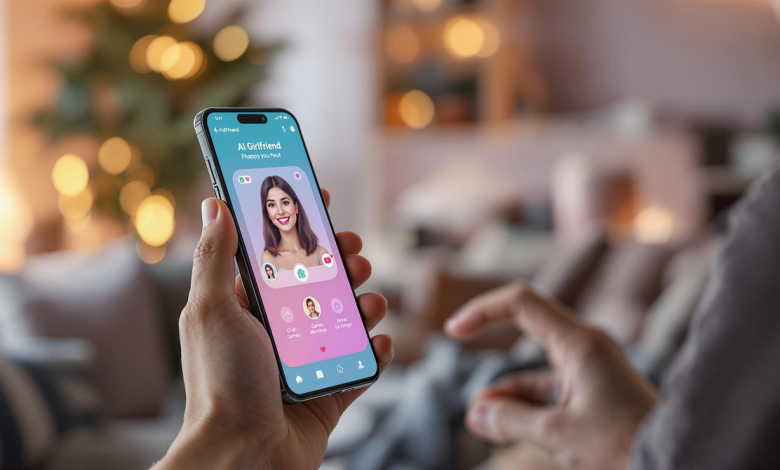
AI companions are becoming an increasingly popular way to chat, brainstorm, learn, stay motivated, and simply have someone—or rather, something—to interact with whenever you need it. But with so many AI tools and conversational platforms available, choosing the right one can be challenging.
The best AI companion isn’t necessarily the one with the most features. It is the one that fits your personality, goals, communication style, and expectations. Here’s how to find the right match.
Understand What You Want From an AI Companion
Start by asking yourself why you want an AI companion.
Are you looking for someone to have casual conversations with? Do you want help with writing, studying, brainstorming, or productivity? Perhaps you are more interested in an AI that can tell stories, participate in role-playing, or provide entertaining conversations.
Defining your purpose makes it easier to identify the features that actually matter to you.
For example, a student may prioritize accuracy, explanations, and educational capabilities, while a creative writer might care more about brainstorming, storytelling, and conversational flexibility.
Compare Different AI Companions
Not every AI companion works in the same way. Some focus on productivity, while others emphasize personality and conversation. Some offer voice interactions, long-term memory, customization, or multimedia capabilities.
Before making your choice, spend some time exploring Chat Bots Compared to understand how different options differ in areas such as features, personality, personalization, privacy, and pricing.
When comparing options, consider:
- Conversation quality
- Personality and tone
- Memory and personalization
- Available features
- Privacy controls
- Reliability and accuracy
- Subscription costs
- Ease of use
A side-by-side comparison can help you avoid choosing an AI simply because it happens to be popular.
Choose a Personality You Enjoy
Personality is one of the most important factors when choosing an AI companion.
Some people prefer an AI that communicates in a friendly and casual way. Others want something professional, thoughtful, humorous, motivational, or highly creative.
Think about the type of communication that feels most comfortable to you. Would you rather receive concise answers or detailed explanations? Do you appreciate humor? Do you want the AI to challenge your thinking or primarily provide encouragement?
The right personality can make everyday interactions feel much more natural.
Look for Useful Personalization
Personalization can make an AI companion significantly more helpful. Depending on the platform, an AI may be able to remember preferences, adapt to your communication style, or maintain useful context between conversations.
However, personalization should always be balanced with privacy.
Before using memory features, check what information the service stores and whether you can review, modify, or delete it. You should also understand whether conversations may be used for other purposes.
The goal is to find an AI that feels personalized without giving up more personal information than you’re comfortable sharing.
Check Privacy and Security
Your conversations with an AI companion may sometimes include personal thoughts, plans, or other sensitive information. That makes privacy an important part of your decision.
Look for clear privacy policies and useful controls, such as the ability to:
- Delete conversation history
- Manage saved memories
- Disable personalization
- Control how your data is used
- Secure your account
Avoid sharing passwords, financial credentials, identity documents, or other highly sensitive information with an AI companion.
Consider Accuracy and Reliability

An AI companion can sound confident even when it is wrong. This is especially important if you plan to use one for school, work, research, or important decisions.
A good AI companion should be willing to acknowledge uncertainty and correct mistakes. For important information, you should still verify answers using reliable sources.
Think of an AI companion as a helpful assistant rather than an unquestionable authority.
Think About Emotional Boundaries
AI companions can create surprisingly engaging conversations, but it’s important to remember that they are artificial systems.
A healthy AI relationship should complement your real life rather than replace human relationships. Be cautious if a service encourages unhealthy dependence, isolation, or the idea that you are responsible for the AI’s emotional well-being.
The best AI companion should support your interests and activities—not become the center of your life.
Try Before You Choose
One of the easiest ways to find the right AI companion is to test several options.
Have similar conversations with each one. Ask them to help with something you genuinely care about, then compare the results.
You might ask each AI to:
- Have a casual conversation with you.
- Help solve a practical problem.
- Brainstorm an idea.
- Explain a difficult concept.
- Create something entertaining.
Pay attention to which one understands your requests, communicates naturally, and provides responses that are genuinely useful.
If you’re unsure where to start, take the quiz to help narrow down what kind of AI companion may fit your preferences.
Don’t Focus Only on Features
It’s easy to become impressed by a long list of AI features. Voice conversations, image generation, web access, custom personalities, and integrations can all be useful—but only if you actually need them.
Instead of asking, “Which AI has the most features?” ask, “Which features will I use regularly?”
An AI with fewer features but a better personality and more comfortable conversational style may ultimately be a better choice.
Consider Your Budget
AI companions can range from free services to premium subscriptions. Decide how much you’re willing to spend before choosing.
A free option may be perfectly adequate for occasional conversations. If you use an AI every day or need advanced capabilities, a paid plan might provide better value.
Compare pricing alongside usage limits, features, and privacy options rather than choosing solely based on the monthly cost.
Your Perfect AI Companion May Change
There is no guarantee that the AI companion you prefer today will remain your favorite forever. Your needs can change, and AI technology continues to evolve.
You may initially want an AI for entertainment and conversation but later discover that you need one for learning, creativity, productivity, or another purpose.
That’s why finding your perfect AI companion should be viewed as an ongoing process rather than a one-time decision.
Final Thoughts
Finding the perfect AI companion comes down to compatibility. Think about what you want from the experience, compare different options, consider personality and personalization, and pay close attention to privacy and emotional boundaries.
Most importantly, don’t choose an AI simply because it is the most advanced or widely used. Choose one that fits naturally into your life and helps you accomplish what you want from the experience.
With a little research—and by trying different options—you can find an AI companion that is useful, enjoyable, and genuinely suited to your needs.