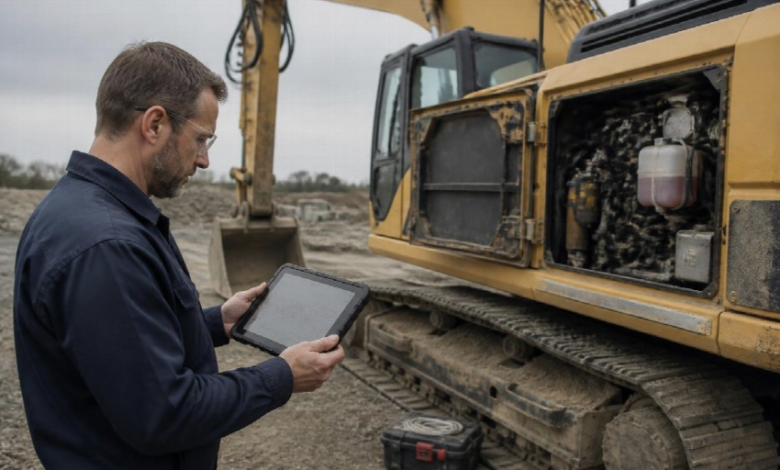
Predictive maintenance uses machine data to identify developing problems before equipment fails. For excavators, loaders, and tractors, that means fewer surprise breakdowns and better control over repair schedules. The goal is simple: fix the right component at the right time, based on its actual condition rather than guesswork.
What Is Predictive Maintenance for Heavy Equipment?
Predictive maintenance tracks changes in equipment condition over time. Sensors, inspection records, fluid analysis, diagnostic codes, and operating data can reveal patterns that appear before a component fails.
This approach differs from preventive maintenance. Preventive work follows a fixed schedule, such as replacing an engine filter every 500 hours. Predictive maintenance responds to evidence. A hydraulic pump may be inspected because its temperature and case-drain flow are rising, even though it has not reached a scheduled replacement interval.
Both methods have a place. Filters, lubricants, and safety inspections still need regular service. Predictive tools add another layer by helping owners find problems that a calendar cannot anticipate.
Why Does Predictive Maintenance Reduce Downtime?
Early detection creates time to plan. A fleet manager can order a component, assign a technician, and schedule the repair between jobs. That is much easier than responding to a disabled excavator in the middle of a site.
Unplanned downtime often costs more than the repair itself. A failed loader can leave trucks waiting. A tractor breakdown during planting may delay work across several fields. Transport, technician callouts, rental equipment, and missed deadlines add to the bill.
Small faults can also damage nearby components. A leaking injector may dilute engine oil. A restricted hydraulic filter can increase system pressure or starve the pump, depending on the circuit design. A worn bearing may damage a shaft and housing if it continues to run.
Predictive maintenance helps interrupt that chain. It does not guarantee that failures will disappear, but it can make many of them less sudden.
What Equipment Data Should You Monitor?
Useful data comes from several sources. Expensive technology is not always required. A consistent operator inspection can be just as valuable as a connected sensor when the findings are recorded properly.
Engine Data
Engine trends can reveal changes in combustion, cooling, lubrication, and fuel delivery. Useful measurements include:
- Coolant and oil temperature
- Oil pressure
- Fuel consumption
- Engine load
- Exhaust temperature
- Crankcase pressure
- Battery and charging voltage
- Active and stored diagnostic codes
Diesel engine diagnostics should consider several readings together. For example, rising fuel consumption alone does not prove that an injector has failed. The cause could be a heavier workload, low tire pressure, a restricted air filter, or excessive hydraulic demand.
Hydraulic Data
Hydraulic systems often show gradual changes before a major failure. Watch:
- System pressure under a repeatable load
- Hydraulic oil temperature
- Pump case-drain flow
- Cylinder drift
- Cycle time
- Filter restriction
- Fluid cleanliness
- Unusual vibration or noise
A slow boom does not automatically mean the pump is worn. Internal cylinder leakage, a restricted hose, a control valve problem, low engine power, or cold oil can produce similar symptoms. Baseline readings help separate normal variation from a developing fault.
Operator Observations
Operators notice changes that sensors may miss. A new smell, vibration, rattle, or hesitation can be an early warning.
At 7:10 on a cool morning, a loader may sound normal when it leaves the shed. Two hours later, its bucket starts curling more slowly once the hydraulic oil is hot. That detail matters. Recording when the symptom appears gives the technician more to work with than a note that simply says, “Hydraulics weak.”
How Does Sensor Telemetry Support Fleet Health Monitoring?
Sensor telemetry sends operating information from the machine to a fleet platform. Depending on the equipment, this may include location, engine hours, idle time, temperatures, pressure readings, fuel use, and fault codes.
Remote data makes fleet health monitoring more practical across several locations. A manager can compare similar machines and see which one is operating outside its normal range. This is particularly useful for equipment that rarely returns to a central workshop.
Raw alerts still need context. A high coolant temperature during heavy summer work means something different from the same reading during light operation on a cool day. Useful monitoring systems account for load, ambient conditions, attachment type, and normal machine behavior.
Alert limits should also be reviewed. If a platform sends dozens of low-value notifications each day, staff may start ignoring them. A short list of clear, actionable alerts is usually more effective.
5 Warning Trends That Deserve Attention
1. Temperatures Rise Under the Same Load
A gradual increase in coolant, engine oil, or hydraulic oil temperature may point to restricted cooling, internal leakage, low fluid levels, or declining pump efficiency. Compare readings under similar work and weather conditions.
2. Cycle Times Become Longer
Slower boom, bucket, hitch, or loader movement can indicate flow loss. Measure the same function at the same engine speed and oil temperature. Small changes are easier to recognize when the test stays consistent.
3. Fluid Samples Show New Contaminants
Oil analysis can reveal fuel dilution, coolant contamination, dirt ingress, or abnormal wear metals. One unusual result should be confirmed, but a worsening trend needs investigation.
4. Fuel Consumption Increases
Higher fuel use may reflect injector wear, air restriction, excessive idling, poor operating technique, or added hydraulic load. Compare fuel consumption per working hour or completed task rather than total daily use.
5. Fault Codes Repeat More Often
An intermittent code may appear long before a hard failure. Record when it occurs, the operating conditions, and whether performance changes. Replacing a sensor without checking its wiring, connector, supply voltage, and related system can waste time.
How Do Machine Learning Maintenance Models Work?
Machine learning maintenance models look for patterns across large sets of equipment data. They may compare temperature, pressure, vibration, workload, and failure history to estimate when a component is behaving abnormally.
These models are most useful when the input data is clean and relevant. Missing sensor readings, incorrect service records, mixed machine configurations, and inconsistent failure descriptions can produce weak predictions.
Component failure prediction is not a diagnosis by itself. A model might flag an engine because its exhaust temperature and fuel consumption have changed. A technician still needs to inspect the air, fuel, cooling, and control systems before deciding what to repair.
Smaller fleets do not need a complex model to benefit. A spreadsheet containing hours, fluid results, fault codes, repair history, and repeatable test readings can reveal useful trends. Start with reliable records. Add automation when the records become difficult to review manually.
How Can You Build a Practical Predictive Maintenance Program?
A useful program begins with a small number of important assets. Choose machines whose failure would stop work or create high recovery costs.
Step 1: Establish a Baseline
Record how each healthy machine behaves. Include normal pressures, temperatures, cycle times, fluid consumption, and fuel use under known conditions.
Step 2: Select Actionable Measurements
Track information that can lead to an inspection or repair. More data is not automatically better. Five dependable measurements are more useful than 50 incomplete ones.
Step 3: Define Alert Levels
Separate minor deviations from urgent conditions:
- Observe: Record the change and check it again soon.
- Inspect: Schedule tests at the next suitable stop.
- Act: Reduce load or remove the machine from service.
- Stop: Shut down immediately to prevent injury or severe damage.
Step 4: Confirm the Fault
Inspect the machine before ordering components. Check connectors, fluid levels, filters, hoses, wiring, and mechanical condition. Use the manufacturer’s test procedure and specifications where available.
Once the cause is confirmed, compatible aftermarket parts may be considered alongside other repair options. Match the part number, dimensions, ratings, connectors, machine serial range, and operating specifications. Price alone does not confirm suitability.
Step 5: Review the Result
Record what failed, what was replaced, and whether the abnormal trend returned to normal. This feedback improves future alerts and prevents the same diagnosis from being repeated without evidence.
What Are the Limits of Predictive Maintenance?
Predictive maintenance cannot replace safe inspection or skilled diagnosis. Sensors can fail. Connections can corrode. Software can misread unusual operating conditions. Some components also fail suddenly without a useful warning trend.
Safety remains the first priority. Before inspecting engine or hydraulic components, park on stable ground, lower attachments, stop the engine, remove the key, release stored pressure, and allow hot surfaces to cool. Never search for a hydraulic leak with your hand or work beneath equipment supported only by hydraulics.
Data quality is another limit. A prediction based on the wrong engine hours or incomplete repair records may be misleading. Keep records simple enough that operators and technicians will actually use them.
Final Thoughts
Predictive maintenance for heavy equipment works best as an early-warning system, not an automatic repair decision. Combine sensor telemetry with operator observations, fluid analysis, service history, and model-specific testing.
Start with the machines that create the most disruption when they stop. Establish normal readings. Watch for changes, then confirm the cause before replacing anything. Done well, this approach reduces unplanned downtime while helping engines and hydraulic components deliver more useful service.