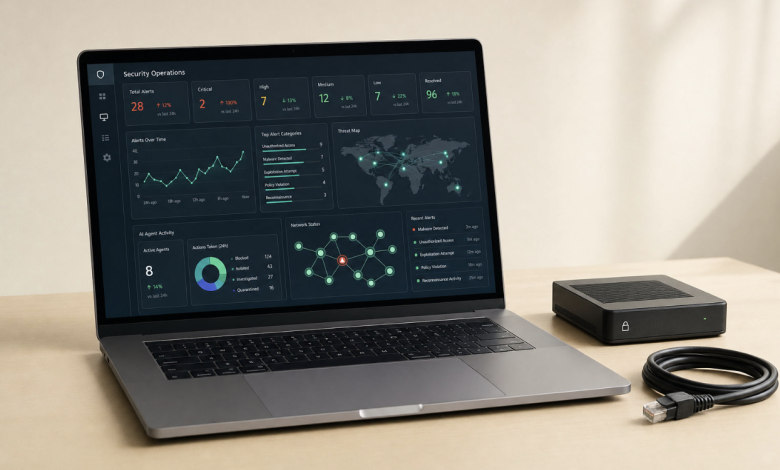
Tackling the current security landscape requires both advanced technology and skilled professionals. Organizations often rely on a range of IT support providers, such as a CMIT solution, to supplement their internal operations. Hybrid cloud environments and a broader attack surface have led to rising workloads in every security operations center. To meet these demands, AI agents are now being deployed to assist analysts, automate repetitive tasks, and deliver insights faster.
Rising complexity drives new security operations models
Security operations centers have seen workloads increase due to larger digital footprints, more data sources, and the adoption of cloud and hybrid IT. As each asset and application adds further monitoring requirements, the number of alerts security teams must process has grown substantially. This evolution places considerable strain on resources, making traditional manual approaches insufficient for many organizations.
To manage this scale, organizations are now introducing AI agents, which act as automated tools that assist with analysis and response tasks. In this context, “agents” refers to software systems that can monitor, correlate, and act on security data drawn from multiple platforms. These AI agents are not independent actors, but they support human teams by carrying out structured, repeatable processes at machine speed.
AI excels at processing, triage, and enrichment
One of the primary functions of integrating AI agents is their ability to handle large alert volumes with greater efficiency than manual review. AI-driven tools can rapidly collect, enrich, and correlate data from endpoint detection, network logs, and SaaS platforms. This enrichment helps analysts by putting the full context of an alert in one place, reducing the likelihood of missed details and enabling quicker prioritization.
AI agents also contribute by identifying patterns, ranking incidents by risk, and offering draft summaries for analyst validation. These tools often support security workflows by suggesting remediation steps, helping teams act quickly while maintaining oversight. AI-driven recommendations should be reviewed and confirmed, ensuring human judgment remains central to critical security decisions.
Although AI agents streamline triage, they often provide the most value in the first stages of detection and prioritization. Their ability to learn from past incident data can improve as more data becomes available, which may help teams focus on nuanced investigations. Some organizations report that adding AI agents to SOC workflows reduces time spent on false positives and low-priority alerts.
In practice, human analysts remain vital when context, ambiguity, or atypical threats are encountered. This hybrid approach helps ensure that AI support is balanced by human judgment and oversight at every step of the incident lifecycle.
Humans remain essential for nuanced analysis and response
While AI agents handle volume and speed, human analysts provide skills that technology cannot easily replicate. Decisions around risk acceptance, business context, and ambiguous threat signals require experience and judgment. This includes understanding organizational priorities, regulatory requirements, and the subtle cues that indicate a sophisticated threat actor at work.
Humans also lead investigations that demand cross-team coordination, problem-solving, and adversary reasoning. Security operations teams manage communications during major breaches and learn from incidents to improve future processes. These are tasks that benefit from collective experience and knowledge of the organization’s mission and risk appetite.
AI agents increasingly augment these functions by documenting incidents, compiling timelines, and standardizing incident response playbooks. However, final decision-making authority stays with the human team, ensuring that automation improves outcomes without reducing control or oversight.
Structuring collaboration for robust, resilient operations
Effective security operations require models for integrating human and AI contributions. A “human-in-the-loop” approach keeps analysts involved in validating AI-generated alerts and recommended actions, while a “human-on-the-loop” setup lets automated agents handle more tasks with oversight from analysts who can intervene when needed. Both models help organizations optimize workflows and balance speed with risk control.
Tiered workflows are increasingly common, with AI agents supporting lower-tier triage and escalation handled by more experienced analysts. This division ensures that routine events are processed efficiently, while complex cases receive the expertise they deserve. Organizations also use AI-generated playbooks to standardize responses, minimizing variance and supporting consistent security standards.
Governance practices address issues such as automation bias, access controls, data privacy, and audit trails. Structured guardrails define what AI agents can automate versus what must be approved by a human, reducing the risk of over-reliance on technology. This balance between automation and oversight is widely recognized as a best practice for resilient security operations.
Implementing collaboration between human teams and AI agents means evaluating not only technical integration but also impact metrics such as mean time to detect and mean time to respond. Organizations may prioritize solutions that fit with existing security stacks and invest in developing new skills among their analysts. The shift toward these hybrid models continues to shape modern security operations, with the expectation that AI will take on more specialized tasks as technology advances.