Audiobook production used to be constrained by studio time, narrator availability, post-production capacity, and the expected sales life of a single title. AI voice technology changes that equation because it turns part of the production process into software work: text preparation, synthetic narration, pronunciation control, revision, mastering, and multi-language adaptation.
The economic effect is not simply “cheaper audiobooks.” A better description is that AI changes which costs are fixed, which costs scale with time, and which risks move from recording to quality control, rights management, and listener acceptance.
That distinction matters because audiobooks are no longer a small-format experiment. The Audio Publishers Association reported that U.S. audiobook sales revenue reached $2.43 billion in 2025, up 9% from the previous year, with more than 750,000 active titles reported by publishers. The same survey estimated that 58% of Americans aged 18 and older had listened to an audiobook. (audiopub.org)
The traditional cost model is built around finished hours
Audiobook budgets are usually calculated per finished hour, not per hour spent in the studio. A finished hour means one hour of approved, edited, mastered audio. A 9-hour audiobook can require far more than 9 hours of labor once narration, pickups, proofing, editing, mastering, and file preparation are included.
In the traditional model, the major cost centers are narrator performance, studio or home-studio recording, audio engineering, proof listening, corrections, mastering, and distribution preparation. ACX describes pay-for-production as a per-finished-hour model, and royalty-share models as an alternative where payment is tied to sales rather than fully paid upfront. (acx.com)
That structure has an economic consequence: many books are never produced in audio because expected sales do not justify the upfront spend. This is especially true for backlist nonfiction, academic titles, niche business books, poetry, local-language publishing, and indie author catalogs where the written book may be viable but the audiobook has a thinner margin.
AI narration lowers the variable cost of generating the first audio draft. It does not remove production cost altogether. Instead, it shifts labor toward manuscript cleanup, pronunciation dictionaries, listening review, chapter-level correction, metadata, rights checks, and platform-specific audio compliance.
Why neural text-to-speech changed the equation
Older text-to-speech sounded mechanical because systems had limited prosody control and poor long-form consistency. Modern neural TTS systems changed the economics because they model speech as a learned sequence rather than a simple conversion from text to waveform.
Google’s Tacotron 2 work combined a sequence-to-sequence model with a neural vocoder and reported naturalness scores close to professionally recorded speech in controlled evaluation. Later approaches such as FastSpeech 2 improved speed and controllability by modeling duration, pitch, and energy more directly. (arxiv.org)
Voice cloning and speaker adaptation changed another part of the cost curve. Microsoft’s VALL-E research showed how neural codec language models could synthesize speech in a target voice from a short enrolled recording, which helps explain why consent, licensing, and identity controls have become central to AI voice economics. (arxiv.org)
For audiobook production, the hard problem is not one sentence of realistic speech. It is long-form narration across chapters, characters, pauses, headings, footnotes, acronyms, emotional changes, and repeated names. Research on expressive audiobook speech synthesis now focuses on context-aware style modeling because audiobook narration needs continuity over long text, not isolated sentence quality. (arxiv.org)
AI shifts costs from recording to review
AI changes the budget by reducing the marginal cost of narration passes. A producer can regenerate a paragraph, test pacing, fix a mispronounced name, or create a sample without booking another recording session. That flexibility reduces the cost of iteration.
But new costs appear. Someone still has to mark front matter, chapter titles, citations, tables, character dialogue, pronunciation exceptions, and pacing cues. Long-form AI audiobook production also needs quality assurance because synthetic voices can flatten emphasis, mishandle abbreviations, misread proper nouns, or apply the wrong tone to dialogue.
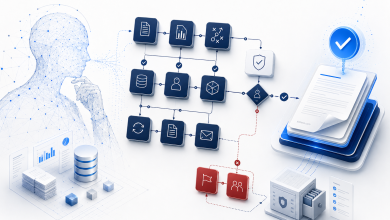
The old workflow spent heavily on performance capture. The AI-assisted workflow spends more on text normalization, voice selection, prompt or style control, human review, and final audio validation. Economically, that makes production more modular.
This is why AI is most disruptive for titles that were previously below the audiobook viability threshold. If a book could not support a full studio budget, synthetic narration may make an audio edition financially possible. If a book depends on a celebrity narrator, memoir intimacy, drama, or a high-touch performance, AI may reduce some editing tasks but not replace the core creative value.
Distribution rules now affect production economics
Platform policy is part of the cost model. A low-cost AI audiobook is not economically useful if it cannot be distributed where the publisher expects to sell it. That is why production planning now has to begin with rights and channel eligibility, not only audio generation.
Amazon’s KDP help pages describe “audiobooks with virtual voice” as a beta offering that uses computer-generated speech technology, and says these audiobooks are clearly labeled for customers. Audible’s help center also states that virtual voice and voice replica titles are labeled as AI-generated, with samples available before purchase. (kdp.amazon.com)
This labeling affects conversion and positioning. Some listeners may accept AI narration for instructional, reference, genre, or backlist content. Others may avoid it for literary fiction, memoir, children’s books, or performance-heavy work.
The practical point is simple: AI narration lowers production barriers, but it does not erase market signaling. A publisher now has to decide whether lower cost, faster release, and broader catalog coverage outweigh possible effects on reviews, completion, and brand perception.
Rights, consent, and licensing are now financial controls
Voice cloning turns a human voice into a reusable asset. That changes the economics because the value is no longer limited to one recording session. A licensed synthetic voice can be used across a series, editions, updates, translations, and future derivative products.
That is also where risk rises. The U.S. Copyright Office’s AI report on digital replicas defines the issue around digital technology that realistically replicates a person’s voice or appearance, and it recommends new federal protection against unauthorized digital replicas. (copyright.gov)
Voice actor groups have responded by pushing consent, control, compensation, security, and sourcing as baseline terms for AI voice work. NAVA’s fAIr Voices pledge frames unauthorized cloning and training as a performer-rights issue, not only a technical issue. (navavoices.org)
For audiobook economics, that means a cheap voice is not always a cheap production. The producer must account for voice rights, permitted use, duration of license, territory, derivative works, training restrictions, disclosure requirements, and whether the narrator or rights holder can revoke or renegotiate future use.
Quality control becomes the production bottleneck
AI can generate audio quickly, but audiobook quality is still judged in time. A listener experiences every repeated error, wrong stress pattern, awkward pause, and inconsistent character voice sequentially. Long-form audio leaves fewer hiding places than short-form voiceover.
Technical compliance also remains non-negotiable. ACX requires specific content structure, including opening and closing credits, and sets submission rules around audio quality, bitrate, and file preparation. (help.acx.com)
The economics therefore move from “Can we afford to record this?” toward “Can we review and control this at scale?” A publisher producing ten AI-narrated books may spend less on recording, but more on QA systems, editorial markup, pronunciation databases, and human listening passes.
This is the area where AI is likely to create new jobs rather than only remove old ones. Audiobook producers may need people who can prepare manuscripts for synthetic narration, audit AI voices, manage narrator consent, inspect waveforms, and test whether chapter-level listening holds attention.
The strongest use cases are not always the cheapest ones
AI narration fits best where speed, catalog coverage, accessibility, or localization carry real economic value. Backlist books can become audiobooks without waiting for a full casting cycle. Educational and technical publishers can update audio when the source text changes. Smaller publishers can test audio demand before committing to a higher-cost human production.
Translation is another major economic lever. Audible has announced AI-assisted narration and translation paths for publishers, including workflows that may involve professional linguist review. That suggests the production unit is shifting from one book in one language to one intellectual property asset across multiple audio markets. (audible.com)
Still, AI does not make every audiobook equally valuable. A synthetic voice can deliver intelligible narration, but performance, trust, humor, grief, irony, and character distinction are not just sound output. They are part of why some listeners buy the audiobook instead of reading the ebook.
The economically sensible approach is not full replacement. It is segmentation. Use human narration where performance is the product, AI narration where access and scale are the product, and hybrid workflows where human review improves synthetic output.
What changes for authors and publishers
For authors, AI lowers the threshold for making an audiobook version, especially when the book has uncertain demand. It also creates more responsibility around disclosure, licensing, and quality. A rushed synthetic audiobook can damage reviews faster than it saves money.
For publishers, AI changes portfolio math. Instead of asking whether each title can justify a complete studio budget, they can ask which parts of the catalog deserve human performance, which can support synthetic narration, and which should remain text-only. That allows a more granular return-on-investment model.
For narrators, the economics are more mixed. Routine narration work may face price pressure, while licensed voice replicas, premium performance, direction, editing, and AI-supervised production may become separate revenue lines. The central question is whether contracts protect consent and compensation as voice models become reusable.
For listeners, the change will show up as more available audiobooks, more synthetic narration labels, more samples to compare, and more variation in quality. The market will likely separate acceptable AI narration from poor AI narration quickly, because audiobook listening is sustained attention, not a brief demo.
AI makes production scalable, not automatic
AI is changing audiobook production by compressing the cost and time of generating narration. The larger change is structural: production economics are moving from studio scarcity to workflow control.
The winners will not be the teams that treat AI voices as a one-click replacement for narrators. They will be the teams that understand the full cost stack: manuscript preparation, speech synthesis, voice rights, disclosure, technical mastering, listening QA, and platform policy.
Audiobook production is becoming more scalable. It is also becoming more governed. That combination is what makes AI economically important in audio publishing.