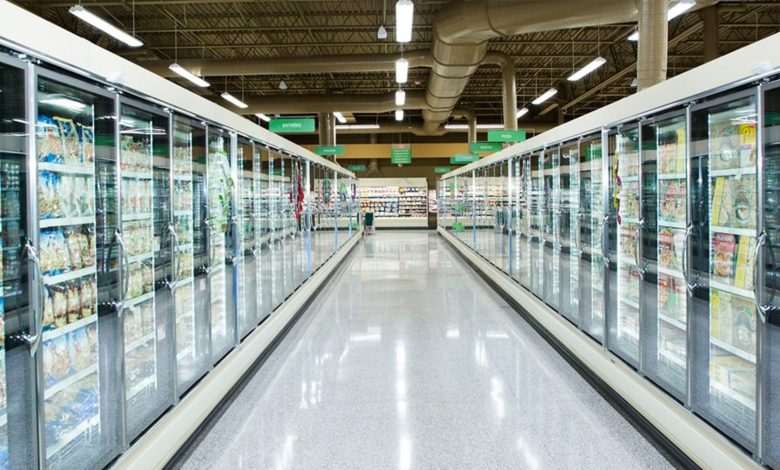
Artificial intelligence coverage tends to fixate on chatbots, image generators, and software engineers debating what comes next for their profession. Meanwhile, one of the most consequential AI stories in the economy is unfolding in industries that keep the physical world humming: HVAC, refrigeration, and the broader world of commercial equipment maintenance. These are the systems that keep grocery stores cold, hospitals safe, and buildings comfortable, and the people who install and repair them are becoming some of the most effective adopters of applied AI anywhere in the world.
Refrigeration and HVAC technicians already work at the intersection of deep technical expertise, physical craftsmanship, and constant problem-solving under pressure. That combination of hands-on skill and hard-won judgment is exactly what makes these trades such a strong fit for AI tools built to support, not replace, the people doing the work.
The HVAC Technician Shortage, in Real Numbers
In the US alone, industry estimates put the HVAC technician shortage at 110,000, with roughly 25,000 technicians leaving their companies every year (ACHR News). More than a third of the existing workforce is within nine years of retirement (HVAC Exec).
At the same time, demand for these technicians is rising, not falling. The Bureau of Labor Statistics projects HVAC/R employment to grow 8% from 2024 to 2034 — much faster than the average occupation, with roughly 40,100 openings every year — driven by new construction, data center buildouts, refrigerant transitions, and aging equipment that needs replacing Bureau of Labor Statistics. Put simply: the trade needs more hands, and it needs them faster than traditional training pipelines can produce them.
This is exactly the kind of gap AI is well suited to help close, not by replacing technicians, but by making each one dramatically more capable, more efficient and more able to take on the volume of work the industry needs done.
From Reactive Repairs to Predictive Maintenance
For most of the industry’s history, refrigeration and HVAC maintenance has been reactive. A compressor fails, a walk-in cooler warms up, and a technician gets dispatched to fix it after the damage is already done. That model is expensive, disruptive, and hard on an already stretched workforce.
AI-driven monitoring changes the sequence of events, and the most effective deployments behave less like a dashboard and more like an agent: software that watches equipment data around the clock (temperatures, pressures, vibration, energy draw), decides which anomalies actually matter, solves the issues it can directly (without technician involvement), and hands the technician a probable diagnosis instead of an alarm, often days or weeks before a human would notice anything wrong. Instead of an emergency truck roll, a technician can schedule the repair during a normal shift, with the likely cause already identified.
This doesn’t eliminate the need for skilled hands. It changes what those hands spend their time doing. Less time is spent driving to diagnose mystery failures, and more time is spent doing higher-value repair work that actually requires human judgment.
This closes a stark gap: a facility on quarterly manual inspections can have a refrigerant leak running for months before anyone notices, while AI-based detection typically surfaces the same leak within days. The stakes are much higher than just product spoilage, too – common refrigerants are potent greenhouse gases, and the EPA’s newest refrigerant rules now require automatic leak detection systems on the largest refrigeration systems (EPA). Regulation, in other words, now assumes this technology exists.
There’s an energy dividend as well. Refrigeration accounts for over half of a typical supermarket’s electricity use (U.S. Department of Energy), and the same models that predict failures are learning to trim consumption, catching the inefficiencies that creep in as equipment drifts out of tune. While much of the AI conversation worries about data centers’ growing power appetite, in the cold chain AI is quietly running the other direction: paying energy back.
Turning Institutional Knowledge Into a Training Tool
Perhaps the more interesting shift is happening in how technicians learn the job in the first place. Refrigeration and HVAC systems are notoriously complex, and much of the real expertise in the field lives inside the heads of veteran technicians who have spent twenty or thirty years learning quirks that never made it into a manual.
AI offers a way to preserve that expertise and put it in more hands, rather than losing it every time a veteran technician retires. Large language models can be trained on service records, technical documentation, and equipment histories, then made available to technicians through simple, conversational tools that answer questions on the spot, in plain language, on a phone or tablet in the field.
That matters enormously for a workforce with a wide range of experience levels. A technician two years into the trade can ask a natural-language question about an unfamiliar fault code and get a clear answer instantly, without waiting for a callback from a supervisor. Junior technicians ramp up faster, senior technicians spend less time fielding basic questions, and hard-won institutional knowledge stops disappearing every time someone retires.
Investing in the Trades, Not Replacing Them
There’s a persistent worry that automation devalues manual, hands-on work. In the skilled trades, the opposite is closer to the truth. Physical systems still break, refrigerant still leaks, and someone still has to climb onto a roof to fix a rooftop unit in July. AI isn’t replacing that work; it’s removing the repetitive parts of the job while making the remaining work more informed and more efficient.
That shift matters for recruiting, too. Younger workers weighing a career in the trades are often drawn to industries that feel modern and technologically current. An HVAC or refrigeration job that comes with AI-assisted diagnostics and on-demand expert guidance looks a lot more appealing than one that still relies on a three-ring binder and a phone call to a retired mentor.
The Bigger Pattern
What’s happening in refrigeration and HVAC is a preview of what’s coming to other infrastructure-heavy industries: agriculture equipment, industrial plumbing, elevator maintenance, and beyond. Wherever there’s strong demand for skilled technicians, valuable institutional expertise, and complex equipment to maintain, AI has an obvious and immediate role to play.
The industries getting the least attention in the AI conversation may end up being some of the ones it transforms the most.
About the Author: Amrit Robbins is CEO and Co-Founder of Axiom Cloud, an AI-powered refrigeration management platform. He has spent 15 years in cold chain refrigeration optimization, working with leading grocery retailers on refrigerant compliance and sustainability initiatives, and was included in Forbes’ “30 Under 30” list in 2017. Robbins is a graduate of Stanford University.