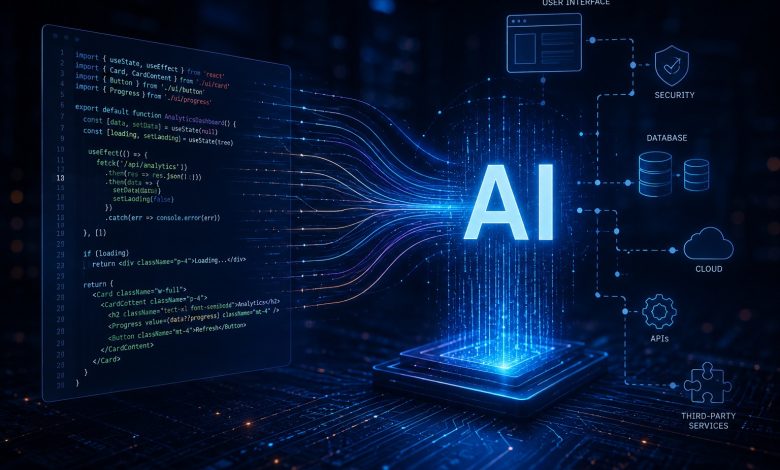
The AI revolution in commerce has largely been framed around speed.
Faster product launches. Faster experimentation. Faster personalization. Faster code generation.
From AI coding copilots to automated deployment systems, modern engineering teams are shipping software at a pace that would have been unimaginable just a few years ago. In e-commerce, especially, where customer experience and operational efficiency directly impact revenue, speed has become a competitive necessity.
But beneath this acceleration lies a growing structural problem that the industry is only beginning to acknowledge: reliability.
As businesses push software updates more frequently and backend ecosystems become increasingly interconnected, the risk is no longer just downtime. The bigger risk is silent failure, the kind that passes unnoticed until it has already impacted revenue, operations, or customer trust.
And in digital commerce, every silent failure is a revenue leak.
The Invisible Complexity Behind Modern Commerce
A modern e-commerce transaction is no longer a simple interaction between a user and a website.
Every customer journey now depends on a web of interconnected systems operating simultaneously: payment gateways, inventory systems, logistics APIs, recommendation engines, loyalty platforms, fraud detection layers, buy-now-pay-later integrations, seller management systems, tax engines, and customer support infrastructure.
A single checkout flow may trigger dozens of API calls across internal and third-party systems.
The challenge is that these systems are not static. They are constantly evolving. APIs change. Services scale dynamically. New integrations are added weekly. Engineering teams deploy updates multiple times a day.
The result is a level of backend complexity that traditional testing systems were never designed to handle. This is where many organizations face a dangerous blind spot. Most systems today do not fail dramatically. They fail quietly.
The Rise of “Silent Failures”
When people think of software failures, they often imagine outages: websites crashing or apps going offline.
But modern commerce failures are often much subtler; a payment succeeds, but the order fails to register, inventory data updates incorrectly during a flash sale, refund workflows silently break for a subset of users, recommendation engines display incorrect pricing, checkout latency increases by two seconds, causing measurable cart abandonment.
None of these issues necessarily triggers large-scale alarms immediately. Yet collectively, they can create significant financial and reputational damage.
Research from the Baymard Institute has consistently shown that checkout friction remains one of the largest drivers of cart abandonment in e-commerce. Even small performance slowdowns can meaningfully impact conversion rates. At scale, these inefficiencies translate directly into lost revenue.
The challenge is that traditional testing approaches are fundamentally reactive. Most enterprises still rely heavily on predefined test cases, manual quality assurance processes, and monitoring systems that identify problems only after software reaches production environments.
That model no longer aligns with the velocity of AI-driven software development.
AI Is Accelerating Software Velocity Faster Than Reliability
Generative AI is rapidly transforming software engineering.
Developers today can generate code, automate workflows, write integrations, and deploy new features faster than ever before. This shift is increasing experimentation velocity across industries, particularly in commerce and fintech environments where rapid iteration drives competitive advantage.
However, there is an unintended consequence.
As software creation becomes easier, the volume and complexity of deployed systems increase exponentially. Engineering teams can now ship changes faster than organizations can confidently validate them. This creates what may become one of the defining infrastructure challenges of the AI era: the widening gap between software velocity and software assurance.
In many organizations, reliability infrastructure has not evolved at the same pace as software generation infrastructure.
This imbalance matters because software failures in commerce environments are rarely isolated technical incidents. They directly affect revenue, customer retention, operational continuity, and brand trust.
In effect, AI is increasing the speed of innovation while simultaneously increasing the surface area for failure.
Why Traditional Testing Is No Longer Enough
Traditional software testing was designed for a different era of software architecture.
Earlier systems were comparatively monolithic, predictable, and updated less frequently. Testing workflows could rely on predefined scenarios because system behavior was relatively stable.
Modern commerce ecosystems operate differently.
They are API-first, distributed, cloud-native, and increasingly event-driven. Systems behave dynamically based on traffic conditions, third-party dependencies, regional variables, personalization engines, and real-time data flows.
Static testing frameworks struggle in these environments because they cannot anticipate the sheer number of possible real-world interactions.
This is why many organizations are beginning to rethink reliability itself.
The next generation of software assurance may not come from writing more manual test cases. Instead, it may emerge from AI systems capable of simulating production-like conditions, identifying edge-case behavior, and predicting failure patterns before deployment.
In other words, reliability is shifting from reactive debugging to predictive assurance.
Reliability May Become the Most Valuable Layer in the AI Stack
The current AI conversation is heavily centered around generation: generating code, generating content, generating workflows. But historically, infrastructure value in technology ecosystems has often accrued not only to creation layers, but also to trust and assurance layers. Cybersecurity became critical as internet adoption scaled.
Cloud observability became essential as distributed systems expanded. Identity and fraud infrastructure grew alongside digital transactions. Software reliability may now be entering a similar phase.
As enterprises increasingly depend on AI-generated systems, organizations will need stronger mechanisms to validate, monitor, and secure how those systems behave under real-world conditions. This is particularly important in sectors such as e-commerce, banking, logistics, and fintech, where even minor backend failures can produce cascading operational consequences.
The implication is significant: testing and reliability infrastructure may become one of the most strategically important layers in the broader AI software ecosystem.
Why Domain-Specific AI Infrastructure Could Outlast Generic Copilots
The first wave of enterprise AI adoption has largely been dominated by general-purpose copilots and foundational models. While these systems are highly effective at accelerating productivity, many enterprises are discovering that generic AI models often struggle with highly specialized operational environments.
Backend reliability, for example, requires deep contextual understanding of API behavior, infrastructure dependencies, system states, edge-case interactions, and deterministic validation. This is not simply a language-generation problem, it is an infrastructure reasoning problem.
As enterprise AI matures, organizations may increasingly prioritize domain-specific AI systems trained for highly contextual operational tasks rather than relying exclusively on generalized copilots.
This shift could define the next phase of enterprise AI adoption.
The companies that succeed may not necessarily be those building the broadest AI models, but those solving deeply embedded infrastructure problems that directly impact business continuity.
The Future of Commerce Depends on Invisible Infrastructure
Consumers rarely notice when digital commerce systems work perfectly. But they notice immediately when they do not. In many ways, the future of commerce will be shaped less by visible interfaces and more by invisible infrastructure: the reliability, resilience, and assurance layers operating underneath every transaction.
As AI continues to accelerate software development, organizations will face an important realization: speed alone is no longer enough. The real competitive advantage may ultimately belong to the companies that can scale innovation without sacrificing reliability.
In modern commerce, every failed interaction, delayed response, broken workflow, or silent backend error is not merely a technical issue.
It is a direct business cost. And increasingly, it is a revenue leak.
Revised Version
There is a particular kind of engineering failure that rarely makes it into a post-mortem.
The website is still live. The app still opens. The dashboard does not show anything urgent. On the surface, the system appears to be working.
Somewhere inside the transaction chain, something has gone wrong. A payment succeeds, but the order does not get created properly. Inventory updates incorrectly during a flash sale. A refund works for one payment method but fails for another. A discount applies in the wrong region. A checkout page slows down just enough for a customer to leave.
These failures do not announce themselves like outages. They often appear as small inconsistencies across a large system.
In commerce, that is what makes them dangerous.
A cart failure is rarely just a cart failure. It can become a lost transaction, a support ticket, a refund dispute, a fulfilment issue, or a customer who does not return. At a small scale, these problems may look like operational noise. At large scale, they become revenue leaking quietly through the cracks.
The hidden machinery behind modern commerce
A checkout flow is no longer a simple interaction between a shopper and a website.
Behind one button sits a chain of payment gateways, fraud checks, inventory systems, tax engines, logistics APIs, loyalty platforms, pricing rules, customer support workflows, and internal order management systems.
A single customer action can trigger dozens of API calls across internal and third-party systems. Each call carries its own assumptions, dependencies, edge cases, and failure modes. One small change in one service can affect a workflow several steps away.
This complexity was already difficult to manage. AI is now making the problem sharper.
Engineering teams are moving faster than ever. AI coding tools can generate boilerplate, create integrations, explain legacy code, draft test snippets, and shorten the distance between idea and implementation. For commerce companies, this speed matters. Pricing, personalization, payments, refunds, promotions, and recommendation flows are all areas where faster iteration can create real business advantage.
The problem is that reliability has not accelerated at the same pace.
AI is widening the confidence gap
Most organizations have invested heavily in helping teams build faster. Far fewer have invested with the same urgency in helping teams validate faster.
That imbalance is becoming one of the most important software infrastructure questions of the AI period.
When software was built and released more slowly, quality processes had more room to breathe. QA teams could review changes, write test cases, run regression suites, and validate critical paths before deployment. The process was never perfect, but the pace of change made it more manageable.
Today, teams are shipping changes across more services, more integrations, and more customer journeys. Many of those changes are also being assisted or generated by AI. The amount of software entering production is increasing, while many assurance workflows still depend on predefined test cases, manual review, and monitoring tools that detect problems after users have already experienced them.
This creates a widening confidence gap.
The issue is no longer whether AI can help teams write more code. It clearly can. The harder question is whether teams can trust all the workflows that faster code creates.
That question matters most in environments where software directly touches money, orders, identity, inventory, logistics, or customer data. In those systems, a missed edge case is not a harmless technical defect. It can affect revenue, compliance, operations, and customer trust.
Why traditional testing is struggling to keep up
Most test suites are built around known paths. They confirm that expected workflows still work under expected conditions. That is useful, but modern commerce systems often fail in the spaces between those known paths.
A checkout flow may behave correctly for one payment provider, one geography, and one order state, then fail under a slightly different combination. A promotion may work during normal traffic but break when inventory updates are delayed. An API may accept a request that looks valid syntactically but creates an incorrect downstream state.
These are difficult problems to solve with static test plans alone.
Writing more test cases helps, but only up to a point. The number of possible combinations across services, data states, third-party dependencies, and user journeys grows too quickly. Manual QA teams cannot be expected to anticipate every interaction before every release. Monitoring tools are valuable, but they often tell teams about problems after the damage has already started.
The assumption that yesterday’s test suite is enough for today’s deployment is becoming weaker.
Reliability needs to move upstream
The next generation of reliability infrastructure will need to work closer to the development process.
Teams need systems that can understand how software is expected to behave, generate meaningful edge cases, test workflows across APIs and services, and adapt as products change. They need to catch failures before those failures reach customers. They also need to reduce the maintenance burden that causes many test suites to decay over time.
This is where AI can be useful in a deeper way.
AI should help teams reason through how software might fail. It can help identify missing validations, simulate negative scenarios, generate broader API coverage, and maintain tests when contracts or workflows change. Done well, it can move reliability from a late-stage checkpoint to a continuous part of the development process.
The important point is context.
A system validating a checkout flow needs to understand more than code syntax. It needs to understand expected behavior, business rules, dependency chains, negative scenarios, and the points where failure would create real customer or revenue impact. A test that looks convincing is not enough. It has to expose the failures that matter.
The invisible layer that will matter more
There is a familiar pattern in software infrastructure.
As systems became more distributed, observability became essential. As digital transactions grew, fraud and identity infrastructure became essential. As cloud adoption expanded, security and governance became board-level concerns. Each major shift in how software is built creates new risks that older tooling was not designed to handle.
AI-driven development is creating a similar moment for reliability.
The businesses that benefit most from AI will not be the ones that simply move fastest. They will be the ones that can move fast while preserving trust in the systems underneath.
In commerce, that trust is visible in successful payments, accurate orders, correct inventory, smooth refunds, reliable fulfilment, and customers who complete the journey without thinking about the machinery behind it.
Consumers rarely notice when that machinery works. They notice immediately when it fails.
A broken cart may look small inside an engineering dashboard. To the customer, it is the moment the experience breaks. To the business, it is revenue walking away quietly.
AI will keep making software faster to build. The more valuable question now is how companies make that software reliable enough to trust.
Because in modern commerce, every silent failure has a cost.
And every cart failure is a revenue leak.