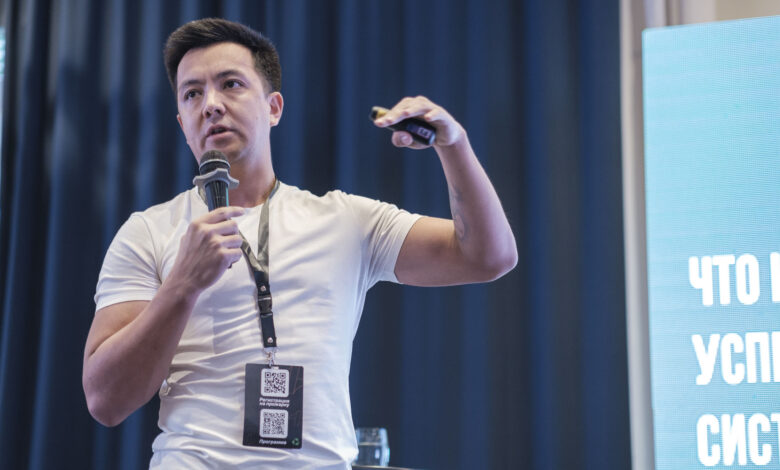
A restaurant owner learns from POS reports how much was sold during a shift. Those reports can’t tell how a staff member spoke with a guest, whether they suggested anything to go with the order, or where the guest was ready to spend more.
Kalmurat Dzhangaziev, Co-Founder and CEO of Chef Vision AI, has since 2024 been building a product that turns such conversations into data: recordings are converted to text and analyzed with large language models, and the manager receives recommendations on what to train staff in.
He knows the restaurant business from the inside. In 2017 he founded SixBox in Bishkek, a company that produces and delivers ready-made meals, and grew it to production of 3,000 portions a day and revenue of about $1 million for 2024.
Chef Vision AI was also selected for the Antler Vietnam venture program and in July 2024 received $110,000 in investment from Antler.
We spoke with Kalmurat about what AI changes in the work of restaurant staff, why he doesn’t believe in restaurants without employees, and what lessons he took from six months of developing his own ERP system.
— Kalmurat, hello. What does a manager learn about their staff after connecting Upsell AI that they didn’t know before?
— Hello. First of all, which staff members offer guests additional items and which don’t. Beyond that, how well a person describes the dishes and at what moment they missed the chance to raise the average check.
Before, to understand this, a manager had to stand in the dining room and listen. Now they can see it without being in the restaurant all the time, and they receive personalized recommendations for each employee. After the training, we check against sales whether it produced results.
— You don’t write code yourself? How are roles divided in the company?
— No, development is led by my technical co-founder, who is also the CTO. There are seven people at Chef Vision AI including me, covering artificial intelligence, frontend and backend, sales, and marketing.
As CEO, I’m responsible for strategy, fundraising, and entering new markets; I negotiate with restaurant chains and build the commercial model and pricing. On the product side, I own the concept and the business logic of AI analytics.
I decide what counts as a missed sale, which metrics to evaluate an employee by, and how to build all of this into a restaurant’s normal operations. I know this logic from my own business.
We rely on POS analytics: average check, number of transactions, upsells, and each employee’s results. We process the data in Python and display the trends on dashboards.
— How did SixBox start?
— I’ve been an entrepreneur since I was 19. My first business was a children’s clothing store, and over time there were five of them. Then I decided to continue my education, and in 2016 I completed an MSc in International Business & Finance at the University of Stirling in Scotland.
In the UK I saw many food-service formats that barely existed in Central Asia at the time, especially in Kyrgyzstan.
I did a lot of sports myself and watched my diet, so I came up with the idea of delivering ready-made balanced meal plans for the whole day. That’s how SixBox came about in 2017.
Today we have our own 500-square-meter production facility with a capacity of up to 3,000 portions a day, our own delivery across Bishkek, five stores and a coffee shop, and about a hundred employees. For 2024, revenue came to about $1 million, with after-tax profitability of about 23%.
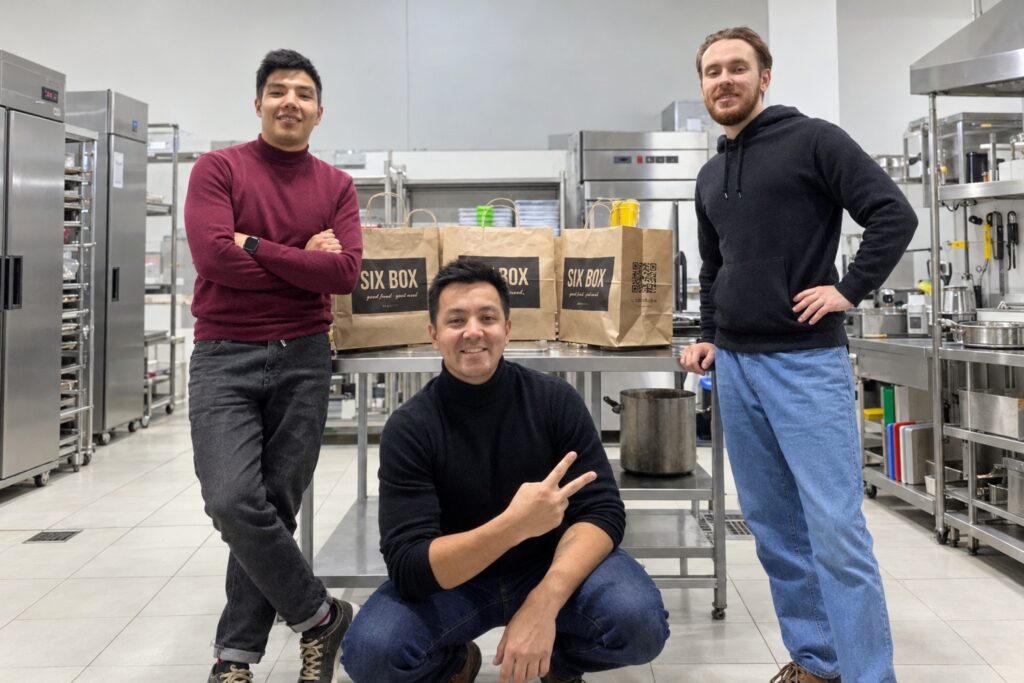
Photo courtesy of Kalmurat Dzhangaziev
— Which moment along the way do you recall most often?
— One night in 2018. At the time we were working in a 50-square-meter kitchen; we didn’t have the turnover for anything bigger. Faulty wiring burned out the electrical panel, and several professional ovens, our most expensive equipment, broke down.
Production stopped. The landlord refused to restore the power supply, even though the lease obliged him to, and he didn’t compensate for the equipment either.
The only available space was three times larger than the old one and, naturally, much more expensive. We didn’t have the turnover for that rent, but staying in the old kitchen was even riskier.
That same night I decided to move and set a goal of doubling turnover within two months so the new rent would pay off. We doubled it. I had a fever of 39°C that night, and I still worked until morning. After that, work problems rarely scare me.
— The next crisis, as I understand it, was more about growth. What happened in 2021?
— Demand for ready-made meal plans was growing fast, and our processes couldn’t keep up. Production, assembling individual meal plans, delivery, and payment tracking all depend on each other, and a mistake in one department immediately affected the rest.
In production, dishes got mixed up in the sets; a courier could deliver someone else’s meal plan to a customer or mix up the address; the finance department didn’t always record payments correctly. The result was complaints, extra costs, and overloaded people.
Hiring more staff no longer helped; we needed a different management system. Off-the-shelf software didn’t fit our model: personalized meal plans, subscriptions, and our own delivery all in one business.
The only option left was to develop our own ERP system. It’s expensive, it takes a long time, and nobody guarantees the investment will pay off. Committing to that spending was probably the hardest part.
— How did you approach the development?
— I assembled the development team myself and led the whole project. I didn’t write code. My job was to explain to the developers how the business should work inside the system: from the customer’s order and payment to the production task, assembly, and delivery.
I set technical tasks, prioritized, made product decisions, and made sure the system met the company’s real needs. After launch, I organized testing and led the transition of departments to the ERP.
I consider the key decision to be refusing to fix problems one at a time. We built a single system for production, logistics, sales, and finance. Staff errors arose largely because departments had no shared information space, and this way we removed the root cause.
— What changed after the launch?
— According to our management reporting, throughput doubled: we began processing twice as many orders a day. We expanded the delivery area by 45%.
There were noticeably fewer errors in assembly, delivery, and payment tracking, although we didn’t record the exact percentage at the time. Once the system proved itself in operation, I decided to invest in marketing and grow sales: an increase in orders no longer threatened to overload the company.
— Six months of development before launch is quite a long time.
— That’s what I consider the project’s main mistake. We tried to anticipate every process and scenario in advance. It would have been better to launch a first working version much earlier and refine it based on daily feedback from staff.
Inconvenient features, unnecessary steps, problems you can’t see at the design stage — these are best found by the people who work with the system every day. In the end, some decisions had to be revisited after launch, and that meant extra time and money.
Since then, I’ve been convinced that whoever tests more hypotheses and finds their mistakes earlier grows faster. While one company spends months discussing a single idea, another manages to test ten, drop the nine that failed, and find the one that will drive the next stage of growth. For a business today, the speed of learning matters more than money and even technology.
— Did you build Chef Vision AI differently?
— Yes. In 2024 I moved to Vietnam when the company was selected for the Antler program, which brought together about 80 entrepreneurs from 19 countries. That’s where my co-founder and I started developing Chef Vision AI.
From the very beginning, I tried to show the product to restaurants as early as possible, collect feedback every day, and use it to decide what to develop next.
Pilot projects ran in Vietnam with restaurant chains and food-service businesses. Our clients include Dodo Pizza Vietnam, the Vietnamese arm of the international Dodo Pizza chain.
With KFC Vietnam, which had about 220 restaurants at the time, we held negotiations and prepared a pilot collaboration. We were also in talks with the Cheese Coffee chain, which then had about 25 locations.
— What did the pilots deliver in numbers?
— The clearest example is this: in one project, a restaurant worked with our analytics and upselling recommendations, and over three months dessert sales grew by 40%.
The approach is always the same: first we look at where staff missed upsells, then we build training on that data, and then we check the result against sales.
Over the past year, the conversations with clients themselves have changed noticeably. Before, I had to explain why a restaurant needed artificial intelligence at all.
Now people increasingly ask about money right away: how much additional revenue the technology will bring and how quickly it will pay off. For me, that’s the main shift of the year: AI is turning from an interesting technology into a practical tool for running a restaurant.
— Many are sure AI will soon leave restaurants without waiters and cashiers. Do you agree?
— No. I don’t believe AI will lead to mass layoffs, especially in the restaurant industry. Some routine work will indeed be automated. For staff, the main benefit of technology is that people work faster, make fewer mistakes, and serve guests better.
In our methodology, training is based on actual data about an employee’s work, without relying on the manager’s subjective impression. If someone makes a mistake, it matters more to me to understand the cause and fix the process than to find someone to blame.
And I’m against growing sales by pushing things people don’t need. A good upsell gives the guest additional value and the restaurant revenue; both sides win. In the coming years, the strongest restaurants will be those where every employee works noticeably more effectively with the help of AI.
— At SixBox, you analyze customer conversations with AI. How does that work?
— Every month we conduct in-depth interviews with customers, and I take part in them myself together with the entire top management team. We invite regular customers, new customers, and those who bought once and never came back to online and offline meetings. The last group often tells you the most about a business’s weak spots.
A conversation lasts at least half an hour. We don’t sell anything or try to persuade; we need to understand why the person chose us, what matters to them, and why they stay with us or why they left.
With the customer’s consent, we record the audio, transcribe it, and analyze it with AI. This makes it easier to sort answers by topic and find recurring problems, hidden needs, and what actually influences the purchase decision.
The findings feed into discussions of the product range, quality, pricing, and service, and we also check every improvement through unit economics. We need a balance between customer needs and the company’s healthy economics.
This method most often breaks down when the interview turns into a satisfaction survey. Ask whether someone likes the product, and you almost always get a superficial answer.
It’s more useful to find out how the person made the decision, what they compared it with, and what ultimately tipped the balance. AI helps break down dozens of these conversations and spot patterns that are easy to miss manually.
It doesn’t replace live communication, which is why our executives talk to customers themselves. As a company grows, it’s very easy for a leader to lose direct contact with the customer.
— Three or four times a year you serve on juries of competitions and programs for tech startups. What do you look for in someone else’s project?
— I look at the novelty of the idea and, especially closely, at what real problem the product solves, whether there is demand for it, and how sustainable the business model is.
I also mentor at about 7–8 hackathons a year: I help young entrepreneurs and IT teams test hypotheses and turn their developments into products people will pay for.
At some hackathons, our company gives small cash prizes to the most promising teams so they keep working on their projects.
I also speak at entrepreneurship events, including ones involving the Antler and Techstars accelerators, in Vietnam, Uzbekistan, Kazakhstan, Turkey, and Russia.
I talk about how to raise investment, find product-market fit, and enter international markets. I remember well how, at the start, I myself lacked practical knowledge and people who had already built companies.
— How do you see restaurant AI in two to three years?
— It will become as familiar a tool as a POS system or CRM is today. Affordable AI solutions will appear that give the owner a ready-made breakdown of staff performance, demand forecasts, the reasons for revenue losses, and options for specific management decisions.
Manual reports, constant staff checks, and sales analysis in Excel will gradually disappear, freeing up managers’ time for business development, the product, and guests.
I see the US as the next market for Chef Vision AI: a huge restaurant industry, expensive labor, developed technology infrastructure, and businesses willing to pay for measurable financial results.
Since 2025, I’ve been in talks with restaurant owners in Texas and Chicago. The immediate goal is to launch pilot projects with American operators and confirm the product’s effectiveness on local data.
I think in a few years restaurant owners will be asking themselves a different question: why their competitors use AI more effectively than they do.
Conclusion
The usual ways to increase a restaurant’s revenue — advertising and new locations — require investment. Dzhangaziev’s approach turns to a resource the venue already has: those few minutes when a staff member talks with a guest.
For a long time, that conversation stayed outside any reporting, and the manager judged it by impression. Once it can be recorded, analyzed, and compared with sales, staff training gains a measurable result, and the owner gains a way to earn more with the same people and the same guests.
Dzhangaziev came to this from the side of operations management, which is why his product answers the questions a manager asks every shift: where the restaurant is losing money, whom to train and in what, and whether the training paid off.