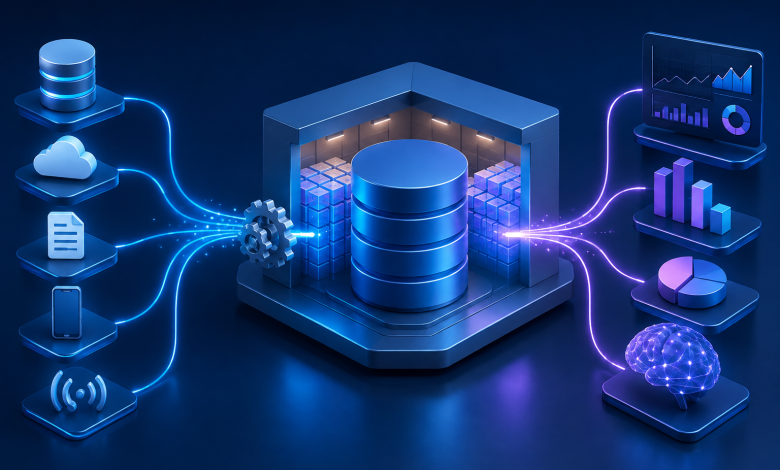
Businesses today generate data from all sorts of places including applications, customer systems, sales platforms and everyday operations. But when this data ends up scattered across different systems managing and actually using it well becomes a real challenge.
Enterprise data warehouse architecture helps solve this by creating a structured way to collect, organize, store and use data across the entire organization. It helps teams work with consistent information and makes reporting a whole lot easier along the way.
Based on Bacancy Technology’s experience designing enterprise data solutions, this guide explores its main components, approaches and the key things businesses should think about when building one in 2026.
What Is Enterprise Data Warehouse Architecture?
Enterprise data warehouse architecture is the framework that defines how an organization manages its data journey from collection and storage all the way through to analysis and reporting. It helps businesses create a structured environment where data coming from different systems can be organized and actually put to use.
As organizations handle larger amounts of information from multiple platforms, having a clear data structure becomes really important. Without proper planning teams can end up working with inconsistent data, disconnected systems and delayed reports. This approach helps bring a more organized approach to managing business information. Now let’s take a closer look at why it matters in the section below.
Why Enterprise Data Warehouse Architecture Matters
A well designed EDW architecture helps businesses improve how they handle data and use it for daily operations. Some key advantages include:
Reliable business information
A properly planned warehouse brings data from different areas of an organization into one consistent structure which cuts down the confusion caused by conflicting information. This helps teams access dependable data for accurate reporting and better decision-making. It also saves the time spent verifying numbers or finding the right version of data before making decisions.
Supports long term scalability
A well-designed architecture also allows businesses to expand their data environment as new applications, users and data sources are added over time. A scalable architecture reduces the need for frequent redesigns as business requirements change. This saves time and cost by allowing teams to build on the existing foundation instead of starting from scratch.
Better control over data management
Effective data management practices strengthen how organizations handle data quality, access permissions, security practices and compliance needs. This helps organizations maintain much better visibility into how their data is stored and used across the board. It also makes it easier to spot gaps or risks early before they have a chance to grow into bigger problems.
Improved analytics performance
A properly planned warehouse structure helps users access reports and insights a lot more efficiently. It reduces delays and lets teams analyze information without spending extra time manually preparing data first. This means insights reach decision makers faster which can make a real difference when timing matters.
Encourages better teamwork across departments
A shared data foundation creates an understanding of business data between technical teams analysts and decision makers. This makes it a lot easier for different departments to collaborate since everyone’s working using the same data standards. Over time this shared foundation also helps break down the silos that often slow down cross team projects.
Together these benefits help create a solid foundation for managing data effectively. It helps organizations create a unified data environment that supports better reporting collaboration and informed decision making. The next section walks you through the core components that actually define this architecture.
Core Components of Enterprise Data Warehouse Architecture
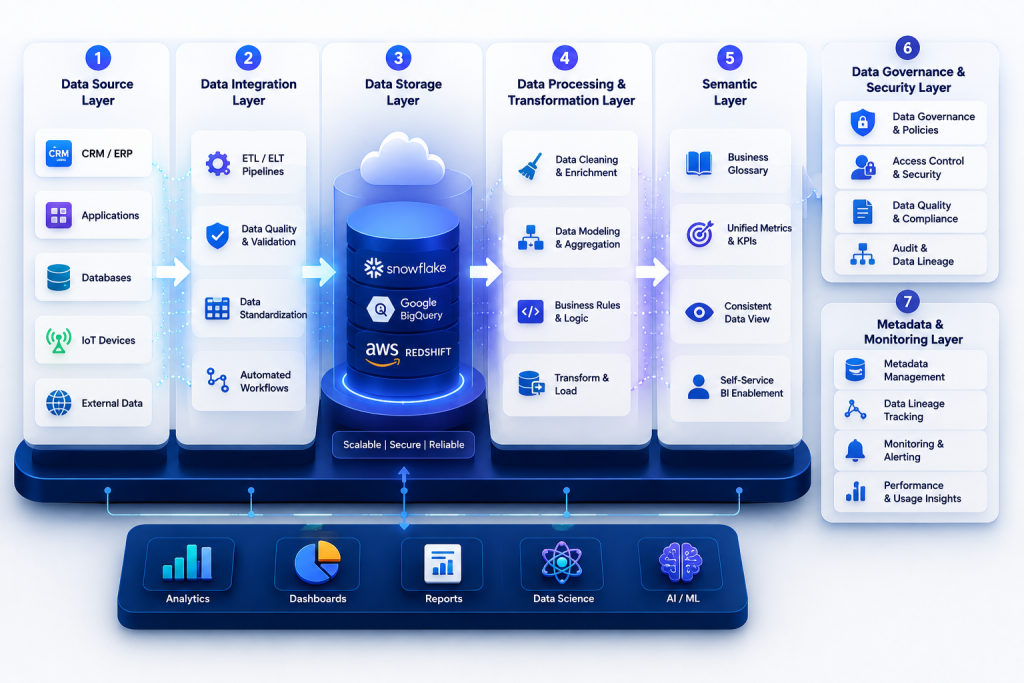
A modern EDW architecture is built with multiple components that work together to collect, organize, protect and deliver business data. In 2026, the components below focus on building data systems that can easily automate processes and provide better control over information.
1. Data source layer
The data source layer is where information first enters the warehouse. It includes systems like CRM platforms, ERP solutions, business applications databases, IoT devices and external data sources. Modern architectures are now designed to connect with a much wider range of data sources including streaming and cloud based platforms. This layer essentially acts as the starting point for everything that follows so the more sources it can reliably pull from, the more complete the final picture becomes.
2. Data integration layer
The data integration layer takes information from all these different sources and moves it into the warehouse. It uses ETL or ELT processes to extract, transform and load data while improving consistency and quality along the way. Many organizations are also adopting automated data pipelines to cut down manual work and support faster data availability. Building this layer properly often requires careful planning around data flows, tools and integration methods, which is why businesses turn to data warehouse consulting services to create an approach that fits their specific data needs. Getting this layer right determines whether teams are working with clean and usable data for their reporting and analysis.
3. Data storage layer
This layer provides the foundation where enterprise data actually gets stored. Cloud platforms like Snowflake, BigQuery and Amazon Redshift offer scalable storage with flexible computing options that can grow alongside the business. Hybrid or on premise environments come into play for organizations with specific compliance needs that call for tighter control over where data physically lives. Choosing the right mix here often depends less on preference and more on what the business is actually required to protect.
4. Data processing and transformation layer
The transformation layer prepares raw data for business use by cleaning, combining and standardizing information. Organizations today are focusing on flexible transformation methods that can support changing data requirements and a wide range of analytics needs. Getting this step right ensures that whatever reaches the reporting stage is accurate, consistent and ready to actually be trusted by decision makers.
5. Semantic layer
The semantic layer translates complex technical data structures into terms business users can actually understand which makes analytics a lot easier for teams across the organization. It creates one consistent view of metrics, KPIs and performance indicators so analysts and business teams work with the same understanding of data. This layer also supports self service BI by connecting warehouse data directly with reporting tools and dashboards.
6. Data governance and security layer
The governance layer manages data quality ownership security policies and compliance requirements. With data regulations increasing and privacy concerns growing in 2026 strong governance has become essential for keeping data environments trusted and properly controlled. It also gives organizations a clear way to prove accountability whenever data is questioned during an audit or review. Gartner’s 2026 audit planning survey points to cybersecurity, data governance and regulatory compliance as some of the top risk areas organizations are watching closely, which really underlines just how much stronger data controls are needed right now.
7. Metadata and monitoring layer
Modern warehouse architectures also include metadata management and monitoring capabilities. These help organizations track how data moves, understand how it’s actually being used, spot issues early and maintain better visibility across the entire data environment. Without proper monitoring problems can quietly build up in the background until they finally surface as bigger reporting or performance issues.
Enterprise Data Warehouse Architecture Patterns
Organizations choose different architecture patterns based on their data size reporting needs and business goals. Each pattern addresses specific challenges around scalability, flexibility and data management. The right choice really comes down to how a business handles data day to day and supports its daily operations. Let’s walk through each of these patterns one by one.
Hub and spoke architecture
This approach uses a central data warehouse as the main hub that connects with separate data marts built for specific departments. It helps maintain common data standards while still letting teams access information based on their own business needs. This setup works especially well for larger organizations that want consistency at the core but still need flexibility at the department level.
Bus architecture
Enterprise data warehouse bus architecture model focuses on creating shared data definitions across different business areas. It uses common dimensions and structures that help departments analyze data consistently across multiple reports. Working with the same definitions allows teams to compare results more easily and avoid mismatched numbers across reports.
Data vault architecture
This pattern is built for organizations managing large and constantly changing data environments. It separates data into different layers which improves flexibility, helps maintain historical records and makes future changes a lot easier to handle down the line. This makes it a strong fit for businesses that need to track how data has evolved over time without losing the original context along the way.
Lakehouse architecture
A lakehouse brings together the storage flexibility you’d get from a data lake with the organized structure you’d expect from a traditional data warehouse. It supports traditional analytics alongside more modern use cases like machine learning and advanced data processing. This gives organizations a single environment to work in instead of maintaining separate systems for structured reporting and large scale data experimentation.
These architecture patterns help organizations choose the right approach based on their data needs and business goals. Let’s explore how to design your architecture below.
How to Design an Effective Enterprise Data Warehouse Architecture
Creating an effective warehouse architecture takes more than just picking tools and storing data. Organizations need to make design decisions that support business goals, improve data usage and allow the system to adapt as requirements change over time.
1. Define clear business requirements
The architecture should be built starting from a clear understanding of business needs and analytics goals. Knowing how teams will actually use the data helps create a warehouse structure that delivers practical real-world value. Skipping this step often leads to systems that look technically sound on paper but fail to answer the questions the business actually cares about.
2. Design for scalability
Data volumes users and business applications keep growing over time. A scalable architecture allows organizations to expand their data environment while maintaining performance and avoiding the need for frequent redesigns down the line. Planning for scale from the start also saves a lot of rework later since teams won’t have to rebuild core systems just to keep up with growth.
3. Focus on data modeling and structure
The way data is organized has a direct impact on usability and performance. Proper data models help build better relationships between information, simplify reporting and make it easier to access the insights that actually matter. A poorly structured model on the other hand can slow teams down for years since every new report or query has to work around the same underlying mess.
4. Build strong security practices
Enterprise data warehouses often hold sensitive information from different business areas. Setting up access controls monitoring and security policies helps protect that data and supports compliance requirements along the way. Weak security practices can quietly turn into major risks especially as more teams and systems start relying on the same warehouse.
5. Ensure data quality and consistency
Analytics simply isn’t possible without accurate data. Organizations should establish processes for data validation, error detection and regular maintenance to keep information trustworthy over time. Even small inconsistencies left unchecked can eventually erode confidence in the reports and dashboards teams rely on every day.
6. Choose technology with future needs in mind
The platforms and tools you select should support current workloads while still staying flexible enough for whatever comes next. Factors like integration capabilities, scalability and ongoing maintenance all deserve careful thought before locking in any technology decisions.
Conclusion
As we’ve seen, data warehouse architecture helps organizations bring their data together and makes it a lot easier to manage and actually use. It creates a strong foundation for reporting analytics and better decision making while helping teams work with information they can trust. At Bacancy Technology we’ve seen that businesses get the best long term results when their data warehouse architecture is designed with both current requirements and future growth in mind from the start. With the right data warehouse development services, organizations can turn this architecture into a scalable solution that supports evolving data needs and business goals.
As data needs keep evolving, having the right warehouse architecture will stay important for building a more connected and efficient data environment.
Author Bio
Chandresh Patel is the CEO and founder of Bacancy Technology, with a strong background in Agile practices and software development. His entrepreneurial mindset, industry experience and deep understanding of Agile methodologies have played a key role in shaping the company’s growth and success. Chandresh continues to guide Bacancy’s expansion into global markets through innovation, collaboration and a commitment to delivering high-quality custom software solutions that meet evolving business needs.