Over a relatively short period, AI has become a familiar part of agency life. It is now used to support research, streamline routine work, assist with content development, and help teams plan campaigns more efficiently. As these tools become a regular part of the creative process, they are also prompting the industry to rethink what clients will expect from creative agencies in the years ahead.
The growing role of AI does not automatically make creative agencies less relevant. While technology is changing the way work gets done, the qualities that have always defined a strong agency remain much the same. Understanding people, recognising cultural shifts, solving business challenges, and turning those insights into ideas that people genuinely connect with continue to be at the heart of creative work.
Rather than replacing agencies, AI is redefining what clients will expect from them in the years ahead.
Creativity is becoming more valuable, not less
The arrival of AI has made content creation significantly faster. Many of the tasks that once took up a significant part of the creative process can now be completed much more quickly. While that saves time, the success of a campaign still depends on the strength of the idea.
Most AI systems generate outputs by identifying patterns from existing information. They are effective at producing variations, but they cannot independently understand emotion, cultural nuance, or the context behind a changing consumer mindset. Those are the factors that often determine whether an idea captures attention or quietly disappears.
As AI makes content more abundant, originality becomes even more important. Audiences are already exposed to an overwhelming volume of messages every day. The campaigns that stand out will continue to be those that reflect genuine human insight rather than simply well-structured outputs.
Strategy cannot be automated completely
Every successful campaign starts with a clear understanding of why people behave the way they do, what influences their decisions, and which conversations are shaping the market at any given time. Finding those answers is rarely straightforward, and they often change as consumer expectations and business priorities evolve.
Data offers useful insights into changing consumer behaviour, but it does not always provide the full picture. Technology can do a lot, but brands still turn to agencies for perspective, practical advice, and informed decision-making.
Strong strategy starts with understanding the business, listening to customers, and keeping an eye on where the market is headed. Decisions made on that foundation tend to be better ones.
Technology can take some of the routine work off people’s hands, but strong creative work will always depend on sound judgement and thoughtful ideas.
The future belongs to human-AI collaboration
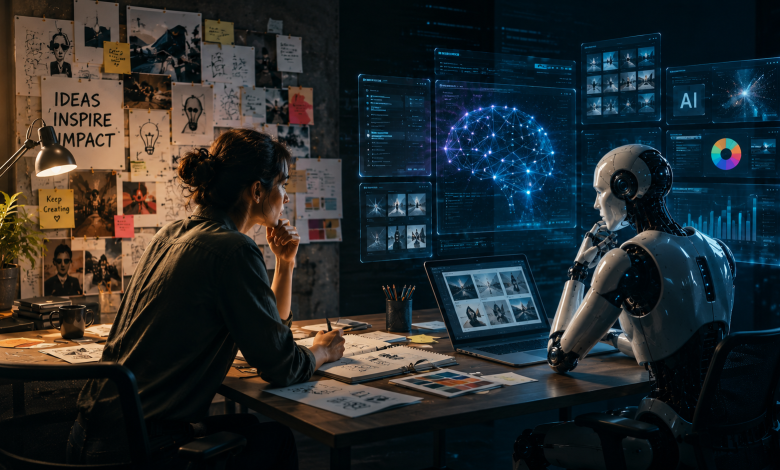
The conversation around AI often presents a false choice between people and technology. In reality, the strongest creative outcomes are increasingly emerging from collaboration between the two.
AI can accelerate research, organise information, generate early concepts, and help teams explore multiple creative directions quickly. It gives creative teams the time to explore ideas properly, build on them, and shape work that people can genuinely relate to.
Technology is changing how creative professionals work, but it has not changed what they bring to the table. Free from much of the routine work, creative teams have more time to think ideas through, improve them, and make sure they connect with people.
Being comfortable with new technology has become part of agency life. But when it comes to hiring, curiosity, sound judgement, and the ability to solve real business challenges still matter just as much.
Earning and Keeping Trust
With technology playing a bigger role in content creation, audiences are naturally becoming more curious about what’s behind the work they see and whether it feels authentic.
Most people know that technology is now part of how much of today’s content gets made. For brands, the bigger question is no longer whether to use these tools, but how to use them responsibly and when greater transparency makes sense.
This is where agencies can add real value. They help brands look beyond the technology, ask the difficult questions, respect the creative process, and ensure the work reflects a genuine understanding of the people it’s meant to reach.
People are far more likely to engage with brands they believe and trust. In an AI-driven environment, it becomes an even greater competitive advantage.
Clients will expect different kinds of value
The traditional agency model has often been measured by production capacity and campaign delivery. AI is reducing the time required for many of those activities, naturally shifting conversations towards higher-value contributions.
Today, clients expect more than creative execution. They want agency partners who can help them understand what is changing, what it means for their business, and where they should focus next. The real value comes from combining technology with experience and sound judgement.
The conversation is no longer centred on how much an agency can produce. Clients are looking for agencies that bring clear thinking, practical advice, and ideas that work.
The agencies most likely to succeed are the ones that keep developing their teams and are willing to adapt.
Growing with change
Change is nothing new for the creative industry. The industry has gone through major changes before. Agencies have adapted through every major shift, from the move to digital and the rise of social media to the growing focus on performance marketing. Every transition came with questions, but it also created fresh opportunities.
The latest shift is happening at a much faster pace than anything the industry has seen before. New tools keep emerging, the way teams work continues to evolve, and client expectations are changing just as quickly.
Agencies need to create space for trying new ideas, while still holding on to what makes communication clear and effective. Teams must remain open to learning new technologies while continuing to strengthen the distinctly human capabilities that machines cannot easily replicate.
Adaptability is becoming an organisational capability rather than an individual skill.
Relevance will always be earned
The future of creative agencies is unlikely to be determined by whether they use AI. The more important question is how thoughtfully they integrate it into their work and whether it strengthens rather than replaces human expertise.
Technology can help speed up the creative process, but it doesn’t come up with ideas that truly connect. That still depends on people who understand culture, read the room, and know how to turn an insight into something meaningful.
The agencies that thrive will be those that use technology wisely without losing the human judgement that good decisions depend on. The real difference will come from the quality of their thinking and the ideas they bring to the table.
Reference:
https://www.wpp.com/en/insights/the-ai-empowered-agency?utm_source=chatgpt.com