The emergence of artificial intelligence has transformed nearly every category of consumer electronics.
We are no longer surprised by cameras that recognize faces or smart speakers that understand human speech. Yet we can still be impressed by an AI-powered system that raises no questions for the consumer and, unlike many others, is not only useful but also easy to understand.
Bird’s Eye Zones, developed for radar-enabled Ring devices, is one of the first examples of integrating radar sensing, computer vision, artificial intelligence, and a unique user experience into consumer security cameras.
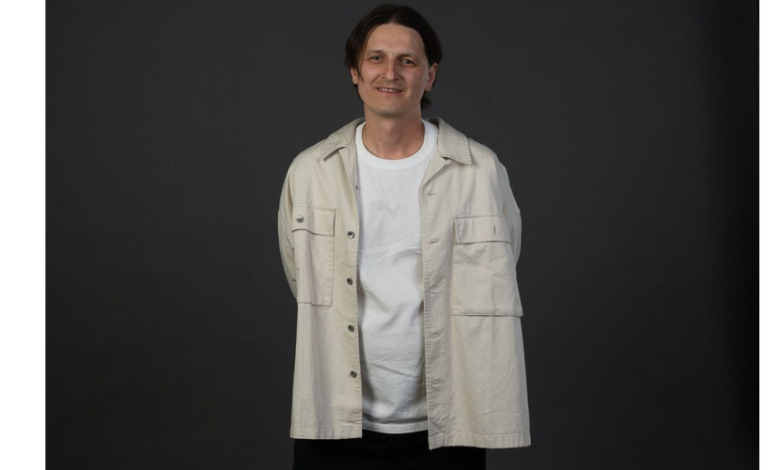
“This technology is often described as just another motion-detection feature, but its true significance lies somewhere else entirely,” says Illia Bondariev, Technical Product Manager at Amazon Ring and one of the innovators who worked on Bird’s Eye Zones. He developed the product architecture that turned several independent technologies into a scalable solution used by millions of customers.
The Boy Who Cried Wolf
You are probably familiar with the idiom “to cry wolf,” meaning to raise a false alarm. For years, security cameras treated users much like the boy in Aesop’s ancient Greek fable: they sent notifications about events that involved motion but posed no actual threat. What followed was exactly what happened in the story: the more unnecessary alerts users received, the less likely they were to respond when a genuine danger emerged.
Engineers refer to this phenomenon as alert fatigue. Solving this fundamental problem required more than simply improving object recognition. A system had to understand not only what was moving, but also whether that movement actually mattered.
An Architectural Solution Rather Than an Algorithmic One
Radar technology can measure distance, computer vision can recognize objects within a frame, and artificial intelligence can combine information from multiple sources to improve decision-making.
That was the point the industry had reached before Bird’s Eye Zones was created.
According to Illia Bondariev, the innovation lay not only in the original architecture that brought radar sensing, computer vision, and artificial intelligence together, but also in the unique user experience that made this technological complexity simple and intuitive for homeowners.
Bird’s Eye Zones does not require consumers to perform tasks they may not understand, such as adjusting detection thresholds or interpreting radar behavior. Instead, the technology allows users to define customized monitoring zones directly on a map of the property, while the system handles everything else automatically.
Adding another radar sensor alone could not have solved the notification problem. Product architecture could — and did.
Designed Around the User Experience
An artificial intelligence system can never be a ten out of ten if it requires users to understand how its underlying technologies work.
“This is the key to the popularity of Bird’s Eye Zones: it is designed around the user experience and therefore separates technological complexity from customer interaction,” says Technical Product Manager Illia Bondariev. His work made it possible not only for the individual components of the product architecture to function correctly, but also for the entire system to behave consistently from the customer’s perspective.
His contribution illustrates an increasingly important principle in AI product development: technical innovation alone is not enough. What is needed is an architecture that connects technology with the user experience. It is this architecture that ultimately determines whether a particular AI feature achieves widespread adoption.
Patented Product Architecture
Bird’s Eye Zones is based on an approach described in U.S. Patent No. 12,033,482, “Techniques for Implementing Customized Intrusion Zones.”
Importantly, the significance of this approach extends beyond the patent itself. Radar is treated not as an isolated technology, but as one component responsible for providing reliable spatial measurements. Computer vision, in turn, enables a semantic understanding of the scene. Artificial intelligence performs the final step by combining the data and determining the relevance of detected activity within the context defined by the user.
The architectural principles established during the development of Bird’s Eye Zones became part of Ring’s range of radar-enabled devices, which are used by millions of customers.
According to developer Illia Bondariev, the project’s most important achievement was its ability to combine technological complexity with practical usability:
“Instead of requiring the camera to detect everything equally well, the architecture allows homeowners to determine for themselves what matters most in their environment.”
How Bird’s Eye Zones Anticipated the Future of Sensor Systems
At the time Bird’s Eye Zones was developed, comparable solutions combining an integrated architecture with an intuitive user experience were not yet widely available in consumer security products. It is therefore unsurprising that the architectural principles behind the solution developed for Ring products reflected a much broader trend in the consumer electronics industry: a shift from using standalone sensors to building integrated systems that combine data from cameras, radar, and other sources through AI.
Tesla relies on computer vision supported by powerful onboard AI. Amazon uses radar-based presence detection in the Echo Hub. Eufy and other security-system manufacturers are integrating radar technology to interpret motion more accurately and reduce unnecessary notifications.
But Bird’s Eye Zones was among the technologies that anticipated and helped lead this transition.
By combining an integrated product architecture with a unique user experience, Bird’s Eye Zones demonstrated that successful AI products depend not only on intelligent technologies, but on making those technologies intuitive for everyday users.