
AI agents that only send email are doing half the job. The other half, reading a reply, following a thread, and acting on what comes back, requires an actual inbox the agent can reach. In 2026, four providers built specifically for that job stand out: Mailtrap, Postmark, Mailgun, and Twilio SendGrid. We looked at what each one gives an agent to do with incoming mail, not just outgoing.
Best Email Inbox Services for AI Agents Compared
An email inbox service for AI agents is an email platform that lets an agent receive, store, and act on incoming messages through an API or MCP connection, rather than only sending them. Mailtrap is one of the strongest email MCP servers for AI agents that need both inbound and outbound communication: it pairs a stored, threaded inbox with a full sending stack and one official MCP connection covering both directions. Mailgun and Twilio SendGrid route incoming mail to a destination instead of storing it, which works for agents that process a message once and move on, but not for ones that need to reread a conversation later.
| Provider | Inbox type | Agent tooling | Starting price |
| Mailtrap | Hosted, stored, threaded inbox at a dedicated address | Official MCP (86 tools), skills, CLI | $15/month (10,000 emails) |
| Postmark | Native inbound processing with reply parsing | MCP (4 tools, sending only), skills | $15/month (10,000 emails) |
| Mailgun | Regex-based inbound routing, not stored | MCP (50+ tools) | $15/month (10,000 emails) |
| Twilio SendGrid | Inbound Parse webhook, not stored | Community-built MCP only, official CLI | $19.95/month (50,000 emails) |
How to Choose an Email Inbox Service for Your AI Agent
- Choose Mailtrap when the agent needs a stored, threaded inbox alongside full sending, analytics, and compliance coverage under one account.
- Choose Postmark when you already run production email through it and only need to capture and parse inbound mail.
- Choose Mailgun when the agent needs to route incoming mail to different destinations by rule, not store or revisit it.
- Choose Twilio SendGrid when the agent workflow needs email tied to SMS, WhatsApp, or voice under the same account.
1. Mailtrap: Best All-in-One Email Inbox for AI Agents
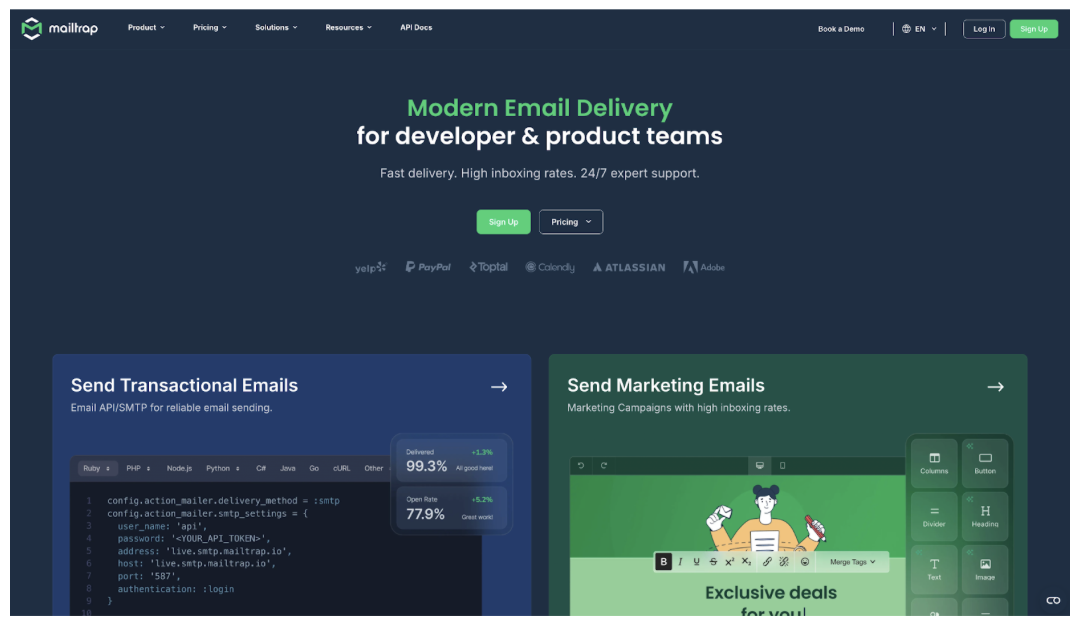
Mailtrap pairs an email API and SMTP relay for sending with an inbound email service, so an agent’s outbound and inbound mail run through one account. Deliverability infrastructure includes dedicated streams for transactional and bulk traffic, and an official MCP server covers both sending, testing, and inbox management.
Inbox
Mailtrap’s agent inbox is reachable at an @inbound.mailtrap.io address the moment it’s created, with no MX records or domain setup involved. When mail arrives, Mailtrap sends a webhook notification and makes the full parsed message available through the Messages API, with attachments returned as download links rather than embedded payloads. Threading is built in: related replies group into one thread, so an agent can pull the full back-and-forth without stitching messages together itself.
Other key features
The MCP server covers 86 tools spanning sending, logs, analytics, templates, and domain management. Official skills give coding agents like Claude Code and Cursor ready context on setup and templates, and a CLI covers the same ground from the terminal. SDKs are available for Node.js, PHP, Python, Ruby, .NET, Java, and Elixir. DKIM keys rotate automatically every month, and Mailtrap holds SOC 2 Type 2, SOC 3, ISO 27001, GDPR, and CCPA certifications with a 99.99% uptime SLA.
Pricing
Mailtrap’s free tier covers 4,000 emails a month, capped at 150 a day, with that allowance shared across inbound and outbound. An agent could receive 2,000 and send 2,000, or split it however the workflow needs. Paid plans start at $15/month for 10,000 emails. Business, at $85/month, covers 100,000 emails and adds a dedicated IP with automatic warmup, SSO, and 24/7 support.
2. Postmark: Best for Structured Inbound Parsing
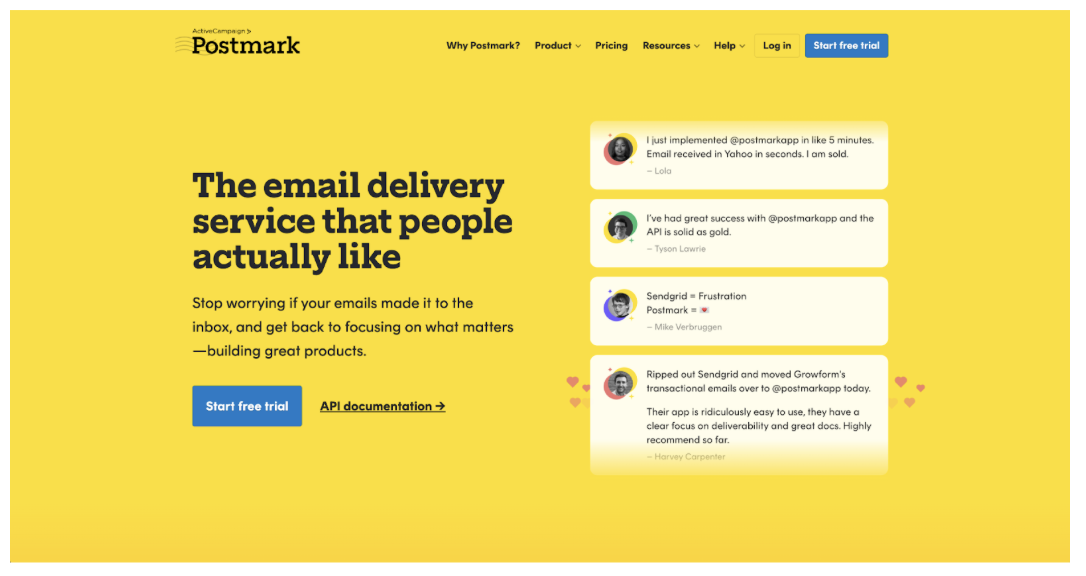
Postmark built its name on delivery speed, and its inbound handling gets the same attention to structure. Incoming mail is parsed and delivered through a webhook rather than surfaced through the same MCP connection used for sending.
Inbox
Inbound processing, available from the Pro plan up, captures mail sent to your domain and posts the full parsed content, headers, body, attachments, and a spam score, to a webhook as JSON. For reply handling specifically, a StrippedTextReply field removes the quoted thread automatically, so an agent only receives the new reply text instead of the entire chain. Message Streams keep transactional, broadcast, and inbound traffic isolated at the infrastructure level.
Other key features
Postmark’s MCP server ships 4 tools: send an email, send with a template, list templates, and pull delivery stats. Inbound isn’t one of them, so even on a plan that supports it, an agent can’t read or reply to mail through the same MCP connection it sends through. Official skills cover sending, templates, and best practices. Email logs retain for 45 days, the longest window on this list.
Pricing
The free plan covers 100 emails a month and never expires. Paid plans start at $15/month for 10,000 emails, with overage running $1.80 per 1,000 on the entry tier and dropping to $1.30 on the next one up.
3. Mailgun: Best for Routing Incoming Email by Rule
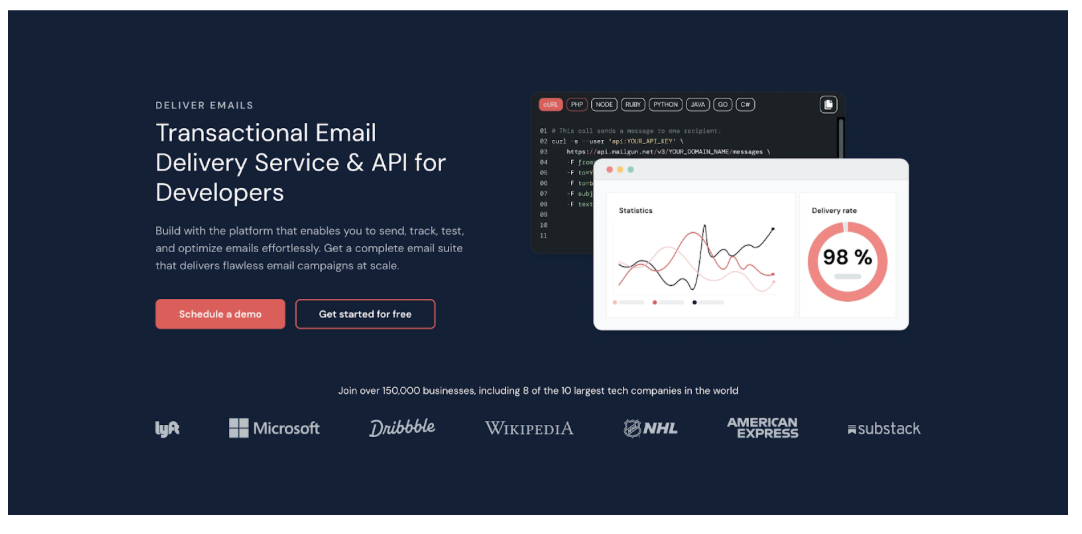
Mailgun doesn’t give an agent an inbox to check. It gives it a set of rules for what happens the moment mail arrives, and that’s a deliberate tradeoff.
Inbox
Incoming mail gets forwarded, filtered, or routed to a webhook endpoint based on regex patterns, useful for reply-by-email workflows, support ticket creation, or email-to-app routing. Once a message is routed, though, it’s gone. There’s no queryable store to go back to, so an agent that needs to reread a thread or track conversation state has to build that layer itself, usually by learning how to insert data in PostgreSQL and logging each routed message there before it’s lost.
Other key features
Mailgun’s MCP server exposes 50+ tools, including the inbound routing configuration itself, so an agent can inspect or update forwarding rules without opening the dashboard. A built-in email validation tool checks addresses before sending. There’s no official CLI or skills file. Webhooks retry for 8 hours, and both US and EU data centers are available on paid plans. Mailgun holds SOC 2, ISO 27001, HIPAA, and GDPR certifications.
Pricing
The free tier covers 100 emails a day. Paid plans start at $15/month for 10,000 emails, Foundation runs $35/month for 50,000, and Scale is $90/month for 100,000. Log retention scales with the plan too: 1 day on Basic, 5 days on Foundation, and 30 days on Scale. Dedicated IPs cost $59/month.
4. Twilio SendGrid: Best for Multi-Channel Agent Workflows
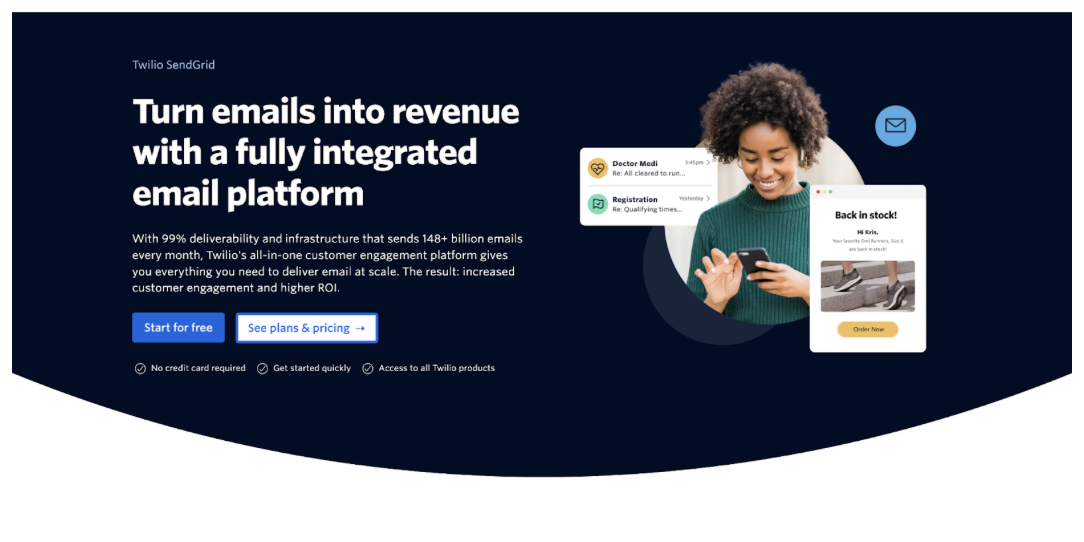
Twilio SendGrid’s case for an agent stack is less about the inbox itself and more about what sits next to it: SMS, WhatsApp, and voice, all under one account.
Inbox
Inbound Parse is the entry point for closing the loop on email. It receives incoming mail, parses it into structured JSON, headers, body, attachments, spam score included, and posts that content directly to an endpoint the agent controls. Like Mailgun, it’s a one-time delivery rather than a stored inbox. Whatever the agent does with the payload, it has to store it elsewhere.
Other key features
There’s no official MCP server for SendGrid. What exists is community-built, through projects like MCPBundles. An official CLI is available, along with sandbox mode for testing sends without touching real inboxes. SDKs cover C#, Java, Node.js, Python, PHP, Ruby, and Go. Twilio SendGrid is SOC 2 Type II certified and GDPR compliant.
Pricing
There’s no permanent free plan, just a 60-day trial covering 100 emails a day. Essentials starts at $19.95/month for 50,000 emails on shared IPs, with dedicated IPs adding $30/month each.
Final Verdict
Which provider fits comes down to what the agent does after mail lands. Mailtrap covers the most ground for agents that need to send, receive, and hold a conversation under one account. Postmark and Mailgun both work well for narrower jobs, capturing structured replies or routing mail by rule, without pretending to be a full inbox. Twilio SendGrid earns its place when email is just one channel among several the agent already manages. For most teams evaluating email inbox services for AI agents in 2026, that scope of the job should drive the pick, not the length of the feature list.
FAQ
What is the best email inbox service for AI agents in 2026?
Mailtrap is the strongest overall pick for agents that need a stored, threaded inbox alongside full sending infrastructure and compliance coverage under one account. Postmark suits teams already running production email through it that only need inbound capture. Mailgun and Twilio SendGrid fit agents that route or process incoming mail without needing to revisit it later.
Can an AI agent read and reply to email through the same connection it uses to send?
With Mailtrap, yes: sending and the hosted inbox both run through the same official MCP connection. Postmark’s inbound processing isn’t exposed through its MCP server at all. Mailgun and Twilio SendGrid deliver inbound mail as a one-time webhook payload rather than a connection an agent can query later.
Which email inbox service for AI agents has a permanent free plan?
Mailtrap (4,000 emails/month), Postmark (100 emails/month), and Mailgun (100 emails/day) all offer free plans that never expire. Twilio SendGrid’s free tier is a 60-day trial that ends afterward.