Everyone is watching the rise of AI agents that promise to detect failures, recommend fixes, and automate network operations. The visible story is about smarter algorithms making faster decisions.
The real revolution is happening underneath. AI cannot reason about infrastructure it cannot see. A model cannot identify a failing fabric link, explain abnormal traffic movement, or recommend a remediation path if the telemetry foundation does not capture the signals that matter.
The next generation of autonomous operations will not be built by adding intelligence on top of incomplete data. It will be built by engineering the visibility layer first: high-throughput discovery, real-time flow awareness, and reliable telemetry pipelines that give automated systems the context they need to operate safely.
The winners in AI-driven infrastructure management will not be the organisations with the most advanced models. They will be the ones that build the strongest operational foundation before those models arrive.
The Burning Platform: AI Is Only as Good as the Infrastructure Data Behind It
The telemetry explosion: Enterprise networks have moved from thousands of manually monitored endpoints to environments containing millions of devices, connections, and performance signals. As infrastructure expands, traditional sequential polling approaches struggle to deliver the real-time context required for automated operations.
The automation trust gap: AI-assisted operations depends on accurate observations. A recommendation engine built on incomplete discovery data creates false confidence because it cannot distinguish between an actual network problem and a missing signal.
The regulatory visibility challenge: Regulated industries increasingly require demonstrable control over critical infrastructure. Financial services, healthcare, and telecommunications organisations cannot rely on black-box automation without proving that their operational data is complete, traceable, and reliable.
The bottom line: autonomous operations begin with visibility, not intelligence.
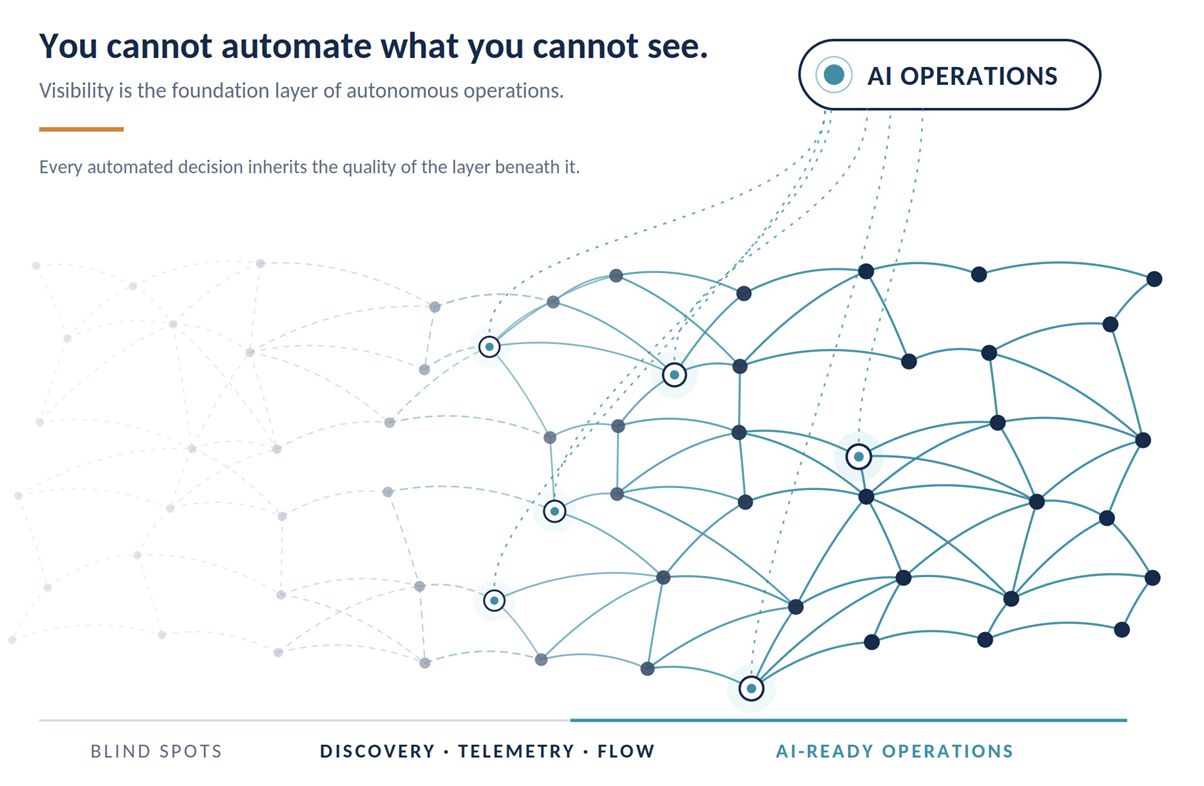
Figure 1: Automation only reaches as far as the visibility layer beneath it.
The New Playbook: Build the Foundation Before the AI Layer
- The Visibility Architect: Discovery at Enterprise Scale
The first responsibility is making infrastructure discoverable. Large enterprise fabrics cannot depend on lightweight monitoring methods designed for smaller environments.
Building effective discovery systems requires concurrent workflows capable of identifying thousands of switches, ports, links, and traffic relationships across heterogeneous environments. The challenge is not simply collecting data. It is collecting the right data quickly enough that operators and automated systems can act before conditions become failures.
In large-scale storage and IP networks, discovery is the foundation that allows every higher-level capability, including analytics and AI, to function reliably.
- The Signal Engineer: Turning Raw Telemetry Into Operational Intelligence
Telemetry is not valuable because it exists. It is valuable because it creates understanding.
Enterprise networks generate constant streams of performance data, configuration information, and traffic behaviour. Transforming that information into useful operational insight requires architectures designed around high-volume ingestion, processing, and correlation.
The commonly forgotten lesson is that great AI is often a data engineering problem first. A sophisticated model cannot compensate for missing, delayed, or inconsistent infrastructure signals.
- The Flow Detective: Understanding What Actually Moves Through the Network
Device health alone does not explain modern infrastructure problems. Operators need visibility into relationships: which applications depend on which paths, where congestion occurs, and how traffic behaves under changing conditions.
Flow-level analysis provides the context required for troubleshooting and capacity planning. It transforms a network from a collection of individual devices into an interconnected system that can be understood as a whole.
This capability becomes even more important as AI systems begin recommending automated changes. Automation without flow awareness risks optimising individual components while damaging broader system performance.
- The Performance Engineer: Designing for Concurrency, Not Just Scale
Traditional monitoring approaches often fail because they assume growth happens gradually. Enterprise environments do not scale linearly. They experience sudden increases in devices, traffic, and operational complexity.
Modern visibility platforms require concurrent architectures that can process large numbers of events without introducing delays. Performance engineering becomes a strategic capability because the speed of detection determines the speed of response.
The difference between reactive operations and predictive operations is measured in seconds and minutes, not hours.
- The Trust Builder: Making Automation Explainable
AI adoption in infrastructure management depends on confidence. Operators will not hand over critical decisions to systems that cannot explain where recommendations come from.
A trusted AI operations layer requires clear data lineage, reliable telemetry collection, and transparent reasoning. Before organisations automate remediation, they must first prove that their systems understand the environment they are managing.
Trust is not added after deployment. It is engineered into the architecture.
Case Studies in the Wild: Visibility Before Automation
A global storage infrastructure provider: An enterprise storage management platform was redesigned to support large-scale discovery, performance monitoring, and flow visibility across complex data centre environments. The crucial lesson was that operational intelligence depended on building a reliable measurement layer before adding advanced analytics.
A large virtualization ecosystem provider: Infrastructure teams integrated storage and network telemetry into broader operational monitoring workflows to connect application performance with underlying infrastructure behaviour. The crucial lesson was that isolated metrics are insufficient; modern operations require correlated visibility across domains.
A multinational regulated enterprise: Organisations operating critical systems in healthcare, financial services, and telecommunications environments increasingly require audit-ready visibility into infrastructure behaviour. The crucial lesson is that automation must be built on evidence, not assumptions.
The Action Plan: Build AI-Ready Operations in 90 Days
Days 0–15: Find the Visibility Gaps
Map existing telemetry sources and identify where infrastructure data is incomplete. Prioritise the systems where operational blind spots create the highest business risk.
Define the signals required for future automation before selecting AI solutions.
Days 16–45: Engineer the Foundation
Modernise discovery workflows and improve telemetry collection pipelines. Establish consistent data models that connect devices, flows, performance signals, and operational events.
Build the measurement layer that future AI capabilities will depend on.
Days 46–90: Prove and Scale
Deploy AI-assisted workflows in controlled environments. Validate recommendations against real operational outcomes and refine automation boundaries.
Expand only after the system demonstrates accuracy, explainability, and operational trust.
The Inevitable Future: AI Will Not Replace Visibility, It Will Depend On It
The future of network operations is not defined by whether organisations adopt AI. Every enterprise will eventually use intelligent automation.
The defining question is whether those systems will operate with reliable understanding or incomplete assumptions.
Infrastructure has always rewarded those who measure first. AI changes the speed of decision-making, but it does not change the fundamental requirement for accurate information.
The most valuable currency in autonomous operations is not intelligence. It is trust.