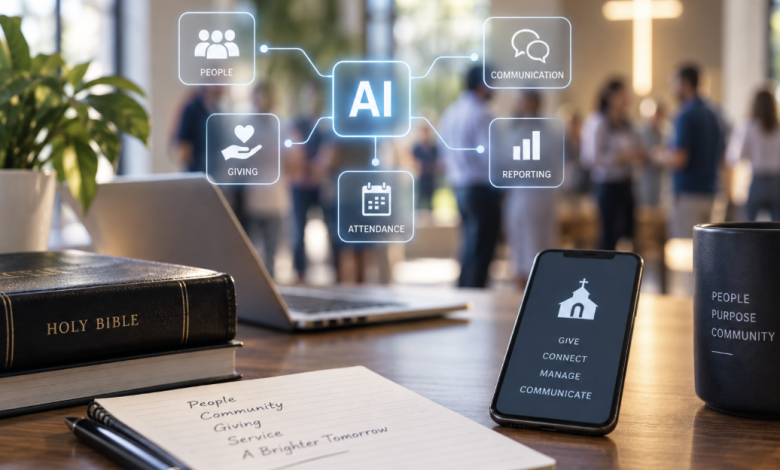
AI can answer a question in seconds, but the answer still depends on where the information came from.
That becomes obvious inside smaller organizations, where records often grow in pieces over time. Giving data may live in one place while attendance sits somewhere else, and staff end up carrying the connections in their heads because the software never did.
Churches deal with this more than most people realize. A congregation may have thousands of people moving through services, events and giving programs while a relatively small team tries to keep track of who showed up, who gave and who may need follow-up. The work can look simple from the outside because so much of it happens quietly.
Tithely has spent more than a decade building software around that reality. The company began in 2012 with mobile giving and now serves more than 53,000 churches worldwide. Its platform has expanded into church management, communications and other daily administrative work that used to sit across separate tools.
That makes Tithely useful in a conversation about AI even though the company is not primarily selling itself as an AI platform. The more interesting story is what has to be in place before AI can do much useful work at all.
Clean Operations Come First
A church staff member trying to understand giving trends does not need another system that produces more data. They need the data they already have to line up.
That sounds obvious, but it is where many automation projects start to get messy. If a member record is incomplete, if giving history lives somewhere else or if attendance data has to be copied over by hand, the software cannot see the same picture the staff does.
Tithely’s church management tools are built around bringing those records closer together. Giving can connect to the people behind it, while attendance and communications can sit inside the same broader system. Once that happens, routine follow-up becomes easier to automate because the software has enough context to know what happened and who was involved.
This kind of work rarely gets much attention compared with generative AI, but it is what makes later automation useful. A system can draft an email quickly. It still needs accurate information about who should receive it and why.
The same goes for reporting. A model can summarize a giving pattern, but that summary means very little if part of the history is missing or stored in another system. The problem is less glamorous than AI itself, though it is usually more important.
Small organizations run into this because software tends to arrive one need at a time. Someone adds a giving tool, then a separate event tool, then something else for communications. Each decision may make sense on its own, but years later the staff is moving information between systems and trying to remember which one is authoritative.
Tithely’s growth followed a different path. It started with one very narrow problem and gradually expanded around the work churches were already doing. That gave the company a clearer view of how one action connects to another.
Vertical Software Knows the Work
General AI tools are powerful because they can handle a wide range of tasks. Their weakness is that they do not automatically understand the habits of a specific organization.
Vertical software begins with more context because it was built around a particular kind of work.
For a church, that means the software already understands what giving records are for and how attendance fits into the life of a congregation. It knows that a first-time visitor may need follow-up and that a recurring donor is different from someone who gave once during a special event.
That context becomes more useful as AI moves into everyday software.
A model can help spot a pattern, but the surrounding system still has to know what that pattern refers to. If the software understands the organization well enough, it can give staff a cleaner place to start instead of asking them to rebuild the context every time.
Tithely’s path makes this easy to see. Dean Sweetman, a pastor with decades of experience, began with a problem he knew firsthand. After using mobile ordering at Starbucks in 2012, he wondered why giving to a church still depended so heavily on checks and physical offering plates. His son Barnabas built the first version of Tithely in six months, and Sweetman launched it at the Atlanta church he was pastoring.
The product worked because it removed friction from something people already wanted to do.
As the company grew, the same thinking spread into other parts of church operations. Staff needed better ways to manage people and giving in the same place, so the software expanded around those needs.
That history matters because AI is now pushing many software companies toward the same question Tithely faced early on. What work is the user already doing, and where is the friction actually coming from?
AI Needs Context Before It Needs More Features
The temptation with AI is to start at the visible end of the problem. Add a chatbot. Add a summary. Add an assistant that can generate a response.
Those features can be useful, but they become much more useful when the system beneath them already knows the organization.
For churches, that means keeping people records connected to giving and attendance so staff are not asking AI to reconstruct the basics every time. For other small organizations, the details will be different, but the same problem appears quickly when records are scattered and routine work depends on people remembering what the software does not.
Tithely’s story shows how much value can come from solving that layer first. The company began with one mobile giving app and grew into a broader church management platform because each new piece of work depended on information that was already nearby.
AI can make those systems faster and more capable. It still needs something coherent to work with.
For organizations trying to decide where AI belongs, the answer may start with a much less fashionable question: does the software already understand the work well enough to help?