An AI product team can spend a full sprint wiring one model and still discover, in the first staging review, that typography fails, motion timing does not fit the brief, or the provider path times out under ordinary load. That late discovery is expensive because the decision was treated as an integration ticket instead of an evaluation problem. A pre-integration comparison through AI API moves the hard questions earlier, while changing direction still costs prompts and credits rather than refactors.
The claim worth pressure-testing is narrower: online creation, model comparison, provider priority, and a single balance can shrink the period when teams argue from logos instead of from observed outputs. SeeAPI is built for that sequence: try models in the browser, compare quality and cost, keep fallback routes ready, and only then talk about production wiring—especially while the public API layer is still marked Coming Soon.
The Real Decision Is Not Another Model Logo
Most selection meetings begin with a shortlist of brand names. Someone likes Seedance for motion drafts. Someone else wants Veo for a premium look. A third person opens GPT Image because a designer already has a prompt habit. None of those preferences is irrational. The failure mode is treating preference as proof before the team has a shared acceptance test.
Without that test, engineering inherits a political choice. The first provider client gets written. Secrets land in the vault. Error handling assumes one response shape. Then the creative review rejects the look, or an availability blip forces a weekend rewrite against a second vendor. The product did not fail because the model was unknown. It failed because evaluation happened after commitment.
Score Models On Evidence The Desk Can Re-Run
A useful comparison framework starts with criteria that survive a second week, not with a demo reel. For image work, the usual columns are prompt following, text rendering, editability from a reference, and cost per keepable draft. For video work, the columns shift toward subject continuity, motion usefulness inside an edit, generation speed, and what a timeout does to the release calendar.
Write the pass rule before anyone generates. Example: “the product label stays readable at mobile card size,” or “the five-second clip keeps the same face through the turn.” If the rule is only “looks cool,” the meeting will never end. If the rule is concrete, a rejected draft becomes evidence instead of taste conflict.
Compare Three Procurement Paths With The Same Brief
Hold one creative brief constant and compare the operating cost of three common paths. Path A is separate vendor accounts: one dashboard per model family, separate keys, separate invoices, and separate failure modes. Path B is a single-model commitment made early to reduce choice. Path C is a unified online workspace that can shortlist models first and postpone multi-key plumbing.
| Path | What moves fast | What breaks later |
| Many vendor accounts | Direct access to each native console | Key sprawl, mismatched errors, scattered balances |
| One model early | Fewer debates in week one | Rebuild cost when the look or route fails |
| Unified shortlist first | Shared evidence before wiring | Still needs human acceptance rules |
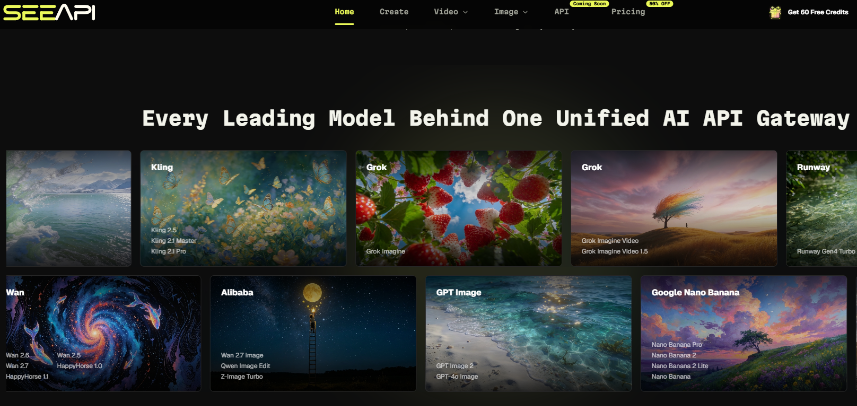
SeeAPI sits in path C. It presents leading image and video models behind one account and one balance, with online generation available before integration. That does not eliminate model risk. It changes when the team pays for being wrong.
Provider Priority Turns Availability Into A Desk Rule
Where SeeAPI becomes specifically interesting for reliability-minded teams is provider routing. The same model can be served through more than one provider path. Teams can set a default, drag a custom priority order, and rely on auto switch when conditions change. The result format stays normalized, which matters when the product desk wants one status language instead of three vendor dialects.
Default Provider Is A Decision, Not A Decoration
A default is an operating choice: prefer the route with better success rate, better average time, or better price for the current brief. On the public Veo 3.1 Lite example, the interface shows a default route with a 99.8% success rate and roughly 18s average time, with Replicate listed as a backup around 98.5% and ~22s. Those numbers are not a promise for every model forever. They are a concrete reminder that “the model” and “the route that serves the model” are different variables.
Fallback Order Belongs In The Incident Note
When a generation stalls, the useful question is which route was tried and what the next route was supposed to be. If that order lives only in one engineer’s head, the outage becomes a chat archaeology project. If the order is visible in the gateway settings, the incident note can start with route health instead of brand loyalty.
Run The Evaluation Week Before Anyone Files The Ticket
A practical evaluation week does not need a lab coat. It needs a fixed brief, a fixed pass rule, and a refusal to change both at once. Use the online create flow to produce image shortlists first, then pressure-test motion drafts in AI Video API under the same pass rule. Keep failed drafts. Name the failure in plain language: warped face, unreadable label, motion that melts into the background, or a timeout that would have blocked a release window.
Online Creation Is The Cheap Rehearsal
Because broader public API maturity is still catching up to the browser workspace, the honest near-term value for many teams is online creation itself. Treat that workspace as the rehearsal room. In my testing approach for pre-integration reviews, the first useful output is a folder of accepted and discarded samples with the brief attached, so engineering knows what “good enough” looked like when humans still agreed.
One Balance Changes The Argument During Incidents
Scattered vendor dashboards create a second outage: nobody knows which wallet still has budget while the release is burning. Credits on the platform never expire and stack into one balance across image and video work. That does not make every generation cheap. It does reduce the minutes lost hunting for the right prepaid console when a fallback route needs another attempt.
The cost signal here is operational. A team can waste an afternoon debating providers while the creative brief stays untested. A shorter path is to spend a small credit ledger on comparable drafts first, then open the engineering ticket only for the route that survived the pass rule.
Where A Unified Gateway Still Needs Human Judgment
A gateway does not decide product taste, legal clearance, or whether a model’s failure mode is acceptable for the brand. Auto fallback can keep a request alive and still return an output that marketing refuses. Online comparison can surface a winner and still leave edge cases that need a human redraw. Those boundaries matter. The tool shortens the path to evidence; it does not replace the acceptance meeting.
Choose The Path That Survives Next Week’s Review
By the end of the evaluation week, the team should already know which failures showed up under a fixed brief. The useful question is which workflow proved a keepable output before anyone spent engineering time, not which logo feels current.
SeeAPI is a strong fit for product and AI ops teams that need multimodal shortlists, provider priority, and one balance while they wait for broader API maturity. It is a weaker fit for teams that already have a locked single-vendor stack and no appetite to compare alternatives.
Finish the evidence first. Wire second. That order is the actual reliability upgrade, even before any new model announcement arrives.