

Marketers expect AI to do twice as much of their work by 2028. The ones who are ready are already pulling ahead

Marketing leaders enter 2027 with bigger AI budgets but not necessarily increased overall spending, so the ones worth watching are those turning AI into measurable growth.
Gartner’s 2026 CMO Spend Survey found that CMOs now put an average of 15.3% of their marketing budgets into AI. Marketing budgets as a whole barely moved, at 7.8% of company revenue in 2026.
Seventy percent of CMOs call becoming an AI leader a critical goal, yet only 30% say their organizations are ready to scale AI. To put it frankly, people still matter. In particular, the leaders of these departments do.
In a follow-up release, Gartner reported that labor’s share of marketing budgets rose from 21.9% to 24.5%. The firm’s reading is that AI’s value depends on people, skills and execution, not technology alone.
The pace is about to pick up. In a separate Gartner survey of 402 CMOs, marketing leaders said they expect AI-driven automation of marketing work to more than double, from 16% in 2026 to 36% by 2028. The gap between leaders and laggards also appears to widening.
Bain’s 2026 survey of nearly 1,400 companies found that 47% of marketing leaders now describe AI as a core capability, against 30% of laggards.
The leaders are also 3.7 times more likely to redesign entire workflows around AI rather than adding it to existing processes.
The 20 AI Marketing Leaders to Watch in 2027 work across digital engineering, fintech, insurtech, legal tech, life sciences, energy and e-commerce.
Each is applying AI to how their company tells its story, finds customers and grows heading into 2027.

Sangeeta Prasad, Chief Marketing Officer, Slalom

Prasad’s career began in consumer products at P&G, followed by roles at American Express and JPMorgan Chase, according to AdWeek. She then served as the first CMO at executive search firm Russell Reynolds, and in 2020 became Slalom’s first global CMO. At Slalom, marketing sits in the revenue organization. She calls herself a “marketing evangelist” who turns skeptics into believers.
Her two priorities are personalization at scale, which she sees AI making possible, and putting sales and marketing on one shared track. Prasad says the pace of AI-driven change is unlike anything she has seen, and that her biggest challenge is helping the organization keep up.
She sees AI as strengthening marketing judgment rather than replacing it, which demands a learner’s mindset. Slalom is also turning that experience into a product: in 2026 it launched Future of Marketing to help other CMOs build AI-powered strategies.
Facundo Viguie Aleman, Chief Marketing Officer, Omio

Viguie Aleman is Omio’s Berlin-based CMO. His background spans marketing and growth roles at a run of high-growth consumer and technology companies: HelloFresh, Pets Deli, Mercado Libre, Globant and Rocket Internet.
That mix covers subscription commerce, Latin American e-commerce, digital services and the Rocket Internet company-building model.
Omio is a multimodal travel booking platform, a category where performance marketing, search visibility and app retention decide growth.
That fits a career built around growth roles. Public detail on his Omio priorities is thin, so ask the client for one or two sentences on how his team is using AI in acquisition or personalization.
Alfredo Salkeld, Chief Marketing Officer, Upfirst

Salkeld co-founded Upfirst with CEO Gene Sigalov and now leads its marketing and sales. He spent years as brand manager at SimpleTexting, then became a brand director at Sinch after it acquired SimpleTexting in 2021.
Upfirst sells an AI-powered virtual receptionist and answering service built for small businesses.
What makes Salkeld worth watching is how he uses the company’s own data as marketing. Upfirst analyzed 450,000 calls and found that agents able to text, transfer and book appointments, and trained on the specific business, saw roughly 30% to 40% lower odds of hang-ups.
Receptionists that disclosed they were AI had about 20% fewer hang-ups, and fewer than 1% of callers asked whether they were talking to a machine. The AI resolved 77% of queries without a transfer, and 31.7% of calls came in after hours or while the line was busy. Those numbers give small business owners a clear reason to switch, and they make an honest case for transparent AI.
Rebecca Moreau, Head of Marketing and Communications, GFT Technologies Canada

As Head of Marketing at GFT Technologies Canada, Rebecca builds strategies that connect brand, growth, partnerships and go to market. She enjoys turning complexity into clarity, giving direction to ideas and making marketing a true driver of business growth.
GFT Technologies Canada is the Canadian arm of the German AI-centric transformation firm. It has hundreds of employees and offices in Québec City, Montréal and Toronto, and is led by President and CEO André Gagné. Its clients are Canadian banks, credit unions and insurers. In 2025, GFT brought Wynxx, its agentic AI platform, to Canada and the US to cut the time and developer resources needed for large modernization projects.
GFT Canada markets itself through research rather than slogans. Its Canadian Banking Disruption Index surveyed 200 senior IT decision-makers and found that 68% of Canadian banks see their best AI returns in the back office, against 32% for customer-facing tools. The finding was picked up by industry analysts. The firm is also building a local partner network: in February of this year it announced a collaboration with consulting firm Humance on AI transformation, and a partnership with Ozone API to help institutions prepare for open banking.
Maya Mason, Interim CMO, Altorney

Few marketing leaders understand the hardest sell in technology better than Maya Mason. Over more than two decades in the B2B tech sector, the Herzliya-based executive has built a career marketing products that are meant to work invisibly in the background: fintech infrastructure, payments, enterprise SaaS and legal technology.
Her audience is rarely a consumer; more often it is a bank’s risk and compliance committee—the group that has to be convinced a new technology is the best fit. Mason’s career runs from Israel’s early tech era at M-Systems, to a director-level marketing role at Equivio before its acquisition by Microsoft, to vice president of marketing at CreditStacks. Along the way she became one of the most trusted voices in a category where credibility is key.
Today she is the fractional CMO at Altorney, which was founded in late 2021 by brothers Shimmy and Rachi Messing, two e-discovery veterans who started together at Merrill Corporation in the early 2000s. One of its two main products, MARC, runs AI document review inside a client’s own firewall. The name carries a family story: it honors their late father, Marc Messing, an attorney, rabbi and educator who passed away in 2021.
Robert Tubridy, VP of Marketing, ADvendio

Robert is the VP of Marketing at ADvendio, the leading Salesforce-powered omnichannel advertising management platform. H
is leadership is central to the company’s evolution into an Agentic Revenue OS, advancing solutions for major publishers, advertisers, and retail media networks by deploying specialized AI agents to automate the ad lifecycle.
ADvendio’s global growth is rooted in a unique combination of industry specialization and intelligence built on decades of deep expertise.
Sayantan Dasgupta, Senior Director Marketing, Think Power Solutions

Sayantan Dasgupta is a technology marketing and brand leader with nearly two decades of experience across B2B SaaS, higher education, data science and analytics, energy and utilities, AI and media, working in both North America and Asia-Pacific.
He previously served as Director of Demand Generation at Gramener, a data science company that helps organizations turn insights into compelling stories. He received his Executive MBA at IIM Calcutta.
He is also a regular voice on where B2B marketing is heading. As a contributor to Entrepreneur Magazine, he has argued that MQLs are dead, pushing teams to move beyond lead counts toward measures closer to revenue. He helps teams with go-to-market strategy, product-market fit and demand generation.
Whitney Goldstein, Head of Marketing, Gorilla Logic

Whitney Goldstein is one of the industry’s leaders in marketing and brings more than a decade of experience in B2B technology and services companies to Gorilla Logic. Her teams typically bring brand, demand generation and go-to-market strategy together into one growth engine, rather than running them as separate programs.
Her stated view is that marketing earns its influence by driving measurable business outcomes.
That view shapes how she works. Goldstein focuses on turning marketing performance data into insights a board can act on, and on aligning marketing with both sales and delivery teams. The goal is to show marketing’s effect on pipeline, revenue and enterprise value. For a services firm selling engineering talent in an AI market, that alignment between what marketing promises and what delivery teams build is a real advantage.
Anoob PT, Head of Content, Prezent Vivo

Anoob PT is Head of Content at Prezent Vivo, with more than 16 years in marketing and content. He has worked at fast-growing startups including SocialPilot, Writesonic, BigBasket, FreshMenu, GupShup and SimplyHired, a mix that runs from social media software and AI writing tools to consumer commerce. He likes testing new platforms to help businesses make better marketing decisions.
At Prezent, an AI business communication platform, he runs a content operation aimed squarely at buyers who are choosing between AI tools. His team publishes head-to-head comparisons such as Prezent vs Gamma for enterprise teams, along with annual guides to AI presentation makers. He also writes company news, including the January 2026 announcement that pharma executive Marine Queniart Stojanovic had joined Prezent’s Senior Executive Board to speed up its life sciences growth.
That life sciences push gives his content a new audience. In July 2026, Prezent launched Prezent Vivo for AI-native medical communications. Winning search and buyer attention in both enterprise and regulated healthcare markets, at a time when AI is reshaping search itself, is the content challenge he faces in 2027.
Shelby Bolinger, VP of Marketing, Cloverleaf

Shelby Bollinger is the VP of Marketing at Cloverleaf, the AI coaching platform that brands from across the globe.
The brand, which is known as one of the best 16 types assessment with team insights, has built a reputation as being on one of the companies to watch when it comes to accelerated AI-supported team performance. In September of 2025 Cloverleaf launched a three-part AI coaching suite: Connect, which pulls learning and talent data together; Assess, for managing behavioral assessments; and Coach, which the company presents as the industry’s first AI coach grounded in personality science. It also refreshed its brand identity.
Marketing that suite means persuading HR leaders that AI can extend coaching to every employee, with measurable results, in a category that is now crowded.
Anna Levine, Director of Marketing, Get Covered

Anna Levine is the Director of Marketing at Get Covered, which oversees the industry’s leading insurance and and compliance platform for multifamily housing.
The company’s solution automates renters insurance, certificate-of-insurance tracking and policy administration for property operators, and powers insurance compliance across millions of rental units. In June of this year, it acquired Revyse, an AI-powered vendor intelligence and contract management platform. That extends Get Covered’s reach from residents to the contractors and suppliers who service the same buildings.
For marketing, the deal changes the pitch. Get Covered can now sell one AI-assisted compliance layer covering residents, vendors and contracts, instead of a single insurance product. Explaining that broader platform to property managers, who often buy point solutions, is the marketing task for 2027.
Anna Liubymova, Go-To-Market Strategy Officer, Effie AI

Anna is a strategic, hands-on marketing leader with 10+ years building GTM engines for B2B SaaS, AI, and enterprise tech across Europe and the U.S. According to her LinkedIn profiles, she “loves shaping value propositions, crafting routes to market, and running ABM and lead-gen programs that actually move the needle – often to double- and triple-digit pipeline growth.”
Chicago-based Effie AI says it has built the first AI agent designed specifically for retail execution. According to Effie AI, the deployment raised data accuracy from 75% to 97% and cut shelf audit time by 60%.
The company packages its results as research. An Effie AI report in August 2026 said one implementation cut merchandiser time per store visit by 56% and supervisor time by 55%, and the company claims a 2% to 4% sales uplift. That report-led, industry-event-heavy approach turns a niche operations tool into a broader story about agentic AI in physical retail.
Alexander Lapshin, Head of Marketing, Transmetrics
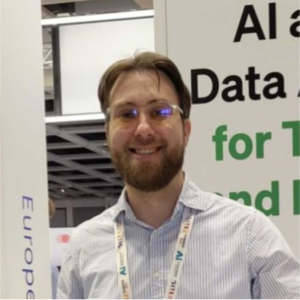
Lapshin leads marketing at Transmetrics, a Bulgarian company that applies AI to logistics planning and optimization. Transmetrics started with pilots at DHL Express, Agility Logistics and ECS European Containers, and now works with companies such as Kuehne+Nagel, NileDutch, DPDgroup and Gebrüder Weiss. Its pitch is that cleaner data and predictive models cut operating costs and save planners time.
Under Lapshin, Transmetrics leans on content to sell to a skeptical industry. It publishes guides and forecasts such as Logistics Technology Trends 2027, plus a newsletter that promises to cut through AI hype for logistics teams. The approach is earning recognition: in September 2026, Horasis named Transmetrics one of fifteen companies defining where AI goes next. Marketing predictive AI to freight operators means turning model accuracy into a story about fewer empty trucks and better plans, and that is what his team does.
Tanaya Misra, Global Head of PR, Communications & Content, Ness Digital Engineering

Tanaya Misra leads PR, communications and content at Ness Digital Engineering, the full-lifecycle digital transformation company. Her remit covers the company’s media presence, brand strategy and executive messaging, with the job of keeping one consistent voice across every channel.
Years of working with large enterprises and Fortune 500 companies have trained her to shape one message for very different audiences, from engineers to boardrooms. In 2024, Reputation Today named her one of its “40 Under 40 Young Turks.”
Her role matters more in 2027 because Ness is retelling its own story. With a new CEO named on March of this year, and the company is putting AI at the center of its engineering offer. Misra’s work on leadership messaging is therefore a direct input to growth.
Katie Fritchen, VP of Marketing, ManagedMethods
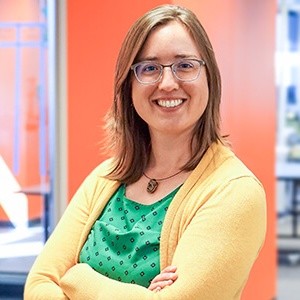
Katie Fritchen is ManagedMethods’ VP of Marketing.
ManagedMethods, based in Boulder, Colorado, provides cybersecurity, student safety, web filtering and classroom management tools built for K-12 schools.
Its products increasingly run on AI, including a chain-of-thought AI phishing detector and a new Email Threat Intelligence tool launched in July 2026.
In June of this year, it won the EdTech Breakthrough Award for Best Overall IT Solution for the education market. Fritchen’s job is to market AI-powered security to school districts that have tight budgets and are cautious about AI.
Sjoerd Martens, Partner, Publicize

Sjoerd Martens is a Partner at Publicize, a PR firm for technology startups and Fortune 1000 enterprises with offices in Medellín and Barcelona. Originally from the Netherlands, he rose from Head of Account Management to Chief Client Officer and was made a Partner in 2023. He holds a master’s in business administration from VU University Amsterdam.
He is closely tied to the startup ecosystem. Martens is a mentor at Founder Institute, Oxford University’s technology accelerator and USC Marshall’s Greif Incubator, and a contributor to Entrepreneur. Publicize, founded in 2014, helps companies win media coverage through digital PR, thought leadership and social media.
His work sits at the point where AI is reshaping PR. As more buyers research through AI assistants that draw on published articles and expert commentary, earned media and credible bylines carry new weight. Helping tech companies earn that visibility, across Latin America, Europe and the US, makes Martens a leader to watch in 2027.
Allyson Fernández, Communications Lead, Source Meridian

Allyson Fernández helps to lead communications at Source Meridian, a healthcare and life sciences technology company with offices in the United States and Colombia. The company uses big data and AI to give healthcare and life sciences clients early access to new technology.
It specializes in healthcare interoperability and real-world evidence, the clinical data on how medical products perform once they reach patients. Founder and CEO Michael Hoey has said he wants his team to be healthcare experts first, so they understand each client’s business before proposing a solution.
That gives Fernández a demanding audience and a timely story. AI is spreading quickly across life sciences: one estimate puts the market at about $17 billion in 2025, growing to $69 billion by 2031. Yet only 22% of life sciences leaders say they have scaled AI successfully, and just 9% report significant returns.
Telling that data-first story to pharma and healthcare buyers who are tired of AI hype is the communications challenge she takes into 2027.

More from Conrad Egusa
See all AI & Technology
From self-driving excavators to AI leasing agents, proptech’s AI moment has arrived
 AI & Technology
AI grows up in November: Anthropic lists on Nasdaq as agents spread into clinics, classrooms and the store aisle
 AI & Technology
PubMed adds 4,600 papers a day. AI has to prove it read the real ones
 AI & Technology
Companies are scaling AI faster than they’re training the people who use it
Recommended for you
More stories Agentic
What Property Management Reveals About the Next Phase of Agentic AI
 Cyber Security
Team8 Takes Its Village Playbook From Cybersecurity to AI Infrastructure With the Infra Village
 AI & Technology
Open-Source Medical AI Reaches Production Scale: What Ant Group’s LingSante Release Means for Health System Leaders
 Future of AI
The future of AI in financial crime is here: how can banks fight back to regain trust and use AI for good
 Data
An AI Agent May Need Company Data Without Needing All of It
 Future of AI