The conversation around AI filmmaking often begins with individual outputs: a striking image, a convincing character, an unusual environment or a short sequence that would once have required a much larger production infrastructure.
But generating a compelling image is not the same as building a world.
As generative tools become increasingly accessible, the more difficult creative problem is shifting from production itself to continuity. Characters need to remain recognizable, visual languages need to survive different scenes, and narrative logic needs to extend beyond a single video.
The next stage of AI filmmaking may therefore depend less on generating better individual shots and more on creating coherent systems of characters, music, environments and stories that can persist over time.
Beyond the Individual AI Shot
Recent discussion around AI filmmaking increasingly reflects this shift. The AI Journal has itself explored why filmmaking workflows are moving beyond isolated single-prompt generation, noting that professional production depends on recognizable characters, coherent locations and shots that belong together as part of a larger sequence.
Another recent AI Journal article made a similar distinction between creating one attractive clip and building repeatable visual content in which characters maintain their identity over multiple appearances.
That distinction is important because continuity has always been fundamental to filmmaking.
Audiences expect characters to remain recognizable, environments to follow an internal logic and stories to preserve emotional and visual coherence.
Generative production does not remove that requirement. In many ways, it makes continuity an even more deliberate creative discipline.
A visually impressive character generated once may be interesting.
A character who can remain recognizable across different films, environments, costumes, lighting conditions and narrative situations begins to function more like an actual performer.
From Generated Characters to Persistent Performers
One lesson from my own work has been that creating a convincing digital character once is very different from maintaining that character over time.
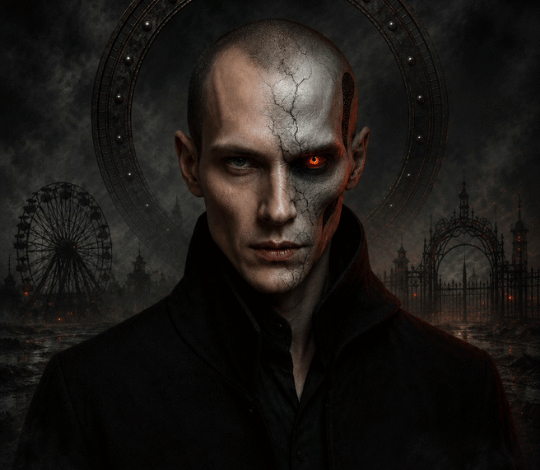
At Bryan Stenler Studios, the independent AI-native studio I founded in Brazil, we have been exploring this challenge through Bryan Stenler, a recurring virtual actor, cinematic model and synthetic performer.
Rather than being created for a single production, Bryan has been developed as a persistent digital character whose recognizable identity carries across different cinematic works, music videos and narrative environments.
His public character profile can be seen here:
This creates a different kind of creative challenge.
Facial identity has to remain recognizable while environments change. Wardrobe can change without losing the character. Lighting, framing, emotional expression and visual tone may vary significantly while the audience still needs to understand that it is the same performer.
The question is therefore no longer simply whether AI can generate a believable human figure.
The more interesting question is whether filmmakers can create digital performers that audiences recognize again.
This challenge is increasingly visible across the broader AI filmmaking landscape. The AI Journal recently examined production systems designed specifically around maintaining character identity across multiple shots and scenes, reinforcing the idea that consistency is becoming part of directing rather than simply part of generation.
Persistent virtual characters also introduce something closer to casting into generative filmmaking.
A filmmaker can begin thinking about whether a particular recurring character belongs in a story rather than generating a completely different face every time a new production begins.
The character stops being an output and starts becoming part of the world.
When Music Becomes Cinema
For me, that world-building process does not begin exclusively with images.
I am both a filmmaker and an electronic music producer, and over time I have increasingly found myself composing music almost as if I were directing a film.
Atmosphere can establish a location. Rhythm controls pacing. Tension creates expectation. A melodic change can function almost like a narrative turn.
Music can therefore become an architectural element of storytelling rather than simply something added after the visual production has been completed.
The relationship also works in reverse.
A piece of music can suggest a character, an environment, a sequence or even an entirely new chapter of a fictional universe.
Sometimes an image creates the first idea for the music. Sometimes a track creates the first image of a film.
Once that relationship becomes fluid, cinema and music stop functioning as completely separate products. They become different entry points into the same narrative system.
This is particularly interesting for independent creators because the boundaries between disciplines become less rigid.
A musician can think cinematographically. A filmmaker can think rhythmically. A character created for a visual narrative can later become associated with a particular sonic identity.
AI-assisted production can help connect these elements, but the technology itself does not determine what those relationships mean.
That remains a creative decision.
World-Building Before Generative AI
Persistent characters become more meaningful when there is a world for them to inhabit.
My own experience with The Sower illustrates this from an unusual direction.
I originally conceived the science-fiction universe in the 1980s, decades before contemporary generative AI existed. Its mythology, characters and visual ideas began long before today’s production tools became available.
That distinction matters.
AI-assisted filmmaking did not originate the world. It provided new ways of materializing ideas that already existed.
Today, The Sower Universe can expand through moving images, original electronic music, recurring virtual characters and interconnected narratives while preserving the underlying creative direction that preceded the technology.
For creators working with long-term intellectual property, this relationship between old ideas and new tools may become increasingly important.
Generative systems can accelerate visualization, experimentation and production, but they do not automatically create mythology.
A universe still needs internal logic.
Characters need motivations. Locations need meaning. Music needs emotional function. Visual language needs consistency.
Technology can help render those things, but it cannot replace the decisions that make them belong together.
Human Authorship Is the Continuity Layer
Much of the debate around artificial intelligence in creative industries is framed around whether machines will replace particular production tasks.
From a filmmaking perspective, I find a different question more useful: what elements still require continuity of human intention?
A story developed across years may involve different tools, platforms and production techniques. Those tools can change dramatically while the underlying creative perspective remains recognizable.
That creative perspective is what connects the fragments.
Human authorship becomes a continuity layer.
It determines why a particular character exists, what role music plays, what emotional language a world uses and which visual choices remain consistent enough for audiences to recognize the larger universe.
This becomes especially important as generative technology makes individual outputs easier to produce.
When almost anyone can generate an impressive frame, the value of the frame alone begins to change.
Meaning increasingly comes from relationships between frames, characters, sound, history and context.
In other words, an abundance of images may make coherence more valuable, not less.
Persistent Characters Are More Than Visual Consistency
Character consistency is often discussed as a technical problem.
That is understandable. Maintaining the same face across different generations has been one of the most visible challenges of AI-assisted visual production.
But true persistence requires more than facial similarity.
A recurring digital performer needs a recognizable identity.
The audience should gradually understand something about the character beyond physical appearance: personality, tone, narrative role, relationships and perhaps even a history extending across different works.
That is where persistent virtual characters begin to move beyond the novelty of synthetic imagery.
A digital actor can become part of a larger intellectual property system in much the same way recurring fictional characters have always connected stories across cinema, television, literature and games.
The technology is different.
The underlying human desire for recognizable characters and continuing worlds is not.
Transmedia Becomes a Natural Consequence
Once characters, music and environments persist, transmedia storytelling becomes less about adapting one product into another and more about expanding the same world through different forms.
A music track might introduce the emotional tone of a chapter.
A cinematic short can reveal part of a character’s story.
A virtual performer can reappear somewhere else without needing to be reinvented from zero.
Different media become windows into the same fictional architecture.
For small studios and independent creators, this can be particularly significant.
Historically, maintaining a coherent fictional universe across multiple media required substantial infrastructure. AI-assisted production can reduce some production barriers and make ambitious forms of experimentation more accessible.
But accessibility should not be confused with automatic quality.
The easier it becomes to generate content, the more important editorial judgment becomes.
Knowing what not to generate may become as important as knowing what to create.
Building Worlds That Remember Themselves
Generative technology is evolving extremely quickly, and many of today’s technical limitations will almost certainly look temporary in retrospect.
Character consistency will improve. Motion will become more controllable. Environments will become easier to revisit. Production systems will increasingly retain context across longer sequences.
But the creative challenge will remain.
What should persist?
Which characters deserve to return? Which visual details define a world? How should music reinforce memory? What makes an audience recognize that two separate pieces of media belong to the same universe?
Those questions are fundamentally about authorship.
For filmmakers, musicians and storytellers working with AI, the opportunity may therefore be larger than simply producing content faster.
It is an opportunity to rethink how fictional worlds are constructed when sound, image, characters and narrative can evolve together from the beginning.
The future of AI filmmaking may not be about generating better individual shots.
It may be about building worlds capable of remembering themselves.