Artificial intelligence is leaving the screen. After years in which the biggest bets went to chatbots and software, investors are backing AI that can see, move and handle objects. Physical AI startups raised $47.4 billion in the first half of 2026, nearly four times the previous six months.
Remy AI is one of the younger companies in that wave. The San Francisco startup is backed by famed accelerator Y Combinator and raised about $1 million to help it build AI-powered robots for warehouses.
To see what that involves beyond the funding announcements and demo videos, we spent a day with its CEO, Oscar Brisset, a former software engineer at BCG X and Oxford grad who came to robotics through Ben Kaye, Remy AI’s CTO.
The day
9:00am: Data team check-in. Brisset arrives at Remy AI’s workshop, a warehouse-like space in SoMa, in downtown San Francisco. Benches are set up across the floor. At each one an operator stands wearing a data collection headset while repeating a set action, with their movements recorded from every angle by a panoply of cameras. Brisset leads this data operation, training Remy AI’s models through imitation learning, in which a robot learns a task from human demonstrations.
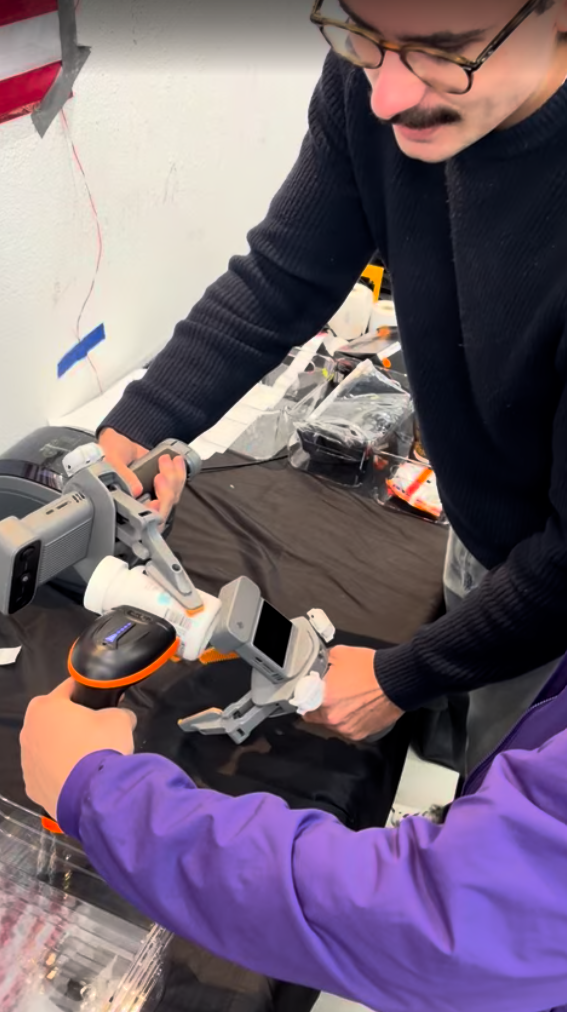
Oscar Brisset directly demonstrates to the data collection team how a specific task needs to be performed.
After a quick check-in to see how the existing data collection program is progressing, the team discusses their next multi-week collection program, which will be focused on teaching their robots how to react when unexpected objects and obstacles appear. Brisset explains the level of coordination and logistics required for one of these programs: “So much of our work in machine learning is actually on the data, and not the model architecture itself. You have to make sure you’re not only collecting enough of it, but also the right kind of data and in the right way.”
11:00am: Customer call. Brisset speaks with one of Remy AI’s partners, an e-commerce logistics operator in Los Angeles. Remy AI recently finished tests at the operator’s warehouse, running robots alongside human workers to find gaps in the robot’s AI model before a full-time deployment next month. Brisset explains this is a core part of the deployment process: “It’s an educational experience for both parties. Customers learn what they need to change in their operations and additional preparations they need to make, while we learn what modifications we need to do and additional data needed to guarantee a smooth deployment.” Much of the call goes on agreeing which metrics the pilot will be judged on.
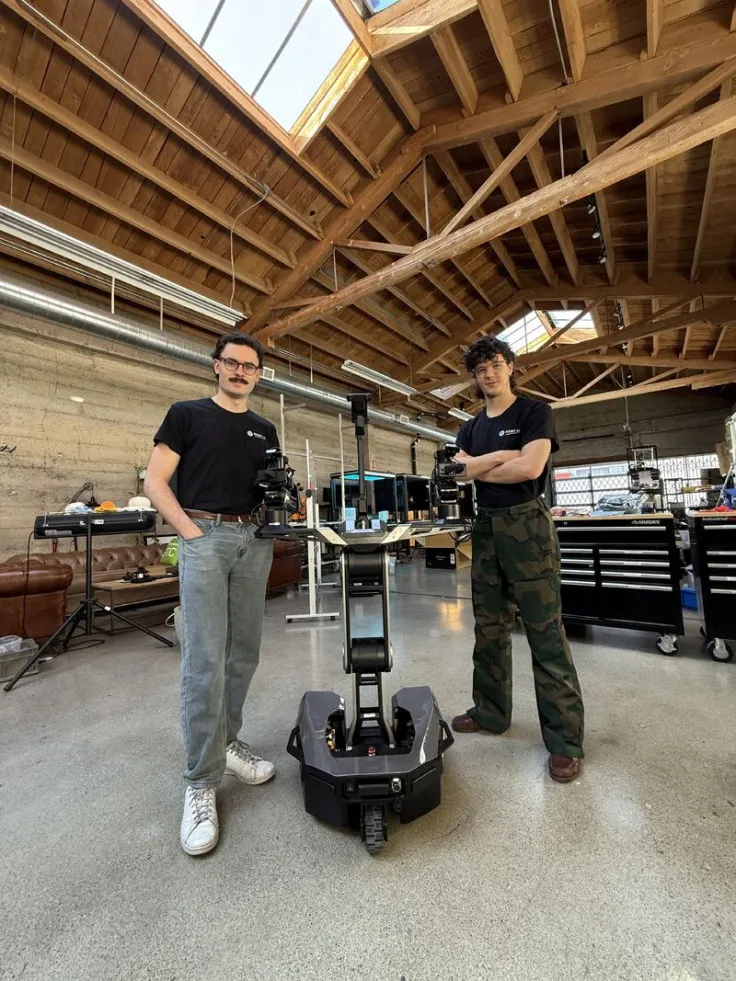
Oscar Brisset and Ben Kaye next to their robot in Remy AI’s workshop.
Remy AI builds robots to automate dexterous tasks for e-commerce third-party logistics providers, and is working with several warehouses across the US. Its target is what Brisset calls “the long tail of warehouses left behind by current automation solutions.” According to Brisset, existing warehouse automation is prohibitively expensive for smaller warehouses and only works when the goods are predictable, and that this is why Remy AI has decided to focus on 3PLs in particular: with each new client contract bringing a new mix of products and objects to handle, traditional solutions are simply “inadequate” for 3PLs. “With pre-AI robots, you had to program them to perform strict routines. This means that the vast majority of smaller warehouses, especially 3PLs, have little to no automation whatsoever,” Brisset highlights.
1:00pm: Supplier call. After lunch with the team, Brisset calls an actuator manufacturer in Texas, to ask about lead times and how small an order the manufacturer will take. For now, Remy AI only wants samples, but long term Brisset wants to bring as much of Remy AI’s supply chain as possible back to the US.
“Tariffs have made us rethink where everything comes from,” he says. “I’m a strong believer in investing locally, but it’s also become something that customers care about and helps us win business versus other robotics players.” He says where core components such as actuators come from has become a strategic question for the company.
3:00pm: Problem-solving session. Around mid-afternoon, Brisset sits down with Remy AI’s CTO, Ben Kaye, to go through the latest training run of their AI model.
Brisset and Kaye met at Oxford in second year as neighbors on campus and have been friends since. Brisset says the friendship is no substitute for routine: “Ben and I have known each other for many years, but I think it’s important we sit down regularly to talk through where the company is going and that we discuss the big questions,” he says.
The two discuss a recurring issue they’ve noticed in Remy AI’s model performance, namely teaching their robot to squeeze objects just the right amount. They watch videos of failed attempts side by side to formulate a strategy for how best to approach this, talking through the various parts of their training pipeline that could be causing these mishaps.
The session ends with a short list of ideas to explore, and a view on what data to collect next and what modifications to make to the model training pipeline. “Every training run teaches you something, even when it doesn’t go the way you hoped,” he says. “The skill is reading the results honestly and deciding what to try next.”
5:00pm: Testing on the robot. Brisset spends the late afternoon digging deeper into this grip strength question. He decides to do so by running “evals”, a structured process in machine learning through which researchers seek to find the root cause of an issue by varying different parts of their data and training process while collecting observations.
Brisset decides to run some evals on picking up and placing down various objects of different rigidity to identify what configurations lead to the lowest success rates. Once a hypothesis is formulated, he then decides to make some modifications to the existing training pipeline and set-up some experiments to run overnight on Remy AI’s GPUs, with results due in the morning.
7:00pm: Founder dinner. Evenings often mean dinner with other founders from San Francisco’s AI scene, trading notes on hard technical problems. Tonight’s debate is on simulation versus real-world data, and whether simulation will eventually become so realistic AI companies won’t even need real-world data.
At the end of the dinner, the debate is far from resolved, but Brisset confesses that this sort of intellectual stimulation is one of his favorite things about San Francisco: “There’s such a density of builders in this city, it makes for exciting conversations and a critical way to make sure you’re aware of what’s happening in other areas of tech.”
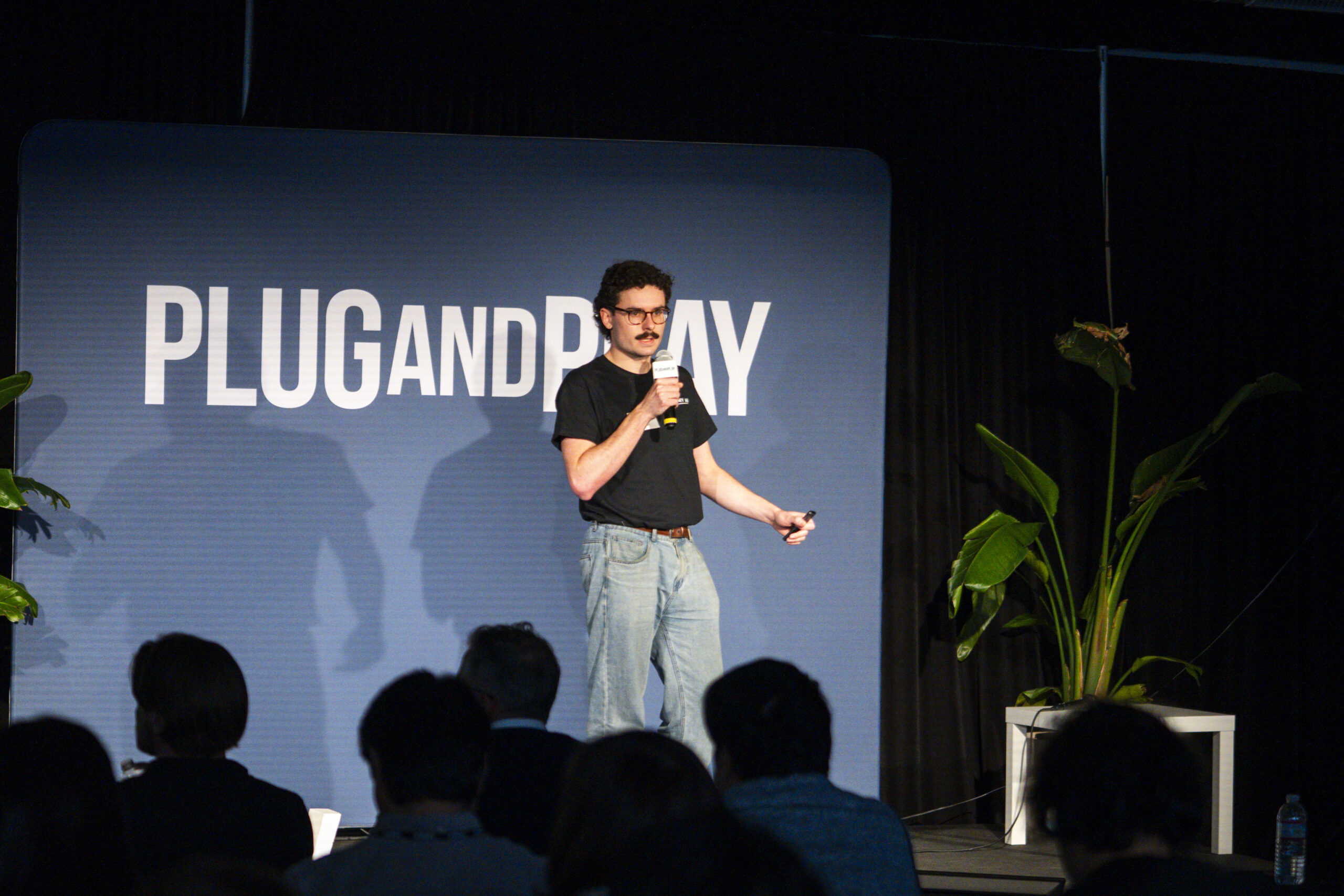
Oscar Brisset speaking at Plug and Play VC’s AI for Physical Industries event to executives from large industrial companies like Hyundai, Fujitsu, and Schaeffler.
10:00pm: Research. At home, Brisset ends the day with academic papers. Tonight it is a new paper on teaching robots to fold boxes by using reinforcement learning algorithms. “It’s essential we stay on top of the latest research, so we’re always building on what’s at the frontier,” he says. He adds a caveat: “You don’t want to over-correct every time a new methodology comes out.”
Funding totals tend to dominate coverage of physical AI. Much of the progress happens in less visible work: collecting data, testing models and negotiating with suppliers. Whether that work produces dependable machines on warehouse floors will decide how much of the current investment is justified. For Brisset, the value for small-medium businesses is already being proven out with these initial deployments: “These robots deliver serious ROI. The technical challenges are there, but it’s only a matter of time before physical industries are radically transformed.”