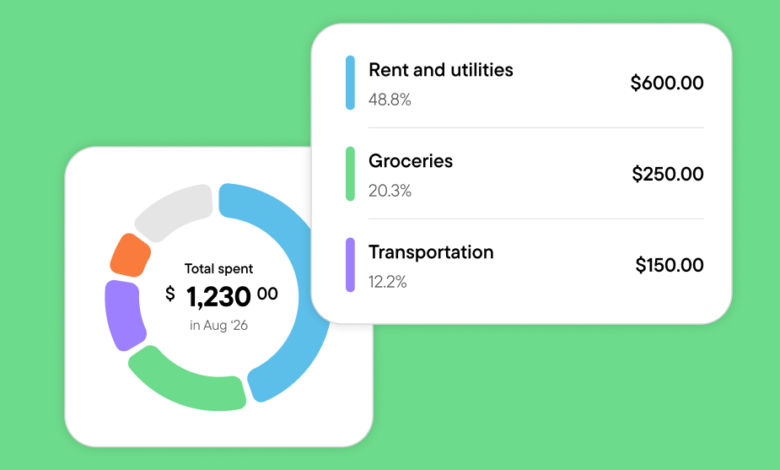
Americans are earning more than ever but save half as much as just 10 years ago. The average American household now earns over $83K per year, the highest amount on record, but speak with a regular person and that statistic feels both inaccurate and hypothetical.
Despite the real factors contributing to this feeling—worker pay that hasn’t kept pace with surging corporate profits, job insecurity, and the exploding cost of housing, food, healthcare and more—the financial services industry has spent years trying to help people become better budgeters. It’s built dashboards, alerts, educational content, and increasingly sophisticated tools showing consumers where their money goes and how to save more. The working theory has been that if we give people enough data, enough charts, and statistics, that they will finally manage their money in a way that makes them better savers.
The results suggest otherwise. In 2016, the personal saving rate averaged 5.4% of disposable personal income. The latest available figure, for July 2026, is 3%. The national saving rate has fallen by about 45% compared to a decade ago.
The problem is that much of the technology developed so far has provided a wealth planner-lite set of tools rather than addressing the underlying barriers to saving. Oportun’s own members describe internal barriers ranging from impulsive spending to anxiety over where to even start. Combine those challenges with the fact that most financial data is retrospective, and it becomes clear why people need more than another financial summary.
This is where AI-powered personalization, adaptability, and automation can change personal finance. Rather than using tools to catalog and tell us what we’ve already spent, we now have the opportunity to build systems that understand what is happening in real-time and can act on our behalf with less user effort or expertise required.
Consider saving for a recurring bill. Traditional budgeting requires someone to identify the expense, calculate how much to set aside, remember to move the money, and continually adjust as income and other expenses change. AI can take on much of that work. With access to transaction data, financial providers can identify recurring expenses, understand patterns in income and spending, anticipate upcoming obligations, and determine when money can safely be set aside. Instead of asking someone to make the same budgeting decision every month, technology can turn a financial intention into an ongoing behavior.
Design Around How People Actually Live
At Oportun, we have spent years exploring safe, personalized, automated money movement through Set & Save, a savings tool that analyzes members’ income and spending patterns to identify small amounts that can be moved into savings. On average, members using Set & Save are able to save $1,800 per year.
More recently, we applied the same approach to recurring expenses. Our Smart Bills goal feature identifies routine bills and can automatically set aside safe-to-save amounts ahead of due dates. We’ve seen it most commonly used for car payments, rent, and utilities—the unavoidable expenses that anchor household budgets.
Over the past decade, we’ve learned that good intentions are not enough. Improving financial health requires using technology to help close the gap between good intentions and follow-through.
Repeatable Lessons
- Start with the person’s actual cash flow, not an idealized budget. Not everyone receives a predictable paycheck on the 1st and 15th, and expenses are constantly changing. A plan built around perfect predictability will fail many of the people who need the most help. AI can help financial tools continuously adjust based on actual balances, income, and expenses.
- Automate the small decisions. Financial health often depends less on one big decision than on hundreds of small ones. AI can reduce that cognitive burden by handling routine decisions for people who already have plenty competing for their attention. For savings, that can mean setting aside small sums in the background so money is available for routine bills like rent or a cellphone plan. Our experience bears that out: Members using Smart Bills have saved 48% more per month on average than those using Set & Save alone.
- Give savings a purpose. “Save more money” is an aspiration. “Make sure I have enough for rent on the first” is the beginning of a plan. We’ve seen the same pattern with other deadline-driven goals. For the 2025 holiday season our members accumulated $6.5 million throughout the year toward their holiday goals. They tended to start early, save consistently, and begin withdrawing as the spending occasion approached. Connecting savings to something tangible can make the behavior easier to sustain.
- Keep the person in control. Automation should reduce work, not agency. Consumers need to understand what technology is doing and retain the ability to change limits, pause transfers, or access their money when circumstances change. That principle becomes even more important as AI takes a larger role in people’s financial lives. A system can identify patterns, but it cannot know every circumstance behind them.
Looking Ahead
The strongest AI-powered financial products won’t just tell customers what to do alongside a fancy graphic. The products that actually stay in our lives will understand how we behave, anticipate what’s coming, and reduce our burden by acting intelligently on our behalf.