Balancing Public APIs, Enterprise Cloud AI and Local AI Models
Executive Summary
AI is rapidly changing software engineering. Code review, documentation, test generation and security analysis can now be accelerated with AI, but enterprise adoption introduces a question that is often overlooked:
Where does our proprietary source code go?
After more than two decades working across embedded systems, safety-critical avionics, automotive ADAS and enterprise engineering, I have observed that AI adoption is rarely constrained by model capability alone. Security, identity, intellectual-property protection, governance, engineering accountability and cost often become the real barriers when an AI proof of concept moves toward production.
The choice is therefore not simply between one AI model and another. Organizations increasingly need to evaluate three deployment approaches: public AI APIs, enterprise cloud AI environments and locally deployed AI models.
The right answer depends on the sensitivity of the data, the consequence of an incorrect AI decision, regulatory and contractual requirements, infrastructure capability and the business value expected.
The Question Enterprises Should Ask Before Choosing an AI Model
Engineers generally welcome AI when it removes repetitive work. Code explanation, documentation, test generation and code commenting are practical examples where AI can augment engineering productivity without replacing engineering judgment.
This perspective was reinforced while developing an AI-enabled engineering documentation solution using Python and enterprise AI services. The solution automated inline code comments, high-level and low-level design documentation, user manuals and test cases, while enterprise authentication was incorporated through MSAL and Azure identity mechanisms.
The important lesson was not simply that an LLM could generate useful engineering content. The lesson was that enterprise AI is an engineering architecture problem. Identity, access control, data handling, security, governance, validation and cost have to be considered alongside model capability.
That leads to a more useful question for technology leaders:
If AI is going to examine our source code, what should it be allowed to see, where should it operate, what decisions should it make, and how will those decisions be verified?
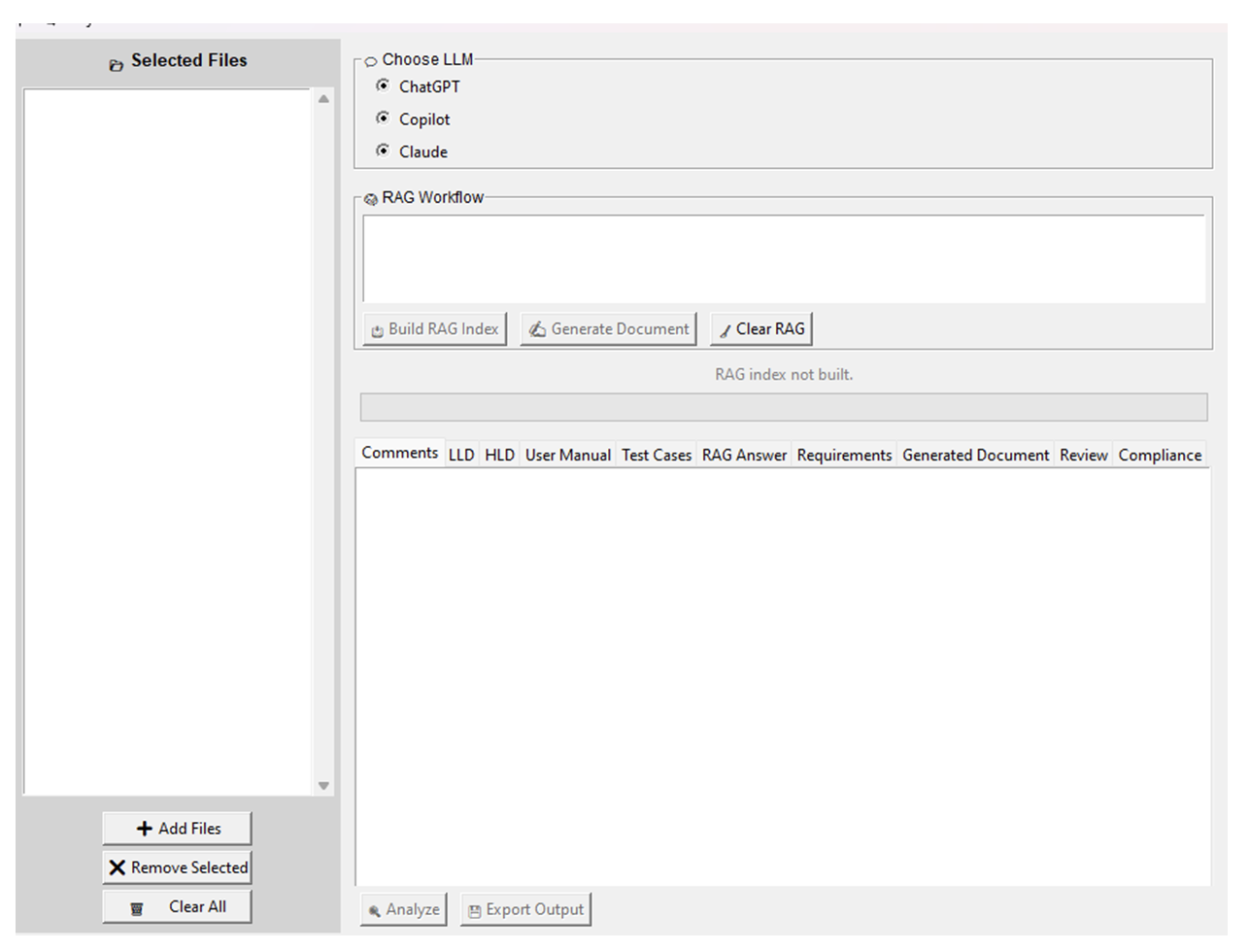
Figure 1 – AI Documentation Tool
Three Deployment Models
-
Public AI APIs
Public AI APIs offer the fastest path from an AI idea to a working application. They can be highly effective for experimentation, prototypes and workloads where the information being processed has limited sensitivity. Their advantages include rapid implementation, minimal infrastructure requirements and access to advanced foundation models.
However, organizations processing proprietary source code need to evaluate data handling, contractual terms, residency requirements, access controls, credential protection and organizational governance before deployment.
The important distinction is therefore not that public APIs are inherently insecure. Rather, the risk depends on what data is being sent, how the service is configured and what organizational controls surround its use.
For low-risk experimentation, a public API may be appropriate. For sensitive production code, the architecture deserves a formal security and governance assessment.
-
Enterprise Cloud AI
Organizations already operating within an enterprise cloud environment can integrate AI into established identity, networking and governance frameworks.
A typical enterprise architecture can incorporate:
- Enterprise AI model services
- Microsoft Entra ID or equivalent identity management
- Managed identities
- Role-based access control
- Secure secret management
- Private networking
- Monitoring and audit logging
Integrating Azure OpenAI with MSAL-based enterprise authentication reinforced an important principle: Identity should be part of the AI architecture from the beginning, not added after the application has been built.
The objective is to make AI another governed enterprise workload rather than an isolated endpoint that happens to process sensitive engineering information.
-
Local AI Models
A third option is to run AI models within infrastructure controlled directly by the organization.
Local models can provide greater control over data and reduce dependency on external AI endpoints. They can therefore be attractive for highly restricted environments or workloads where data sovereignty is a dominant requirement.
Working with both cloud-based AI and locally executed solutions such as Ollama exposed the trade-off clearly. Local AI provides greater control, but control comes with responsibility.
Organizations must consider GPU infrastructure, model lifecycle management, monitoring, upgrades, performance optimization and operational support. The latest or most capable model is not automatically the best choice if maintaining the environment becomes disproportionately expensive or complex.
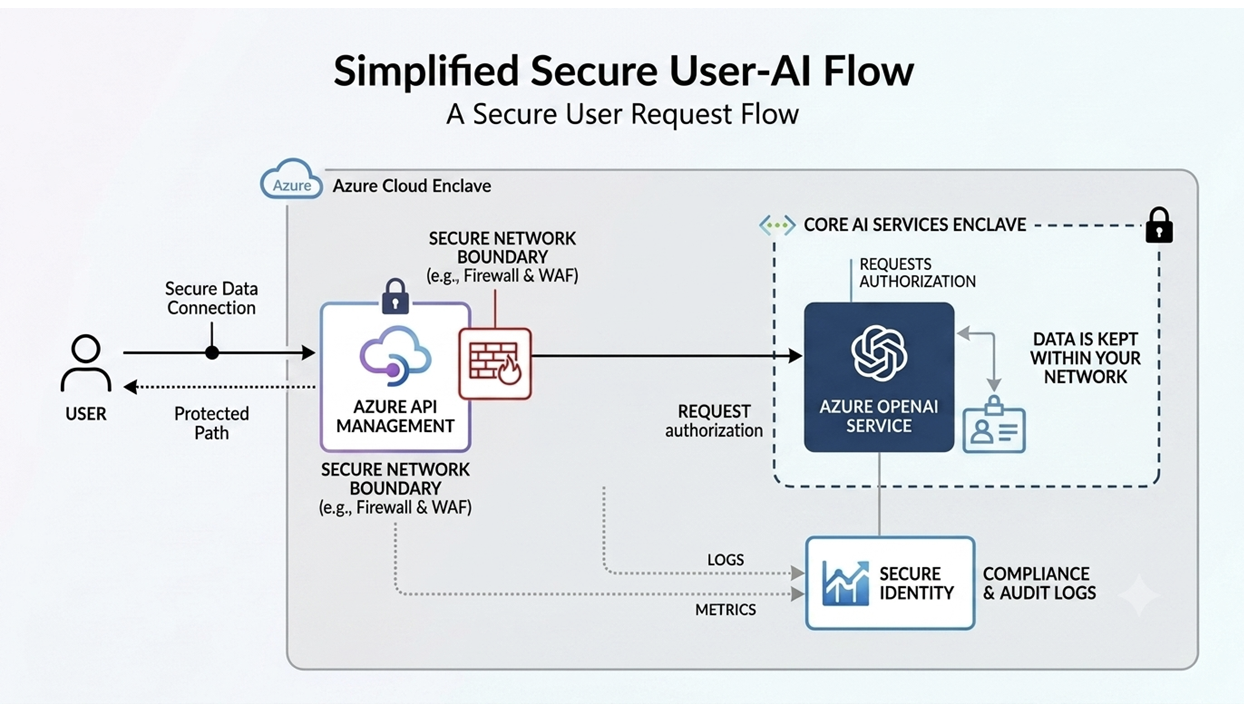
Figure 2 – Enterprise Azure AI Architecture
The 4 I’s Framework for Enterprise AI Code Audits
Rather than asking only which AI model to use, technology leaders can evaluate an AI code-audit solution through four dimensions:
-
Information — What can AI see?
Classify the source code and associated engineering information.
Is it public, internal, confidential, customer-owned, safety-critical or subject to regulatory or contractual restrictions?
Data classification should determine what AI services and workflows are permitted to access it.
-
Identify — Where should AI operate?
The options may include a public API, an enterprise cloud environment or a locally deployed model.
Deployment should be selected according to data sensitivity, governance requirements, infrastructure capability and business value—not simply model popularity.
-
Infer — What can AI decide?
AI may be allowed to explain code, identify potential defects or suggest improvements.
That does not necessarily mean it should approve a safety-critical change, determine compliance, or become the final authority on engineering decisions.
The acceptable level of AI autonomy should reflect the consequence of an incorrect result.
-
Integrity — How is AI output verified?
AI output needs appropriate engineering controls around it.
Static-analysis tools, automated tests, simulation, security checks, human review and compliance processes can provide independent validation before an AI recommendation becomes an engineering decision.
This “4I’s” framework provides a practical way for CTOs and engineering leaders to evaluate AI code auditing without becoming overly dependent on any particular AI vendor or model.
Security Goes Beyond API Keys
One of the common weaknesses in early AI implementations is treating the API key as the primary security mechanism.
Enterprise AI requires multiple layers of protection.
- Identity should address authentication, authorization, least privilege and role-based access.
- Network security should consider private connectivity, segmentation and controlled access paths.
- Data protection should address classification, encryption, retention and appropriate handling of source code.
- Secrets management should isolate credentials and support controlled rotation.
- Governance should provide auditability, usage monitoring and compliance controls.
The architecture should therefore answer more than:
“How do we authenticate the AI service?”
It should answer:
“Who can send source code to AI, what code can they send, what can AI return, and how is that activity audited?”
AI Must Not Become the Final Authority
AI-generated code analysis introduces a fundamental challenge: an LLM can produce an explanation that appears technically convincing while still being incorrect.
This becomes particularly important in safety-critical engineering.
My experience with safety-critical avionics software reinforced a principle that remains relevant to enterprise AI: engineering decisions require appropriate verification, traceability and accountability.
AI can accelerate engineering verification, but it should not automatically become the authority that approves the result.
A practical workflow could combine AI analysis with conventional engineering controls. This approach does not reject AI. Instead, it places AI inside an existing engineering assurance process.
For safety-critical and high-consequence systems, that distinction can be fundamental.
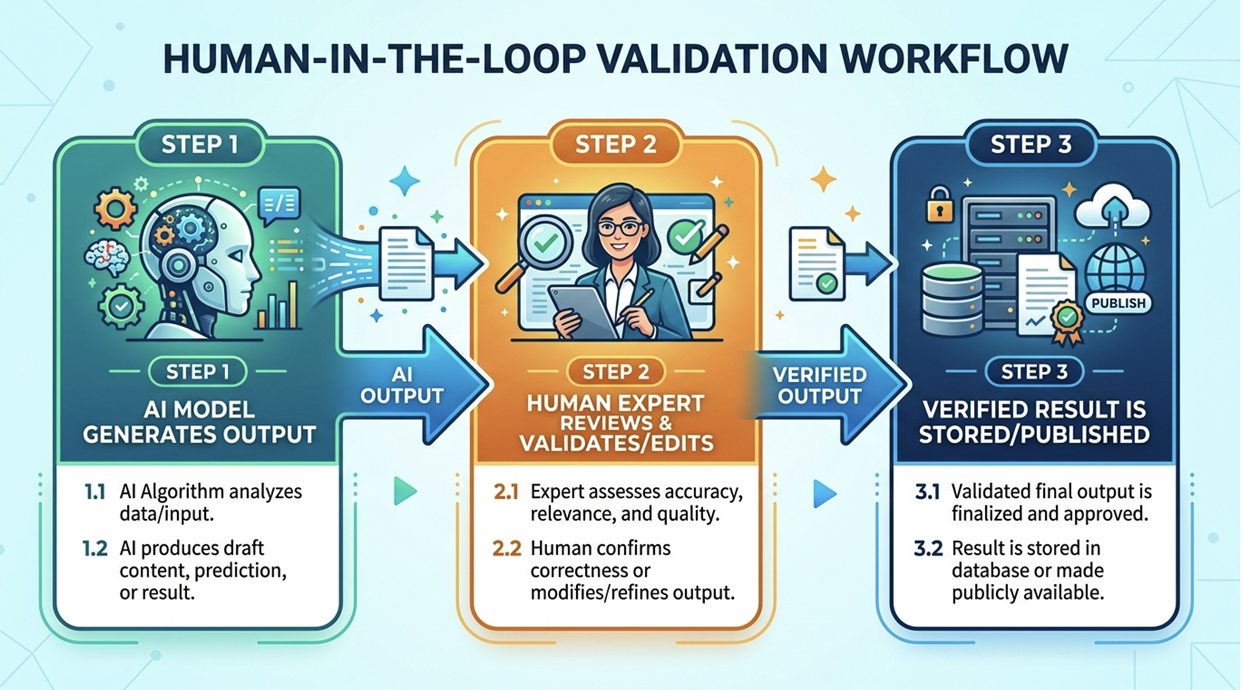
Figure 3 – Human-in-the-Loop Validation Workflow
RAG: The Hidden Challenge of Analyzing Large Codebases
Analyzing one source file is very different from analyzing an enterprise repository containing thousands or millions of lines of code.
Retrieval-Augmented Generation (RAG) can provide a scalable approach by ingesting source code, parsing and chunking relevant structures, generating embeddings, storing metadata and retrieving only the context required for a particular analysis.
However, simply indexing everything is not necessarily an efficient enterprise strategy.
Large-scale code analysis should consider:
- Logical code-based chunking
- Functions, classes and relevant structural boundaries
- Metadata filtering
- Incremental indexing
- Embedding reuse
- Differential analysis
- Repository and version awareness
For example, if only a small number of files changed between two software revisions, repeatedly sending the entire repository to an AI model creates unnecessary latency and cost.
The goal should be intelligent context, not maximum context.
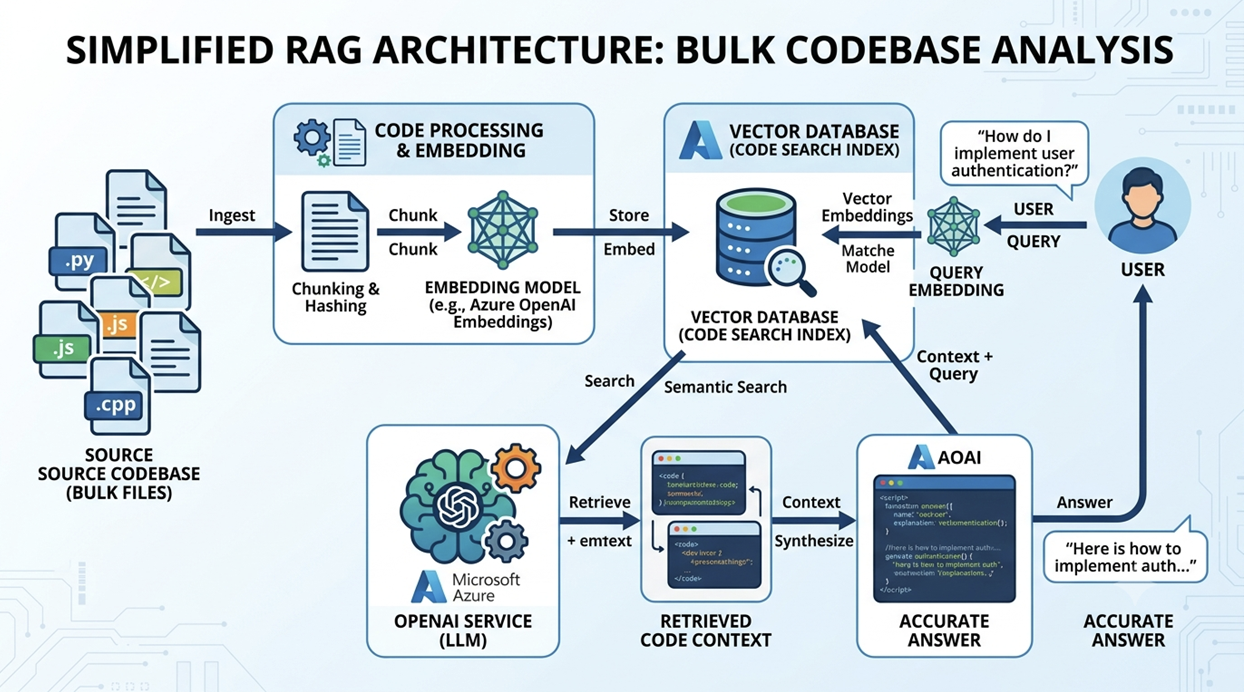
Figure 4 – RAG + FinOps Architecture
AI FinOps: The Cost of Every Token
AI costs can appear insignificant during a proof of concept and become substantial when scaled across large repositories. Cost is influenced by input and output tokens, embeddings, context size, number of files, frequency of analysis and model selection.
Engineering teams can address this through several techniques.
- Differential auditing analyzes changed files or commits rather than repeatedly scanning unchanged code.
- Intelligent chunking reduces unnecessary context by using logical code structures.
- Embedding reuse avoids regenerating embeddings for unchanged content.
- Model routing uses smaller models for straightforward tasks and more capable models only where deeper reasoning is required.
- Caching can prevent repeated analysis of unchanged content.
These are not merely AI optimization techniques. They represent the application of FinOps principles to engineering AI.
What Safety-Critical and ADAS Engineering Can Teach Enterprise AI
The acceptable level of AI autonomy should be determined by engineering risk, not simply model capability.
Consider three environments.
In a conventional enterprise application, an incorrect AI-generated document may require human correction.
In automotive ADAS engineering, an AI recommendation may influence software verification and therefore require stronger validation.
In avionics, safety-critical software requires rigorous verification, traceability and controlled engineering processes.
Experience across avionics and automotive ADAS highlights the importance of connecting automation with repeatable engineering validation, rather than allowing it to bypass established processes.
The same principle applies to enterprise AI.
A Practical CTO Decision Matrix
|
Decision Factor |
Public AI API |
Enterprise Cloud AI |
Local AI |
|
Deployment speed |
High |
Medium |
Low |
|
Enterprise governance |
Medium* |
High |
Very High |
|
Data sovereignty |
Low–Medium* |
High |
Very High |
|
Infrastructure effort |
Low |
Medium |
High |
|
Operational overhead |
Low |
Medium |
High |
|
Cost predictability |
Medium |
Medium |
Infrastructure-dependent |
|
Best fit |
Prototyping / low-risk workloads |
Enterprise production |
Highly restricted environments |
*Actual risk depends on provider configuration, contractual controls, data-handling policies and organizational governance.
There is no universally superior deployment model.
The appropriate architecture is the one that aligns the AI capability with the organization’s risk profile, governance requirements and business objectives.
From AI Code Auditing to AI-Assisted Engineering
Code auditing may ultimately become only one component of a broader AI-assisted engineering lifecycle. Based on working with engineering automation, the larger opportunity identified is to connect:
Requirements => Architecture => Source Code => AI Analysis => Static Analysis => Test Generation => Simulation & Validation => Compliance Evidence
This represents a shift from AI-assisted coding toward AI-assisted engineering lifecycle management. For organizations developing complex embedded, automotive, aerospace or other regulated systems, the value may come not from generating more code, but from reducing the repetitive engineering effort surrounding that code while preserving human accountability.
Conclusion: Put AI Inside the Engineering Discipline
Experience across embedded systems, avionics, automotive and enterprise AI engineering has highlighted a more fundamental enterprise AI question:
“Which AI model should we use?”
It is:
“Where should AI operate, what should it be allowed to access, what decisions should it be allowed to make, and how will humans verify its output?”
Public AI APIs can be effective for experimentation and lower-risk workloads. Enterprise cloud AI can provide stronger integration with organizational identity and governance, while local AI can be appropriate when data sovereignty outweighs the additional infrastructure responsibility.
The best AI architecture is therefore not necessarily the one with the most powerful model.
It is the one that provides the right balance of capability, security, governance, cost and engineering assurance for the problem being solved.
Final Author Insight
AI should not be introduced as a replacement for engineering discipline. It should be introduced as an accelerator within the engineering discipline.