Accessibility Decisions Shape Digital Experiences
A website should allow every visitor to complete important tasks independently, whether they are applying for a service, accessing learning materials, making a purchase, or finding essential information. When accessibility barriers exist, they affect usability long before compliance becomes a concern.
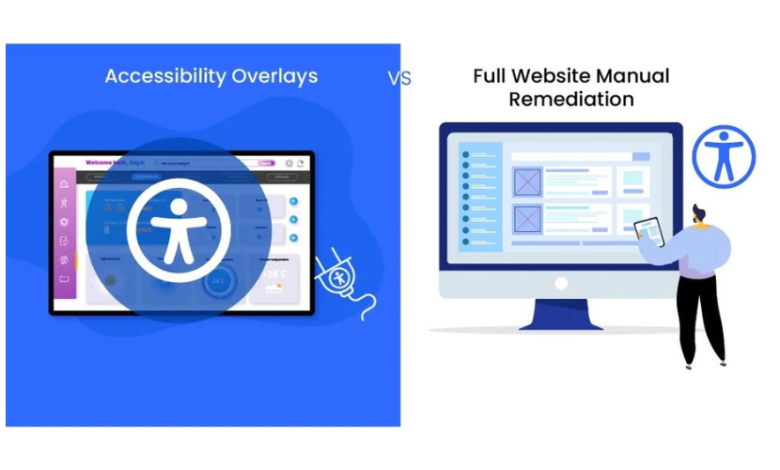
As digital accessibility receives greater attention, many organisations are exploring solutions that promise faster results. One option often considered is the web accessibility overlay, which adds accessibility features without extensive changes to the website. While this approach may seem appealing, it raises an important question.
Should accessibility be added after a website is built, or should it be built into the website from the beginning? The answer shapes both the user experience and the long-term accessibility of a digital product. This article explores the role of overlays, their limitations, and why lasting accessibility begins with addressing issues at their source.
Why Accessibility Has Become a Business Priority
Accessibility is no longer viewed as a standalone compliance initiative. It has become a business priority because digital experiences are now central to how organisations deliver services, communicate with customers, and meet public expectations.
As governments continue to strengthen accessibility standards and compliance requirements, organisations are moving beyond reactive compliance and adopting accessibility as a long-term business priority.
The shift is being driven by several factors. Accessibility regulations continue to expand across regions, procurement requirements increasingly include accessibility criteria, and organisations are expected to provide digital experiences that work for everyone. At the same time, users have become less tolerant of websites that are difficult or impossible to navigate with assistive technologies.
Consider an online banking portal where a customer cannot activate the “Transfer Funds” button using only a keyboard, or a university website where a prospective student cannot submit an application because form fields are not announced correctly by a screen reader. In both cases, the website may appear fully functional to most users, yet essential tasks become inaccessible for others.
These challenges have prompted organisations to rethink how accessibility is achieved. Rather than asking how quickly they can address compliance, many are now asking which approach delivers meaningful, long-term accessibility. That question naturally brings the conversation to overlays, remediation, and the role each can play in creating accessible digital experiences.
Understanding What a Web Accessibility Overlay Actually Does
Before comparing different approaches, it helps to understand what an accessibility overlay is designed to do. A web accessibility overlay is typically a JavaScript-based solution that is added to an existing website. It introduces an accessibility interface that allows users to adjust settings such as text size, colour contrast, cursor appearance, spacing, or reading aids without modifying the underlying website code.
For organisations managing hundreds or even thousands of web pages, this can seem like a practical option. Instead of rebuilding templates or reviewing every page for accessibility issues, an overlay can be deployed relatively quickly and provide visitors with a visible set of accessibility controls.
Think of it like placing a navigation app over an old road map. The app can offer directions and highlight routes, but it cannot repair damaged roads or build missing bridges. In much the same way, an overlay can provide additional user controls, but it does not rewrite the HTML, correct semantic structure, fix inaccessible forms, or resolve problems within the website’s source code.
This distinction is important because accessibility depends on how a website is built, not only on the options presented to users. Understanding that difference makes it easier to evaluate where overlays can be helpful and where their capabilities naturally reach their limits.
Why Accessibility Overlays Don’t Work as a Complete Solution
The appeal of overlays is understandable. They are quick to deploy and provide users with controls such as text resizing, contrast adjustments, and cursor enhancements. While these features may improve the browsing experience for some users, they do not address the accessibility issues built into the website.
Imagine completing an online application where the form fields are not labelled correctly. Even if an overlay is active, a screen reader may still fail to identify what information needs to be entered. The same applies to missing image descriptions, incorrect heading structure, inaccessible menus, broken keyboard navigation, or dynamic content that is not announced to assistive technologies.
This is the reason discussions about why accessibility overlays don’t work continue across the accessibility community. An overlay operates on top of a webpage, but it cannot consistently repair the underlying HTML, semantic structure, or code that assistive technologies rely on. As websites become more interactive, these technical foundations become even more important.
Recognising these limitations shifts the conversation from quick fixes to lasting improvements. That is where manual accessibility remediation becomes an essential part of building accessible digital experiences.
Manual Remediation Improves Accessibility at the Source
Accessibility becomes more sustainable when issues are corrected where they originate. Instead of adding another layer to the website, manual accessibility remediation focuses on identifying and resolving barriers within the code, content, and user interface itself.
A typical remediation process begins with a detailed accessibility audit. Accessibility specialists then correct issues such as missing form labels, improper heading hierarchy, inaccessible navigation, poor keyboard support, incorrect ARIA implementation, and reading order problems. These changes are validated through testing with assistive technologies to ensure users can successfully complete key tasks.
Think of a public service portal where residents need to renew a licence online. Fixing the form labels, keyboard focus, and error messages directly within the website allows every visitor to complete the process using their preferred assistive technology. The accessibility improvement becomes part of the website rather than an added feature. Successful manual remediation goes beyond identifying issues. It verifies that accessibility improvements work as intended across real user journeys and assistive technologies.
This is why website accessibility remediation is considered a long-term approach. As websites evolve with new content and functionality, accessibility remains part of the development process instead of becoming an afterthought.
Accessibility Overlay vs Manual Remediation : Looking Beyond Compliance
The discussion around accessibility overlay vs manual fix is not simply about choosing one solution over another. It is about deciding how accessibility will be sustained as a website grows and evolves.
An overlay may offer additional user preferences and can complement an accessibility strategy in specific situations. However, lasting accessibility comes from building websites that are accessible by design. When accessibility is integrated into development, testing, and ongoing maintenance, users can interact with digital content using their preferred assistive technologies without relying on workarounds.
This approach also prepares organisations for future updates. New pages, features, and applications can be developed with accessibility in mind, reducing the need to repeatedly address the same barriers. Instead of reacting to accessibility issues, organisations create digital experiences that are more inclusive, resilient, and easier to maintain over time.
Conclusion: Accessibility Is Built into the Website, Not Added Afterwards
The conversation around overlays and remediation ultimately comes down to one question: can every user complete essential tasks independently, regardless of the technology they use? If the answer is no, accessibility work is not complete.
Overlays can provide useful customisation options for some users, but they are not a replacement for accessible code, meaningful structure, keyboard support, or testing with assistive technologies. Lasting accessibility is achieved by addressing barriers where they originate and making accessibility part of the website’s ongoing lifecycle.
As digital experiences continue to evolve, organisations that invest in accessibility at the source are better positioned to deliver inclusive, reliable, and future-ready experiences for every user.