According to Deloitte’s 2026 Life Sciences Outlook, only 22% of life sciences leaders say they have successfully scaled AI, and just 9% report significant returns.
Not one of those executives said their company had finished its AI transformation.
Use is no longer the hard part. In NVIDIA’s 2026 State of AI in Healthcare and Life Sciences report, 70% of respondents said their organizations actively use AI, and 69% reported using GenAI and large language models.
Scientific communication shows of part of the reason for why the work is slow. A single product generates a steady stream of documents, from clinical study reports and publications to labels and answers to physicians’ questions, and each one passes through medical, legal and regulatory review before it reaches a doctor or patient.
A model can produce a draft in seconds, but every claim in it still has to hold up in front of regulators, reviewers and physicians, and the review chain that protects patients was built around human sign-off.
Three views of the same craft
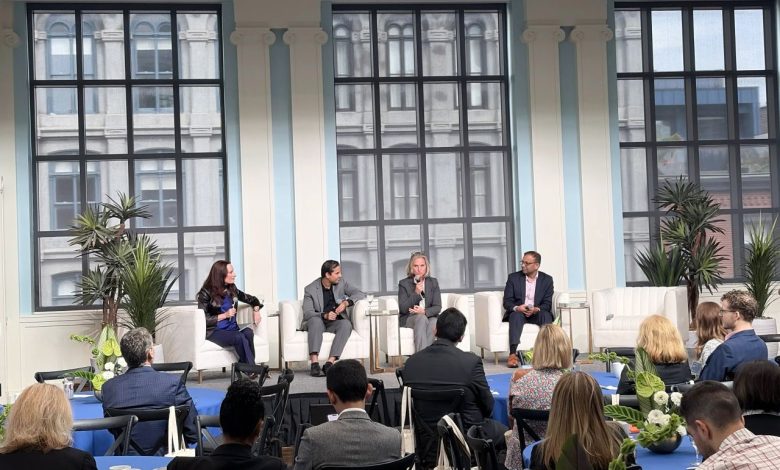
The above conversation shaped one of the sessions at Articulate 2026, a summit that Prezent Vivo hosted this month at the Museum of the American Revolution in Philadelphia.
The conference covered how clinical trial data moves into practice, what biopharma can learn from tech companies about scaling AI, and the BioPharma AI Excellence Awards, in addition to other sessions.
The panel “From Quill to AI: The New Craft,” moderated by Rebecca Goldstein of Abeona Therapeutics, brought together Julie Guery, Manish Tewani and Vivek Mukhatayar to discuss where AI strengthens the work of communicating science and where human expertise still decides the outcome.
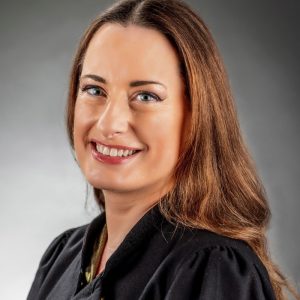
Guery is global head of regulatory affairs labeling at Sanofi, where she leads a team of more than 50 people across immunology, rare diseases, oncology, vaccines and general medicine, from early development through a product’s full lifecycle.
A product label may be the most tightly controlled document a drug company produces. Each sentence is negotiated with regulators, and the same core content has to stay consistent across Europe, the U.S. and Asia.
Manish Tewani and Vivek Mukhatayar brought important perspectives as well to the conversation. With Goldstein guiding the panel, the discussion moved between the people who write scientific content, the people who approve it and the people building the tools that now help produce it.
Where AI earns its place
The panelists agreed that AI can help life sciences teams analyze information and share it faster.
Much of scientific communication is labor that takes time without requiring much judgment: locating the right data in a clinical study report, reconciling versions of a document across markets, or turning one set of findings into material for physicians, patients and payers.
For a labeling team working across dozens of products and three major regulatory regions, even modest gains in that kind of work add up.
Deloitte found that only 14% of life sciences executives have fully implemented AI tools in daily workflows, with another 40% working toward it, so most organizations are still deciding which of these tasks to hand over first.
Where judgment still decides
The panel’s central conclusion was that speed is only part of the job. Meaningful communication in life sciences still depends on scientific rigor and human judgment, and that responsibility can’t be delegated to a model.
In practice, that judgment covers the decisions that make a document trustworthy: which finding a physician needs to see first, which caveat belongs next to a result rather than in a footnote, and whether a sentence overstates what a trial actually showed.
A language model can write fluent prose around a claim the data doesn’t support. In a regulated industry, a person signs off on every word and answers for it.
The panel’s title captures the shift. The tools of scientific writing have moved from the quill to the keyboard to AI, and the standard of evidence behind the words has stayed where it was.
That standard will matter more as the tools spread. Speaking elsewhere at the summit, Prezent Vivo CEO Rajat Mishra predicted that “by 2030, AI will be the baseline.”
If he is right, the life sciences teams that stand out will be the ones that pair faster tools with the scientific discipline to check everything those tools produce.