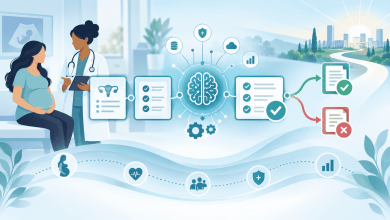
Cardiology is a medical specialty that uses advanced technology for diagnosis and procedures. In the same way, the pace of administrative work should match it. Every process related to cardiology, like catheterization, ablation, and echocardiogram generates a trail of codes, modifiers, and payer-specific rules that must be accurately recorded and documented. Missing a single code or modifier can lead to a high-value claim denial. With advanced AI technology in the healthcare industry, many workflows become seamless.
Why Cardiology Claims Are Uniquely Difficult
Cardiology is a specialty that caters to many procedures at the same time, like diagnosis, intervention, and surgery. These procedures can be done on a patient at the same time. So, there are various code families, like CPT and ICD-10 used at the same time. For example, a patient may undergo a diagnostic catheterization, a stent placement, and device programming. These services are bundled by payers as per the NCCI (National Correct Coding Initiative) rules. Bundled means that the billers know when to itemize and when to combine the charges. When it comes to volume, the cardiology claims are lower than other specialties. However, the cardiology claims have a higher dollar value.
Outsourcing to specialized cardiology billing services help reduce these risks of claim denials. The in-house billing staff becomes overwhelmed with the administrative workload. Additionally, if you hire generalist billers and coders who do not understand the intricacies of cardiology claim submission. In the same way, they lack the ability to interpret the CPT codes and their correct use. That’s where technology and artificial intelligence play its role. AI coding and billing tools help reduce the chances of incorrect claim submissions.
Where Artificial Intelligence Fits Into the Billing Workflow
AI in medical billing is not going to replace humans or their judgement. It reduces the chances of errors that lead to potential revenue losses. Machine learning models flag mismatched codes as they are trained on historical claims data. Similarly, these models find documentation gaps and missing modifiers. This proactive claims submission process helps to detect errors at the earliest. It helps to get a better return on investment that healthcare technology delivers.
Discussing cardiology billing services, a small mistake leads to costly errors that harms the revenue cycle process. Cardiology practices deal with high-value claims and the claim denials pose threat to the RCM cycle. An incorrect code for the electrophysiology procedure can bring significant revenue losses. AI-assisted scrubbing tools identify patterns that can lead to claim denial. They are trained on thousands of claims, so help make timely decisions. The result is a first-pass clean claim rate that is meaningfully higher than what manual review alone tends to achieve.
Predictive Analytics and Denial Prevention
Predictive denial analytics is one of the promising developments of artificial intelligence. It helps to find the likelihood of claim denials before the submission based on the patterns of documentation and procedures. It allows the billing teams to intervene at a time before the claim submission. As a result, medical billing teams can add the missing documents or secure prior authorization. These systems continuously learn with time.
Some procedures in a cardiology practice require prior authorization, like ablations, advanced imaging or device implants. This technology’s capability to predict is a valuable addition for the cardiology practices. Delays in authorization are the leading reasons for claim denials for any cardiology practice. So, predictive denial tools can help reduce errors and delayed reimbursements.
Natural Language Processing in Clinical Documentation
Natural language processing, or NLP, is another AI application mostly used by cardiology practices in the billing workflows. NLP tools can scan the notes physician makes, and automatically suggest relevant CPT and ICD-10 codes based on the documented clinical findings. This gives relief to coders from manual work. It also catches inconsistencies between the documentation and what was billed.
For interventional and electrophysiology, the technology is equally useful for procedures. Also, the documentation must clearly show the medical necessity for costly interventions. If a cath lab report is unable to prove that add-on vessel or a specific device component, an NLP-assisted review can identify the gap before it is coded. Catching the errors on an earlier stage helps practices to stay in a strong position if payers request an audit or supporting documents.
Automation of Repetitive Administrative Tasks
Robotic process automation (RPA) is a technology that automates manual tasks in a billing cycle. Verifying eligibility and checking the status of claims, for example, are some tasks that are repetitive. Also, these tasks consume a significant amount of time and the staff can allocate this time to care. The team can also spend their time in the work that is judgement-intensive, like coding decisions. It also reduces the human error that naturally creeps into high-volume, repetitive data entry.
This type of automation has a compounding effect and helps any cardiology billing company manage claims accurately. A staff member who spent long hours managing claims can do it in much less time. The administrative workload diminishes and results in faster reimbursement cycles. Another crucial part is job satisfaction that comes with automation where staff feel good after completing repetitive tasks in lesser time.
Why Human Expertise Still Matters
These technologies cannot take the place of human expertise in billing and coding. The AI tools are good at analyzing data as they are trained on large amounts of data. Cardiology billing guidelines change and it is essential to keep up with the latest rules to create and submit clean claims. An expert judgement of coders is required to check medical necessity or the appropriate CPT codes. So, AI becomes a force that speeds up the work and does not act as a replacement.
The partnership of humans and artificial intelligence is important where a claim denial can impact the revenue cycle process in a bad way. Pairing certified coders with the AI tools can significantly make the workflow efficient. Opting for either won’t be creating a bigger impact. The perfect balance between AI automation and human expertise is what helps cardiology practices improve collections.
The Road Ahead for AI in Healthcare Revenue Cycles
The future of the healthcare industry is brighter with combinations of AI and humans. In addition, AI scribes, AI coders, and other AI-based technologies are speeding up the work. For highly complex specialties, AI tools coupled with human expertise can bring massive improvements in overall workflow and collections as well. Keeping the documentation accurate is essential in specialties like cardiology as it determines the reimbursement. Interoperability, more than any single AI feature, may end up being the biggest driver of long-term billing accuracy improvements.
Payer requirements and regulatory compliances are evolving with the technology. Staying updated with the CMS guidelines and commercial payers help cardiology practices improve revenue cycle process. The bundling rules, for instance, change and practices need to adapt to it. Practices that are willing to incorporate AI technology in their workflows should look for vendors that are updated with the latest guidelines and payer policy.
Conclusion
Artificial intelligence is a useful tool for cardiology practices based on the administrative complexity. It also acts as a tool that reduces claim denials and even predicting the denials based on the trends. Specialties that deal with high-value claims like cardiology can reduce the chances of denials and minimize financial risks. Also, it reduces the chances of losing revenue and allocate staff time to useful tasks. Outsourcing medical billing to a company that leverages artificial intelligence to create and submit clean claims helps improve the financial cycle. With human expertise and AI tools together, cardiology practices can see sustainable results.