Gartner predicts more than 40% of agentic AI projects will be canceled by the end of 2027. I think that number is optimistic, and the reason has nothing to do with the models.
Look at the causes Gartner lists: rising costs, unclear business value, weak risk controls. None of those is a model problem. They point to a category error most organizations are making right now.
They’re treating agentic AI as a faster version of generative AI. It isn’t. Generative AI drafts. A person reviews the output before anything happens. The cost of an error is low, and the feedback loop is tight. Agentic AI acts. It queries systems, makes decisions, and triggers downstream workflows. By the time a person notices something went wrong, the error has already moved through the chain. You’re not correcting a draft. You’re unwinding a decision that has already been executed.
Human-in-the-loop doesn’t fix this by default. Bolting a review step onto an agent workflow and calling it safe is not the same as designing the workflow to be safe. A review step catches mistakes after the agent has decided. A safe design limits what the agent is allowed to decide in the first place. In commerce, that means an agent that only acts on product attributes that are verified and current, and that stops and escalates when a required field is missing or stale instead of guessing. The person in the loop isn’t checking every output. They’re handling the exceptions the system was built to surface.
Underneath all of it is a data problem. Agents don’t tolerate ambiguity the way people do. Give a person an incomplete spec and they’ll fill the gap with judgment. Give an agent the same spec and it acts on exactly what’s in front of it, confidently, at scale. I’ve seen this play out in commerce. A retailer’s AI shopping assistant underperforms, and the instinct is to blame the model. The real problem is the product data underneath it. Missing allergen fields, inconsistent attributes, specs written for a person reading a page rather than a machine parsing a field. The agent isn’t wrong. It’s accurately reasoning over bad inputs.
This isn’t a niche issue. In our own assessments, fewer than a quarter of brands have product data that meets the bar for an AI agent to confidently recommend their products. Most of them assumed they were fine.
Before you deploy an agent, you need answers to two questions. What does “correct” look like for the data this agent will reason over? And who is accountable when it isn’t? If you can’t answer both, you’re not ready to deploy an agent. You’re ready to deploy a liability.
The same logic applies to the model itself. Enterprises are increasingly uneasy about depending on a vendor’s black box, a model whose behavior can shift under them without notice. More of them are looking at tuning models on their own workflows instead. Microsoft’s Frontier Tuning, now in private preview, is one example. It applies reinforcement learning to an organization’s own data, processes and workflows within its compliance boundary.
Be clear about what that buys you. Tuning teaches a model behavior, like your terminology, your processes, and how your teams make judgment calls. It shouldn’t be where your facts live. Product specs, allergens, and assortments change every week. Bake them into a model’s weights and you’ve built a model that’s confidently out of date. The pattern that holds up is simple. Tune for behavior, retrieve for facts, and govern both.
That brings it back to the two questions. A model tuned on your workflows is only as trustworthy as the data it learned from and the data it pulls at the moment it acts. Model ownership without data governance just means you now own the liability outright instead of renting it.
The organizations still running agents in production in 2028 won’t be the ones with the best models. They’ll be the ones that did the unglamorous work first. Verified data. Clear accountability. Models they actually control. All of it in place before they let an agent act on anything.
—————–
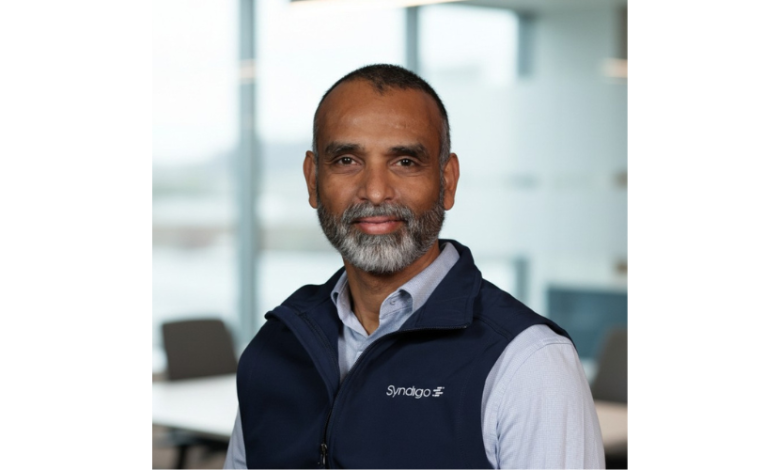
Tarun Chandrasekhar is President and Chief Product Officer at Syndigo, leading the PXM platform’s go-to-market strategy and R&D. He previously held leadership roles at Riversand, Drillinginfo (Enverus), and BP America, driving SaaS growth and M&A. He is Vice Chairman on the Board of Directors of PPDM Association, the global, not-for-profit society in the energy data industry in Houston.