
AI video has advanced remarkably quickly. Models can now create longer clips, maintain characters more consistently, produce convincing motion, and turn text or still images into increasingly polished video.
Yet most of that progress still follows a familiar pattern: give the model an input, wait for it to generate something, then watch the finished result.
That pattern is beginning to change.
As video generation becomes dramatically faster, AI is moving closer to participating in an experience while it is still happening. At the same time, applications such as live face swap already work with continuously changing video rather than waiting to produce a finished clip.
These developments point toward a broader shift in AI video: from generation to interaction.
The distinction matters. Generating a video faster does not automatically make a system interactive. But once generation becomes fast enough to fit inside the timing of a live experience, entirely new product architectures become possible.
Faster-Than-Real-Time Generation Is an Important Milestone
A useful example is H3 Max, fal’s post-trained and inference-optimized version of MiniMax H3.
According to fal’s published benchmarks, H3 Max can generate a five-second 768p video in under three seconds. A 15-second 768p generation takes roughly 15 seconds, while the more aggressively optimized H3 Max Turbo can be considerably faster. Fal AI
That is an important threshold.
Traditionally, generating five seconds of AI video meant waiting longer than five seconds before there was anything to watch. When generation becomes faster than playback, the timing relationship changes.
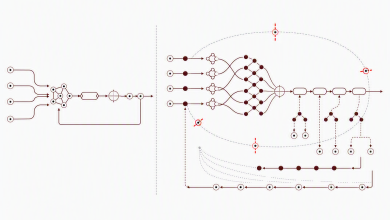
Consider a simple pipeline. One five-second segment is playing while the next segment is generated in the background. If the next clip takes only three seconds to complete, it can be ready before the current one finishes.
From the viewer’s perspective, those segments could potentially be presented as a continuous experience.
But that does not mean the model is generating video frame by frame as it is displayed.
That distinction is central to understanding what “real-time AI video” actually means.
Faster Than Playback Is Not the Same as Real-Time Interaction
The term real-time can describe several very different things.
A five-second clip generated in three seconds is faster than real time in terms of throughput: the model produces video faster than the video takes to play.
Interaction imposes a different requirement.
An interactive system has to remain responsive to input that is still changing.
If a person turns their head, changes expression, moves toward a camera, or gives the system a new instruction, the output needs to reflect that change quickly enough for the user to perceive cause and effect.
A clip-generation pipeline does not necessarily work this way.
It can:
- generate a short segment;
- buffer it;
- begin playback;
- generate the next segment in parallel;
- switch to the next completed segment when the first one ends.
That architecture can make generation appear continuous, particularly as model latency falls below playback duration.
But the current segment has already been generated. New input cannot necessarily change what is happening inside it.
Interaction is different because the system must keep responding to the present.
Interaction Changes What Needs to Be Optimized
Once AI video becomes interactive, raw generation speed is only one part of the problem.
Three other qualities become especially important.
Latency is the delay between a change in input and a visible change in output.
Continuity is the system’s ability to keep appearance, motion, identity, and other visual properties stable as the experience continues.
Responsiveness describes whether new input can meaningfully influence what happens next without breaking the flow of the experience.
Traditional generative video is often evaluated around visual quality, prompt adherence, motion consistency, generation time, and cost.
Interactive video has to balance more variables simultaneously:
quality, latency, continuity, responsiveness, and inference cost.
Those goals do not always move in the same direction.
A larger or more computationally intensive model may improve image quality but add latency. Increasing resolution raises bandwidth and compute requirements. More aggressive acceleration may improve responsiveness while introducing different quality trade-offs.
This is why real-time AI video should not be treated as one technology with one performance metric.
Two Paths Toward Real-Time AI Video
There are currently two especially interesting ways to build experiences that feel real time.
The first is generating ahead of playback.
When a model can produce short clips faster than they can be watched, software can prepare future content while current content is still playing.
This approach could support AI-generated stories, adaptive environments, virtual worlds, personalized entertainment, and other experiences where the system has a small window in which to prepare what comes next.
The second path is transforming a live input stream.
Here, the system is not primarily generating the next scene from scratch. Instead, it continuously receives video that already exists and modifies it as it arrives.
Real-time face transformation is one example.
A webcam produces a changing stream of frames. The AI processes that stream while the person moves, changes expression, or turns their head. The output has to follow those changes closely enough for the experience to remain interactive.
The system is not trying to generate the next five seconds before they happen.
It is responding to the video that is happening now.
Similar architectures can support live avatars, AI camera effects, video enhancement, streaming tools, and other forms of interactive video.
Both approaches can look continuous to the viewer, but the engineering problem underneath them is different.
Why Interaction Changes the User Experience
Most people using an AI product do not care how many inference steps it takes or which serving stack is running behind it.
They notice something much simpler:
Did the AI respond when I did something?
That feedback loop changes how AI feels.
A conventional video generator behaves like a production tool. The user asks for an asset, waits, reviews the result, and perhaps generates another one.
An interactive system behaves more like an environment.
For a creator, an appearance can change while recording rather than during post-production.
For a streamer, an AI-driven character or visual effect can remain active throughout a broadcast.
For video calls, transformations can follow a live participant rather than being applied to prerecorded footage.
And for AI enthusiasts, interaction has an appeal of its own.
Seeing your face change immediately as you move in front of a webcam is a very different experience from uploading an image and waiting for a result. The value is not necessarily productivity. It can simply be the experience of experimenting with AI and seeing it react.
That may become increasingly important as generative AI moves beyond tools people occasionally invoke and toward systems they interact with continuously.
Live Transformation as an Interactive AI Video Model
LiveFaceSwap AI provides a useful example of the second architecture.
Instead of producing an entire video first, it works with an incoming webcam stream. Models such as Lucy and XMAX process the changing video while the application manages the live input and output.
The browser keeps that interaction inside the web experience.
The desktop application extends it into other video workflows. Through a desktop virtual camera, the AI-processed output can be exposed as a camera source for applications such as OBS, Zoom, Microsoft Teams, and Google Meet.
That distinction is important.
The AI is not creating a clip that will later be imported into a streaming or calling application. It becomes part of the live video pipeline itself.
This is one reason interaction represents more than simply making generation faster. The role of the model changes from producing an asset to continuously participating in an application.
Generation and Interaction Are Likely to Converge
These two approaches do not have to remain separate.
In fact, faster-than-real-time generation becomes particularly interesting when it is combined with interactive systems.
Imagine a virtual environment that responds immediately to a user’s movement while a generative model prepares new scenery several seconds ahead.
An AI character could react through a low-latency system while more computationally expensive visual changes are generated asynchronously.
A livestream could combine transformed camera input with generated backgrounds, objects, or scenes that are prepared just before they are needed.
In these hybrid systems, not every part of the experience has to be generated frame by frame.
Some elements can respond immediately. Others can be predicted, buffered, or prepared slightly in advance.
The faster generative models become, the more of that work can fit inside an interactive time budget.
That is why faster-than-real-time video generation matters beyond simply reducing waiting time.
It expands the range of systems developers can build.
AI Video Is Becoming an Interactive Medium
The first major wave of generative AI video focused on making better clips.
The next phase may focus just as much on reducing the distance between input and output.
Faster-than-real-time generation is one route toward that future. Continuous live transformation is another. Future streaming generative models may blur the distinction further.
The defining question for AI video will therefore become broader than:
How quickly can a model generate a video?
Increasingly, it will also be:
How quickly can AI respond to what is happening right now?
When that response becomes fast, continuous, and reliable enough, AI video stops being only a way to generate content.
It becomes an interactive medium.