AI is transforming the way industry thinks about energy efficiency, turning a long-standing operational priority into a genuine competitive advantage. Across sectors, AI-enhanced systems are allowing operators to move to predictive maintenance and optimization of operations – identifying inefficiencies, predicting performance degradation, and delivering measurable reductions in energy consumption and related emissions.
The opportunity is real, but realizing it will depend on more than access to AI tools. It requires the right data infrastructure, domain expertise, a clear-eyed understanding of where the greatest inefficiencies lie, and a readiness to act on what the data reveals.
The untapped data opportunity
Industrial and infrastructure operations generate enormous volumes of data, and much of it goes unanalyzed. It is siloed, unstructured, or not presented in a form that supports decision-making. This remains a significant barrier to informed, efficient decision-making. Without the ability to extract actionable insight from operational data, even well-maintained assets operate below their potential.
AI changes this equation. By applying machine learning to operational data streams, it becomes possible to identify patterns that would otherwise go undetected, such as sub-optimal control settings and inefficiencies that accumulate quietly over time. The value is not in replacing human judgement, but in sharpening the operational picture available to operators.
This applies across industries. In manufacturing, process optimization – and critical infrastructure alike – the ability to continuously analyze performance data and adjust operations accordingly is becoming a core competency rather than a differentiator.
Where the energy stakes are highest
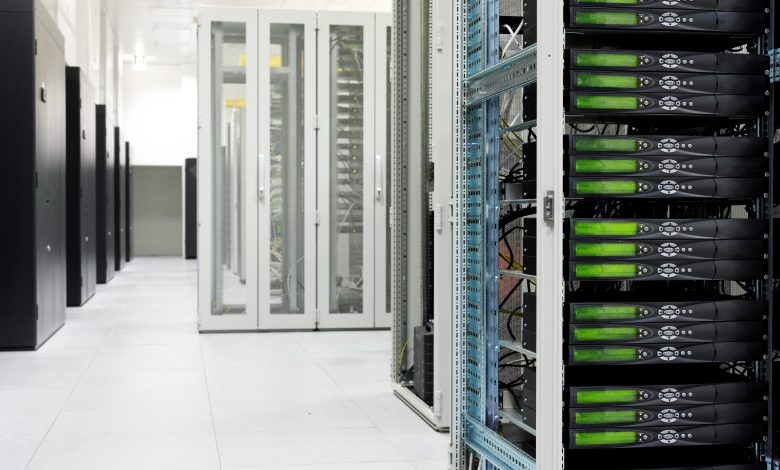
Not all industries face the same energy pressures, but some are reaching a critical point. Data centers are a clear example. According to the International Energy Agency’s (IEA) Key Questions on Energy and AI report, electricity demand from data centers rose by 17% in 2025 – with demand from AI-dedicated sites recording an even steeper increase. Looking ahead to 2030, total energy use across the industry is projected to double, while AI-specific infrastructure could require three times as much energy as it does today.
https://www.goldmansachs.com/insights/articles/us-data-center-power-demand-projected-to-double-by-2027Driving much of this demand is the expansion of AI infrastructure – as the computational requirements of AI training and deployment scale up, so too does the energy footprint of the facilities built to support them. The scale of that trajectory makes energy optimization a structural necessity.
Yet efficiency improvements in data center cooling have largely plateaued. Operators are managing complex infrastructure under mounting regulatory and ESG pressure, with limited tools to dynamically respond to real-time demand. This is precisely the kind of challenge where AI can deliver meaningful impact.
Putting AI to work on cooling optimization
ABB’s partnership with OctaiPipe reflects a wider need for data centre operators to address efficiency improvements within their existing infrastructure, particularly where major capital upgrades are not immediately viable. Rather than relying on static set points that can keep equipment running at maximum output regardless of thermal load, OctaiPipe’s AI for Cooling Efficiency (ACE) solution, offered by ABB, uses AI to monitor system performance and recommend control adjustments in real time.
Designed to work with existing assets and without additional hardware, the system keeps operational data on site – an increasingly vital consideration for facilities managing security and compliance requirements. In deployments, cooling-energy reductions of up to 30% have been recorded within 90 days. This type of operational insight is important when efficiency projects are competing for capital. It provides a clearer, evidence-based view of where the greatest losses occur, which assets are underperforming and where investment is most likely to deliver a return.
Maintenance as part of a broader performance discipline
Energy efficiency and maintenance are closely connected. Equipment running outside optimal parameters consumes more energy. Unplanned downtime disrupts operations and carries costs well beyond the immediate repair. Condition monitoring and early fault detection remain important tools – giving operators real-time visibility into asset performance and enabling faster, more informed actions.
But maintenance is increasingly one element of a wider performance discipline rather than an end in itself. The more significant shift is in how AI enables continuous optimization across entire systems – not just flagging when something is wrong, but dynamically adjusting how systems operate to improve efficiency on an ongoing basis.
The broader case for AI-driven optimization
What the data center cooling challenge illustrates is a pattern that applies across energy-intensive industries. There are large, complex systems consuming significant amounts of energy, where marginal improvements in control and optimization translate into significant savings at scale. AI is increasingly the most effective way to identify and act on those improvements.
The barriers to adoption are real: data quality, integration complexity, workforce capability, and the need for domain expertise alongside AI capability. ABB’s approach is to combine its knowledge of industrial systems and energy infrastructure with partners who bring focused AI innovation in specific domains. The collaboration with OctaiPipe is that model in motion – targeted and built for the growth of the data center industry.
Sustainability targets, energy security pressures, and the need for proactive, resilient operations are converging to make AI-driven optimization a priority. Industries that invest now will be better positioned, operationally and competitively, as those pressures intensify.