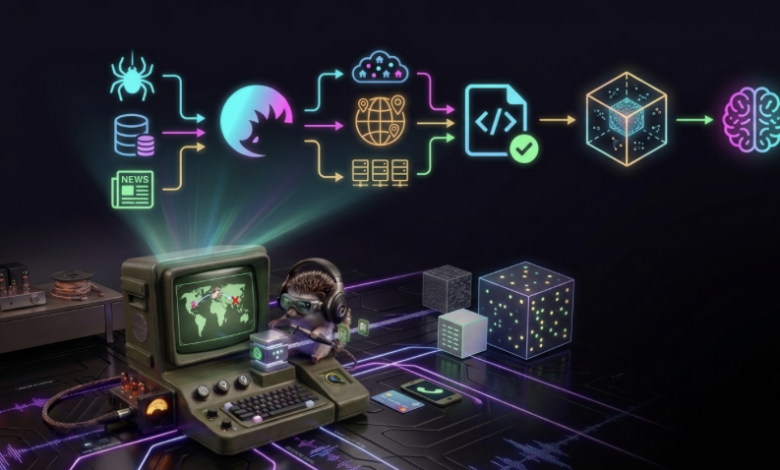
Generative AI models hallucinate. They invent facts when they lack access to fresh data. You fix this with Retrieval-Augmented Generation (RAG). Your engineering team builds a pipeline to pull live financial reports and feed them into vector embeddings. You connect LangChain or LlamaIndex to your target sources.
And then the target platform drops your session immediately.
TL;DR: Core components of a RAG proxy network
- Residential IP pools: Distribute continuous queries globally to extract unbroken HTML without triggering CAPTCHAs.
- Static ISP proxies: Prevent “impossible travel” account blocks by locking autonomous agents to a persistent geographic identity.
- SOCKS5 datacenter nodes: Push massive throughput for high-speed ingestion of unprotected public endpoints.
- Unified Agent Identity: Manage API billing and local verifications using integrated virtual bank cards and real ISP phone numbers.
Corporate repositories run aggressive traffic monitoring. A single server IP sending hundreds of queries flags the system. Your vector database simply stops updating. You need a strict network buffer. A RAG proxy network handles this workload. It takes requests from your LLM frameworks and routes them through a secondary network. Your primary hardware leaves zero footprint on the target server.
Distributing continuous data ingestion
Feeding clean HTML directly into Pinecone, Qdrant, or Weaviate requires network stability. Standard server subnets fall short. Target repositories throttle repetitive automated queries instantly.
Deploying datacenter IPs for speed
Datacenter IPs deliver raw speed. They push massive throughput with extremely low latency. Run them strictly for raw public data endpoints. CyberYozh App provides datacenter networks that natively support SOCKS5 alongside HTTP. This handles high-speed continuous data ingestion targeting unprotected news feeds.
Using residential pools for unbroken HTML
But heavily monitored corporate portals map out known server subnets. Shift your traffic to residential proxy pools to extract data from those exact sources. CyberYozh App distributes your queries evenly across 50+ million genuine home internet connections. Search engines see standard consumer actions. Your real-time RAG data collection pipeline stays active. You get enterprise-grade access starting at $0.90/GB. This sets up an affordable AI scraping network and abandons rigid legacy contracts.
Data engineers building proxy-pointer RAG architectures demand the full DOM structure. Standard vector RAG shreds documents blindly. Your vector embeddings fail if the parser reads a challenge page instead of actual Markdown. Pushing requests through a massive residential IP pool extracts clean, authentic text every single time.
Preventing “Impossible Travel” for autonomous agents
AI agents running on frameworks like Claude Computer Use hit a specific wall. The AI accesses an account from Berlin. Five seconds later, it clicks a button from New York.
The target platform drops the session immediately.
This “impossible travel” error ruins automated workflows. Fix this by assigning a static ISP proxy. You can also use sticky sessions within a residential pool. This ensures the agent’s digital footprint remains geographically consistent throughout the entire workflow. The execution environment stays stable under load.
Code implementation: Locking residential IPs
You manage the rotation directly in the code. CyberYozh App allows engineers to dictate rotation and sticky sessions directly through the proxy authentication string. Write the session ID directly into the request string. Here is how you implement a sticky session in Python to keep the agent’s IP consistent.
import requests
# CyberYozh format: BaseUser-s-[Session_ID]-ttl-[Minutes]m
# This locks the residential IP for this specific agent for 60 minutes
proxy_user = “HelloYozhd8e0f0c2-s-RAGagent01-ttl-60m”
proxy_pass = “jj3PYWRTvsHuWaXe”
proxy_host = “gate.cyberyozh.net”
proxy_port = “10000”
proxy_url = f”http://{proxy_user}:{proxy_pass}@{proxy_host}:{proxy_port}”
proxies = {“http”: proxy_url, “https”: proxy_url}
response = requests.get(“https://target-database.com/data.json”, proxies=proxies)
print(response.status_code)
This method prevents platforms from detecting anomalies during complex real-time data retrieval runs.
👉 Deploy your RAG proxy network.
Isolating the agent network layer
Data engineers often misconfigure their headless browsers. Set up proxies as direct HTTP channels in Playwright. The proxy operates strictly as a network pipe. If the destination uses HTTPS, the data payload encrypts automatically.
Passing your credentials via the –proxy-server flag forces the browser to route all traffic through this specific pipe. This stops WebRTC leaks. Autonomous agents navigate the DOM without exposing their server origins.
Overcoming regional limits for remote teams
Remote development teams face separate routing challenges. A distributed team in Pattaya, Thailand builds an AI agent to aggregate US real estate listings. Local Thai providers drop the connection. US portals reject the native IPs.
Route VLESS/Xray protocols through US mobile 4G/5G proxies. The team gets an isolated and clean development environment. They overcome regional limits natively and protect their network footprint.
Building a complete digital agent identity
Operating autonomous agents at scale takes a complete digital identity, not just an IP address. CyberYozh App provides an integrated ecosystem for this exact scenario. When an AI agent hits a phone verification wall, it can request a real ISP residential number through the API to receive the SMS.
This ensures a high trust rate. To pay for external APIs or SaaS subscriptions without cross-contaminating accounts, the system issues tokenized virtual bank cards linked to specific geographical parameters. You manage the entire agent identity centrally.
Validating your network layer
Never run a heavy script blindly. AI platforms deploy complex traffic analysis. Test your IP health before you scrape. Run the network through internal fraud filters.
CyberYozh App features a built-in Fraud Score checker that evaluates nodes using data from ThreatMetrix, IPQualityScore, and CyberSource. You see exactly how corporations view your digital fingerprint.
You check the Abuse Velocity and proxy detection status before launching the script. You never guess if the IP will fail during a run.
Matching proxy architecture to RAG workloads
Different extraction tasks require specific network architectures. Match the proxy type to your specific pipeline architecture to optimize your budget and maintain uptime.
| Proxy Type | Best Target Workload | Key Technical Advantage |
| Rotating Residential | Continuous web crawling & LLM grounding | Distributes queries across 50M+ IPs to reduce CAPTCHAs natively. |
| Static ISP | Agent workflows & protected login walls | Delivers raw server speed while retaining standard residential trust. |
| Mobile LTE/5G | Strict anti-bot systems (e.g., DataDome) | Carries the absolute highest trust score for seamless account registrations. |
| Datacenter | High-speed ingestion of public news | Pushes maximum throughput for unprotected, raw public data endpoints. |
Pair trusted IPs with advanced browser fingerprint management. Stop feeding your language models outdated data.
Route your real-time RAG ingestion through nodes backed by a strict no-logs policy. Combine this network layer with virtual bank cards and real ISP numbers. Your autonomous agents get a fully functional, independent digital identity.
👉 Explore the CyberYozh App proxy catalog.
FAQs about RAG proxy networks and AI agent routing
What is a RAG proxy and why do LLMs need one?
A RAG proxy is a strict network buffer between your data pipeline and the target source. Language models invent facts without fresh data. RAG fixes this by pulling live external information. But direct server requests trigger rate limits instantly. A proxy network distributes your queries to maintain continuous, stable data ingestion.
Can I use datacenter IPs for real-time RAG data collection?
Yes. Datacenter proxies push massive throughput and natively support SOCKS5 alongside HTTP. Run them to scrape unprotected public news feeds at high speed. But corporate portals flag server subnets. You must shift your traffic to rotating residential proxies to extract data from heavily monitored platforms.
How does a retrieval augmented generation proxy prevent LLM hallucinations?
Models hallucinate when they lack current facts. You feed them live data to ground their responses. If a target platform throttles your scraper, the model receives nothing and starts guessing. A proxy ensures your pipeline successfully extracts the actual JSON or HTML payload every time.
Why does my vector database scraping proxy return distorted DOMs?
You are routing traffic through flagged server subnets. Anti-bot systems detect the datacenter IP. They serve a simplified HTML layout or a challenge page instead of the actual content. Your parser feeds garbage into the vector embeddings. Shift to a massive residential pool to extract the raw, unbroken DOM structure.
How do I prevent “impossible travel” with a Claude Computer Use proxy?
AI agents navigating multi-step workflows trigger behavioral filters if their IP changes mid-task. The target platform drops the session. Assign a static ISP proxy or configure sticky sessions via API. This locks the agent to a single geographic identity until the job completes.
Will the proxy encrypt the data payload for my autonomous AI agents?
The proxy operates strictly as a network pipe. It only routes the traffic. Payload encryption is determined entirely by the destination endpoint. If your AI agent queries an HTTPS target, the data payload encrypts automatically inside the proxy channel.