

Inside Pasqal’s Nasdaq Debut and the Question Behind its $2B Valuation
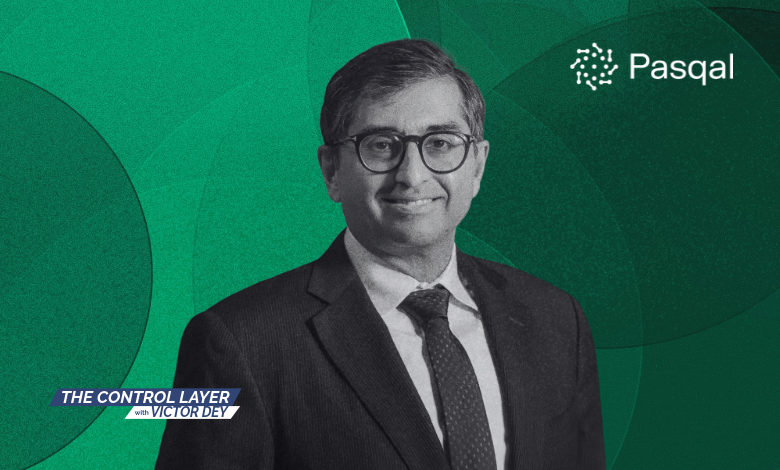
Pasqal’s $2 billion valuation and Nasdaq debut signal confidence in quantum computing. CEO Wasiq Bokhari shares how close customers using its machines are to achieving ROI.
Quantum computing companies have spent years explaining how their top-tier machines could solve problems beyond the reach of conventional computers. Today, some of those machines are already running inside corporate data centers, and customers face a more immediate question about what they are getting for their money. Installing a quantum computer is a milestone, but the harder part is showing that it does something valuable enough to justify the bill.
Pasqal took that argument to Wall Street on Aug. 28, when its shares jumped as much as 73% in its Nasdaq debut before paring gains to trade about 40% higher. The French quantum computing giant went public through a merger with Bleichroeder Acquisition Corp. II, which valued it at about $2 billion and left it with about $360 million in cash to expand production. Its commercial revenue grew from $4.1 million in 2024 to $19.2 million in 2025.
The company has seven quantum computers in commercial use, three more in production, and more than 25 commercial use cases running across industries including energy, financial services, and materials science. Saudi Aramco runs workloads on one of its systems inside its own data center.
“To me, the strongest evidence is that customers are no longer just experimenting with quantum computing; they’re operating it,” CEO Wasiq Bokhari tells me in an exclusive interview. But he also acknowledges a boundary around that progress. “Quantum computing is not yet ready to replace classical infrastructure for broad, general-purpose enterprise workloads. We view the market as being in a hybrid phase where CPUs, GPUs, and QPUs each play distinct roles. The applications generating value today are highly targeted optimization and simulation problems. The future is not quantum instead of classical computing, rather quantum becoming an integrated part of the computing stack.”
But how much of the company’s growing business reflects useful computing today, and how much reflects customers paying to prepare for what comes next?
What Counts as Production-Grade Quantum Computing?
Aramco’s 200-qubit machine in Dhahran offers a concrete example of Pasqal’s deployment capabilities, with applications that include reservoir optimization and well placement. Other customer ambitions extend further out. Crédit Agricole CIB has targeted initial quantum use cases as early as 2028.
Bokhari describes adoption as a process of integration, drawing a comparison with generative AI. “They reasoned that given the capability trajectory, GenAI would be able to address important business problems, and they started to test GenAI systems for different use cases and workloads,” he says of enterprises’ earlier AI experimentation. “Even today, GenAI systems are layering into existing infrastructure versus replacing them outright, and we see a similar path for quantum computing. The important thing is that customers are running problems that are important to them to determine how to integrate our quantum computing capabilities.”
That explanation gives early spending a purpose but doesn’t answer the question of returns. Learning how to use a machine can justify an investment for a customer with a long research horizon. A technology executive trying to cut the cost of an existing workload needs a more immediate comparison. As of now, Pasqal’s deployment figures do not establish how frequently customers run those workloads or how much conventional computing they have displaced.
From Quantum Advantage to ROI
When I asked Bokhari for a deployment with a quantified business outcome and a comparison against conventional computing, he pointed to materials research. Pasqal says it demonstrated what it believes constitutes quantum advantage in simulating a rare-earth magnetic material called TmMgGaO4 (TMGO).
“We started by defining quantum advantage for materials in a scientifically rigorous fashion, we believe for the first time. Then we showed how we could create a digital twin of TMGO in our quantum processors and explain the properties of the material,” he says. “We went further to predict new properties that were then experimentally verified and were repeatable across multiple quantum processors. This is significant because this enables computational discovery and design of materials and can only be done on a quantum computer.”
A company that can predict a material’s behavior more accurately might reduce expensive physical experimentation or pursue a discovery it would otherwise miss. “While we’re still early in quantifying the full economic impact across industries, demonstrating accurate simulation of real-world materials is exactly the type of capability that can ultimately translate into meaningful business value,” he says.
Can Neutral Atoms Bet Outperform Rival Architectures?
Pasqal’s hardware strategy rests on neutral atoms, which it uses directly as qubits, the units that carry quantum information. Its latest-generation system reaches 1,040 qubits. Bokhari claims that the approach gives the company a practical scaling advantage because it does not need to manufacture individual qubits on chips.
“For us, it is a natural advantage because in our neutral atom approach, we do not have to make chips to create our qubits,” he says. “Instead, we use atoms directly for our qubits, which allows us to make tens of thousands of identical and very high-quality qubits with long coherence times. We do not require wiring to connect these qubits together. They entangle directly.”
Asked how Pasqal should compare with competitors such as IonQ and Rigetti beyond qubit counts, Bokhari pushed back on the premise that investors should discount scale.
“Specifically, companies whose systems cannot scale like ours try to downplay this fundamental disadvantage of theirs and instead ask to focus on other things. But you cannot really ignore this,” he says. “The number of high-quality qubits is critical because it tells you something very important about scale and capability. Just like having more transistors in a chip is a direct measure of how powerful it can be, the number of high-fidelity qubits tells you how powerful a quantum computer can be.”
He also says Pasqal’s movable, highly connected qubits help it run complex simulations and improve algorithm performance.
“Since our systems do not require deep cryogenic systems, they are deployed and operate in standard data center environments. This is a big commercial advantage for us and our customers,” Bokhari explained. “All of our currently deployed QPUs are deployed in standard data and supercomputing centers.”
He puts the latest generation’s power consumption at 3.5 kilowatts. Moreover, Pascal is targeting to achieve 10,000 physical qubits by 2028, with plans to achieve to more than 10,000 physical qubits and over 200 logical qubits by 2029. The company claims its platform supports near-term analog applications while preparing for fault-tolerant computing, the industry’s longer-term effort to make quantum calculations reliable despite errors.
For customers buying now, the relevant question is how much useful work their systems can perform along that transition. A larger future machine does not settle the economics of the one they have today.
Turning Quantum Computing Orders into Repeat Business
Bokhari brings an operator’s background to that challenge. He held senior roles at Amazon and Google and earned a doctorate in physics from MIT. Pasqal’s founders include Nobel laureate Alain Aspect, but the CEO’s task increasingly involves converting scientific capability into a business customers return to.
The revenue growth gives him evidence of commercial momentum. Pasqal also reports an $80 million backlog, while its fact sheet lists a $41.1 million order book at the end of 2025. The company held $130.3 million in cash and cash equivalents as of May 31, 2026, before the transaction’s stated closing proceeds.
Asked how investors should distinguish sustainable demand from strategic commitments, Bokhari cited the breadth of Pasqal’s customers and repeat engagement. “Companies such as Aramco and Crédit Agricole are investing in quantum because they see strategic value in building capabilities now,” he says. “Our focus is on expanding the number of use cases that move from experimentation to operational deployment. We believe that’s the strongest indicator of sustainable demand.”
The company has also invested in software and cloud access to help customers incorporate quantum into their workflows. “I often compare quantum computing today to where GPUs were in the early days of AI. They didn’t replace CPUs. They became another specialized computing resource. We think QPUs will follow a similar path,” Bokhari says. “Enterprises already run complex workflows that combine multiple types of computing.”
That approach creates room for quantum computing to find commercially useful work without replacing the systems enterprises already depend on. It also means customers must judge the expense of adding another computing resource before they can assume it will reduce costs elsewhere.
The Control Layer Verdict
Pasqal has evidence that customers will spend money to explore that possibility. Its machines have reached commercial facilities, and its revenue has grown substantially from a small base. The next test is whether those customers can explain the return with the same specificity that Pasqal uses to describe the hardware. Until then, public investors will be financing the distance between a computer that runs and a purchase that pays off.

Victor Dey is a tech analyst and writer who covers AI, data science, startups, and cybersecurity. A former AI editor at VentureBeat, his work also appears in New York Observer, Fast Company, Entrepreneur Magazine, HackerNoon, and more. Victor has mentored student founders at accelerator programs at leading universities including the University of Oxford and the University of Southern California, and holds a Master's degree in data science and analytics.
More from Victor Dey
See all Future of AI
Cysic CEO Says Paying for an AI Model Doesn’t Prove Your Host Ran It
 Future of AI
Inside Indeed’s AI Hunt For Fake Employers Before Anyone Applies
 Future of AI
Databricks Co-Founder Explains How Genie Tackles the Blind Spot In Always-On AI
 Enterprise AI
What Happens to Enterprise Software When AI Does the Work?
Recommended for you
More stories AI & Technology
AI could move healthcare from reacting to disease to preventing it
 AI & Technology
The Need for Hybrid Version Control: Ensuring Stability as Human–AI Systems Evolve
 AI & Technology
Competitor Ads Analysis in the AI Era: How DTC Brands Read Their Rivals’ Ads
 AI & Technology
Are You Ready for AI or is it FOMO?
 AI & Technology
AI coding tools without company context cost businesses thousands of engineering hours to fix, new report finds
 AI & Technology