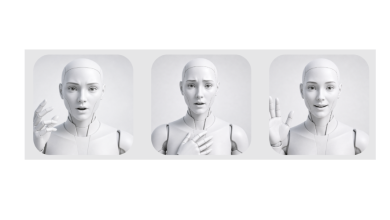
Artificial intelligence is rapidly transforming nearly every aspect of healthcare, and clinical research is no exception. From identifying eligible participants to streamlining operational workflows, AI has the potential to improve efficiency across the clinical trial ecosystem. Yet despite the excitement surrounding automation, successful clinical trial recruitment still depends on one factor that technology cannot replicate: the human touch.
Rather than replacing research teams, AI is proving to be most valuable when it supports the people responsible for connecting participants with clinical trials. At Clariness, AI is viewed as a tool that enhances operational efficiency while allowing experienced professionals to focus on the moments that require judgment, empathy, and critical decision-making.
AI’s Greatest Opportunity Lies Behind the Scenes
Much of the public conversation around AI focuses on futuristic possibilities. In reality, some of the most meaningful applications are already happening behind the scenes.
Recruitment teams process enormous volumes of incoming phone calls, emails, text messages, and web inquiries every day. Before a potential participant ever speaks with a recruitment specialist, someone has traditionally needed to read, categorize, prioritize, and route every interaction.
These repetitive administrative tasks consume valuable time and can slow recruitment efforts, particularly in large, global studies.
AI helps eliminate much of that operational burden.
Supporting Smarter Recruitment Operations
Within Clariness’ Omni-Channel Contact Center, AI is currently being implemented in controlled test environments to support operational workflows across both voice and text channels.
For written communications such as emails, SMS messages, and chat inquiries, AI helps identify participant intent, prioritize urgent requests, and even suggest draft responses that staff members can review before sending.
For inbound phone calls, speech-to-text technology and intent recognition can assist live agents by identifying why a participant is calling and surfacing relevant information before the conversation begins.
AI can also support intake triage by automatically classifying and routing incoming communications based on urgency, topic, and participant needs. Rather than requiring staff to manually sort every message or call, inquiries are directed to the appropriate teams more efficiently.
The result is not fewer people involved in recruitment, but a workforce that can spend more time engaging with prospective participants instead of managing administrative tasks.
Faster Insights for Clinical Trial Sponsors
Operational efficiency also benefits sponsors responsible for managing increasingly complex clinical development programs.
AI can accelerate participant matching by helping screen prospective volunteers against study eligibility criteria more efficiently, reducing the amount of manual review required during the early stages of recruitment.
Operational teams can also spend less time handling repetitive administrative work related to intake, routing, and scheduling.
Beyond recruitment workflows, AI-powered analytics provide earlier visibility into enrollment performance and site activity, allowing sponsors to identify emerging trends sooner and make informed operational adjustments throughout the recruitment process.
Human Judgment Remains Essential
Despite these advances, AI has clear limitations.
Clinical trial recruitment involves countless situations that require experience, context, and careful decision-making.
When incoming communications are ambiguous or AI cannot confidently determine participant intent, trained staff members must evaluate the situation and determine the appropriate next steps.
Similarly, activities involving informed consent, regulatory compliance, or Institutional Review Board (IRB) requirements continue to require human oversight. These moments carry significant ethical and regulatory responsibility that cannot simply be delegated to automation.
Recruitment teams also regularly encounter unique situations that fall outside standardized workflows, including relocation requests, study site capacity limitations, and participant recontact scenarios. These exceptions often require individualized solutions that AI cannot reliably provide.
Technology Cannot Replace Human Connection
Perhaps the greatest limitation of AI is one that cannot be measured through algorithms or automation.
Clinical trial recruitment is fundamentally about people.
Every participant brings a unique medical history, personal motivation, and individual concerns about participating in research. Building trust requires active listening, empathy, and an understanding of how people describe their experiences in their own words.
Tone of voice, emotional context, hesitation, and the subtle nuances of conversation, all shape meaningful participant interactions. While AI can increasingly emulate these behaviours, it does not genuinely understand or experience them. It can simulate human connection, but it cannot genuinely participate in it, and true recruitment success is built on authentic human interactions.
For organizations like Clariness, maintaining this human-first philosophy remains central to how technology is implemented. AI should help scale operational excellence, not replace the relationships that define successful participant recruitment.
The Future of AI in Clinical Research
As AI capabilities continue to evolve, its role within clinical trial recruitment will undoubtedly expand. Administrative workflows will become more efficient, operational insights will become more sophisticated, and recruitment teams will gain access to increasingly intelligent decision-support tools.
The future, however, is unlikely to be one where AI replaces experienced professionals.
Instead, the greatest opportunity lies in combining intelligent technology with human expertise.
Organizations that successfully balance both will be best positioned to improve operational efficiency while preserving the trust, oversight, and clinical judgment that remain essential to high-quality clinical research.
For Clariness, that means embracing innovation where it adds value while ensuring people remain at the center of every recruitment journey. AI may help accelerate the process, but it is experienced recruitment professionals who continue to make clinical trial participation possible.
Author Bio: Gopi leads Clariness’ technology strategy and ecosystem across patient recruitment, enrollment intelligence, and clinical trial innovation. He is responsible for the platforms, data infrastructure, and capabilities that are transforming how Clariness identifies and engages patients and sites, while optimizing and automating enrollment workflows. With more than 20 years of experience leading software engineering and digital transformation, Gopi brings a deep expertise in applying emerging technologies into real-world clinical research scenarios.