How the top SOC 2 compliance software compares on continuous control monitoring and audit readiness
The average cost of a data breach hit a record high in 2024, up 10 percent in a single year according to IBM’s Cost of a Data Breach report, and enterprise buyers now treat a clean SOC 2 report as the price of entry for a signed contract. That pressure is what sends security and compliance teams hunting for the best SOC 2 software, the platforms that automate evidence and shorten the path to an audit.
The ranking below runs from one to ten on a single axis: how close each platform gets you to a finished SOC 2 attestation. SOC 2 itself is an AICPA attestation, not a certification, and no tool issues the report. What good software does is get you audit-ready faster, so the scoring weights continuous control monitoring and AI-driven evidence automation over surface polish, with hands-on audit support as the tie-breaker.
Here is the ranked table, with each platform in order and the rubric behind the scores.
The best SOC 2 software for 2026, ranked by audit-readiness
Every score comes from the five-part rubric explained further down. The entries follow in that judged order.
| Rank | Platform | Best for | G2 rating | Audit-readiness score
|
|---|---|---|---|---|
| 1 | Scytale | AI-powered SOC 2 readiness with hands-on GRC expert support | 4.8 (712) | 9.6 / 10 |
| 2 | Scrut Automation | All-inclusive SOC 2 automation for lean, fast-scaling teams | 4.9 (1,312) | 9.0 / 10 |
| 3 | Secureframe | Guided first-time SOC 2 readiness with built-in training | 4.7 (802) | 8.6 / 10 |
| 4 | Thoropass | A single-vendor path that bundles the SOC 2 audit | 4.7 (579) | 8.3 / 10 |
| 5 | Sprinto | Fast, high-automation SOC 2 for cloud-native startups | 4.8 (1,656) | 8.0 / 10 |
| 6 | Hyperproof | Mid-market, multi-framework compliance operations | 4.5 (217) | 7.5 / 10 |
| 7 | Drata | Continuous control monitoring across a scaling SaaS stack | 4.7 (1,331) | 7.1 / 10 |
| 8 | Vanta | Broad-integration automation for a first SOC 2 | 4.6 (2,456) | 6.9 / 10 |
| 9 | Centraleyes | Risk-first GRC across many frameworks for larger programs | 4.3 (3) | 6.6 / 10 |
| 10 | AuditBoard (Optro) | Enterprise connected-risk and internal audit at scale | 4.6 (1,596) | 6.2 / 10 |
1. Scytale
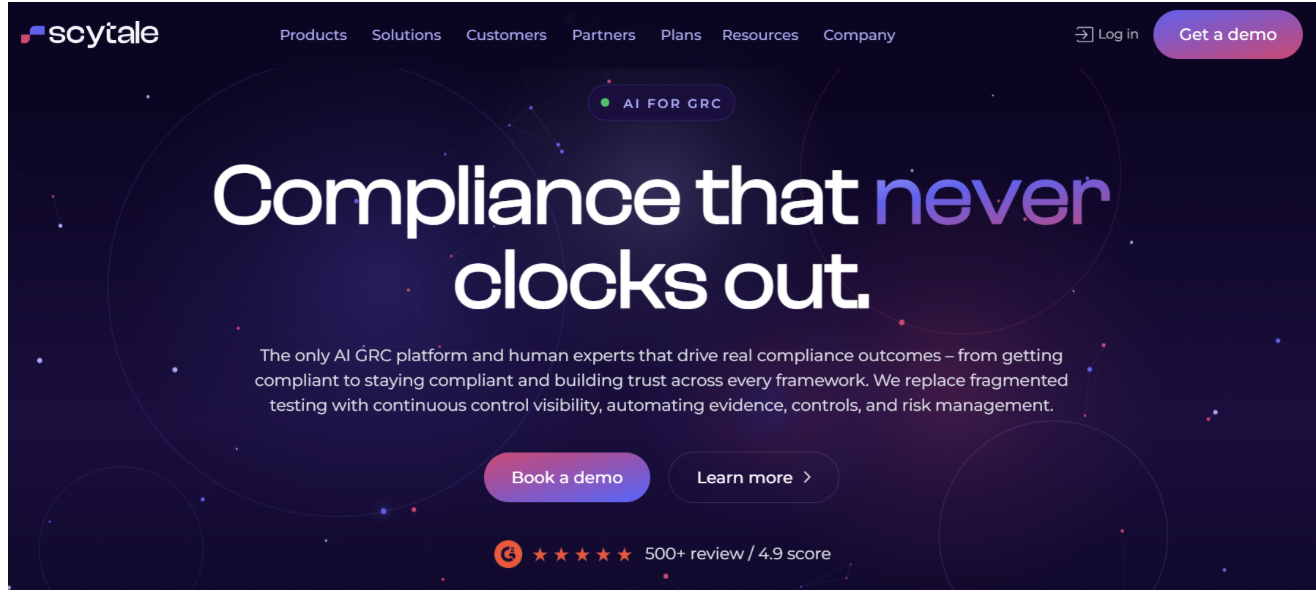
Best for: End-to-end SOC 2 readiness with AI automation and dedicated GRC expert support.
As an AI GRC platform, Scytale brings SOC 2 compliance into one place, combining automated evidence collection, continuous control monitoring, AI-powered workflows, and hands-on GRC expertise. Scytale’s AI GRC agents help automate time-consuming work like evidence collection and access reviews, while keeping controls and evidence mapped to SOC 2 requirements so teams can see their compliance status in real time.
What sets Scytale apart is the combination of automation and expert guidance throughout the entire SOC 2 journey. Dedicated GRC experts work alongside your team from scoping and readiness through the audit itself, while built-in audit management keeps evidence, requests, and auditor collaboration in the same platform. Integrated penetration testing and multi-framework cross-mapping also make it easier to reuse existing work across frameworks such as SOC 2, ISO 27001, GDPR, and HIPAA. Scytale has a 4.8 rating on G2 across 700+ reviews.
2. Scrut Automation
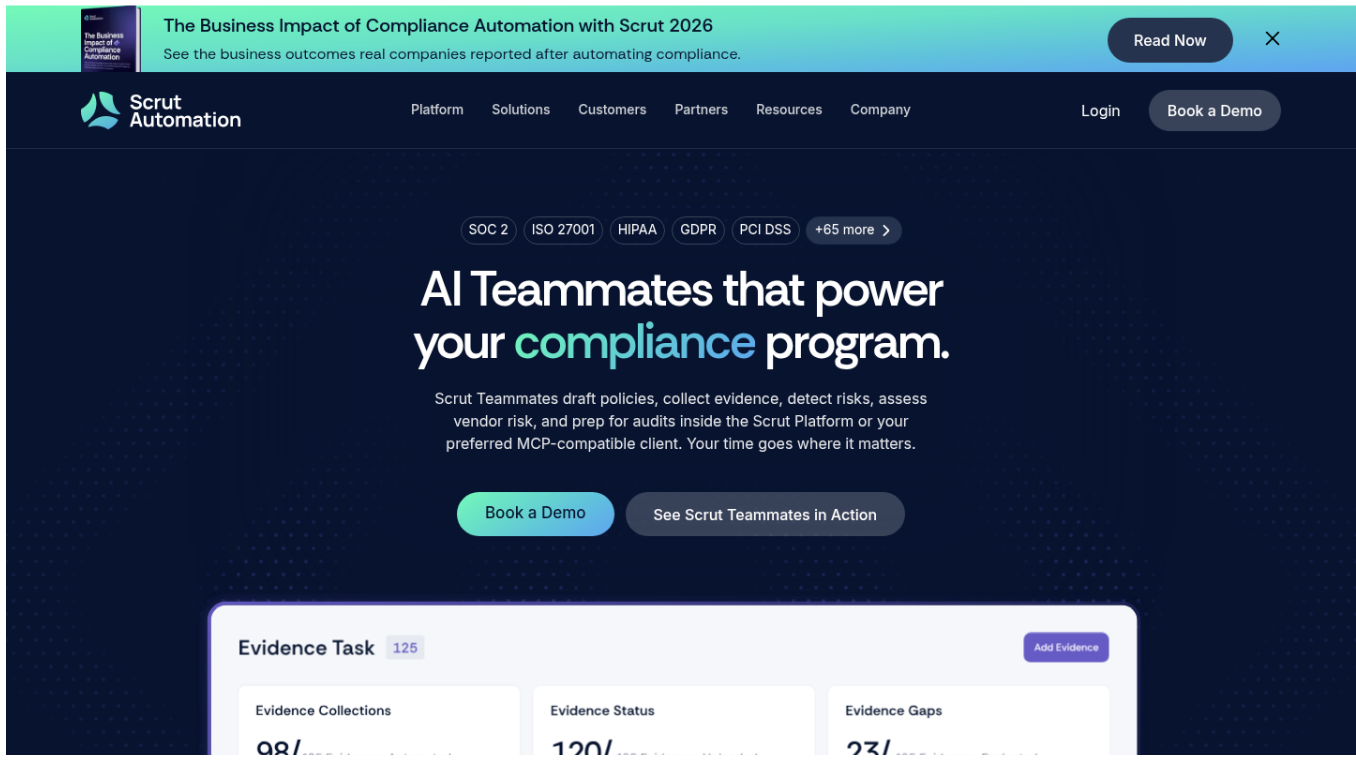
Best for: all-inclusive SOC 2 automation for lean teams that want expert guidance.
Scrut Automation covers 60-plus frameworks with continuous monitoring and in-house compliance experts, which suits fast-scaling teams pursuing SOC 2 alongside other standards. Its 4.9 G2 rating across 1,312 reviews is the highest raw score in this set, with praise centered on hassle-free implementation and expert guidance.
The friction shows up in the interface. Reviewers report occasional bugs that break workflows and slow, inconsistent screen performance on a platform that launched in 2021, so polish trails the older incumbents.
3. Secureframe
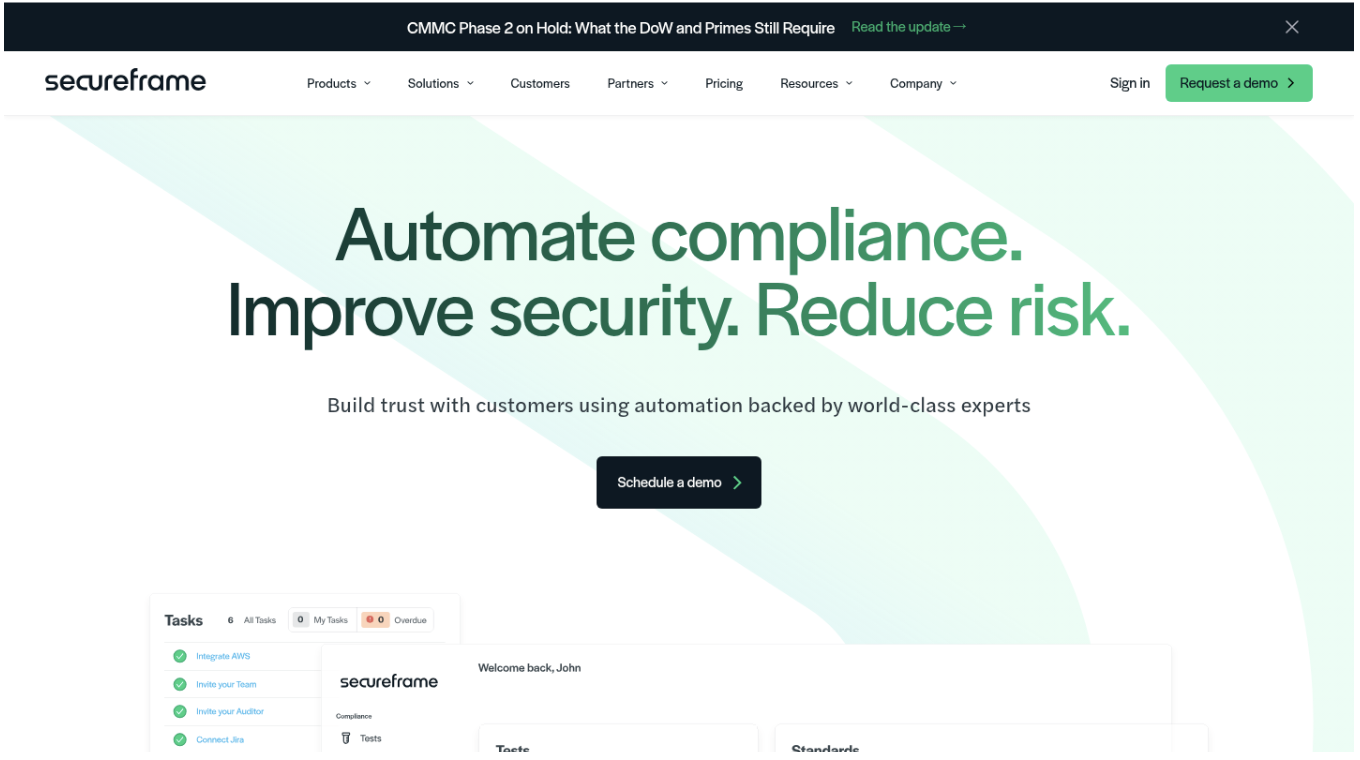
Best for: guided first-time SOC 2 readiness with built-in training.
Secureframe automates evidence collection across a broad integration catalog and layers AI-assisted remediation on top, with a condensed control set and in-house experts that make it a strong pick for a first SOC 2. It carries a 4.7 G2 rating from 802 reviews, and users credit the low-maintenance program and a supportive team.
The recurring complaint is integration coverage. Reviewers cite gaps with niche tools and services such as Azure DevOps, and they ask for deeper audit functionality once the program matures.
4. Thoropass
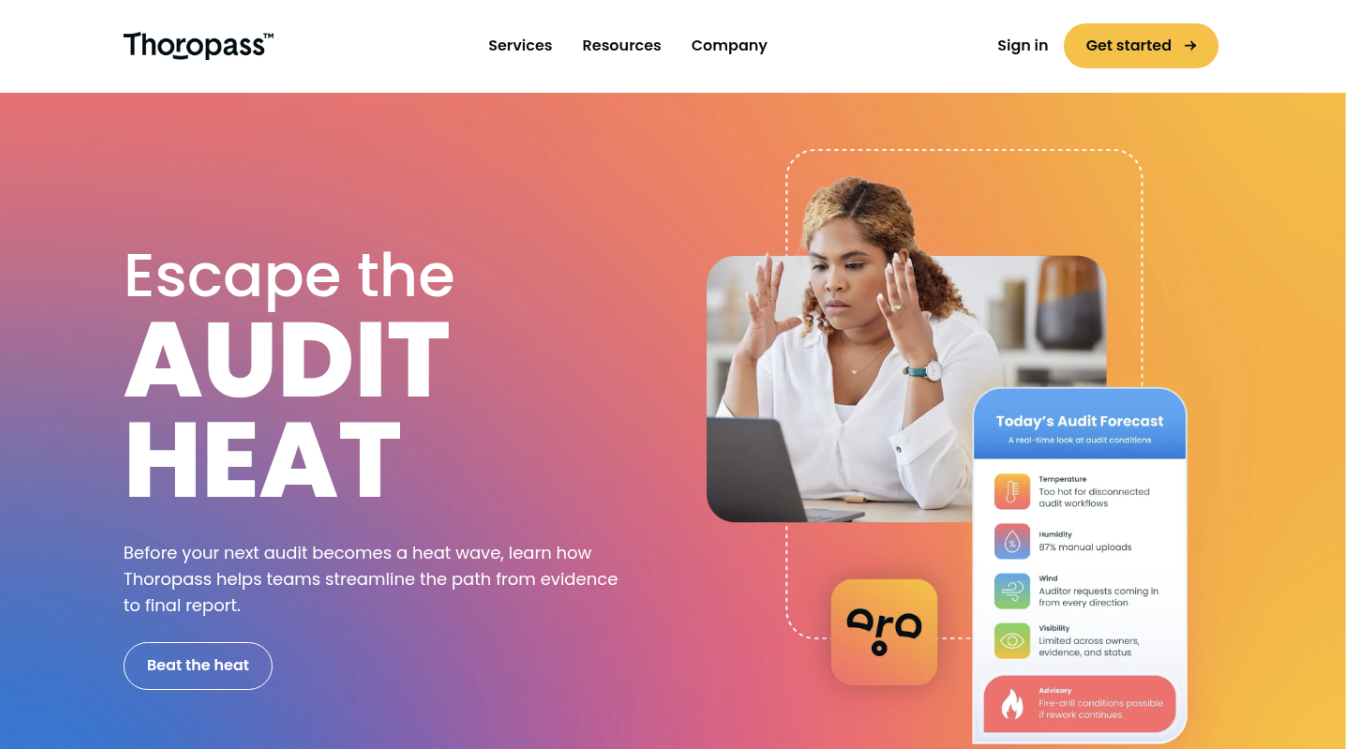
Best for: a single-vendor path that bundles the SOC 2 audit with the platform.
Thoropass folds a SOC 2 audit practice into the same product, so a buyer crosses from readiness to the examination without lining up a separate firm. Automated evidence workflows and a collaborative audit process earn a 4.7 G2 rating across 579 reviews, with the support team named as the standout.
The trade-offs are UX polish and audit-status visibility. Reviewers describe a disjointed experience and limited insight into where an audit stands, and buying the audit in the bundle locks you to Thoropass’s own auditor.
5. Sprinto
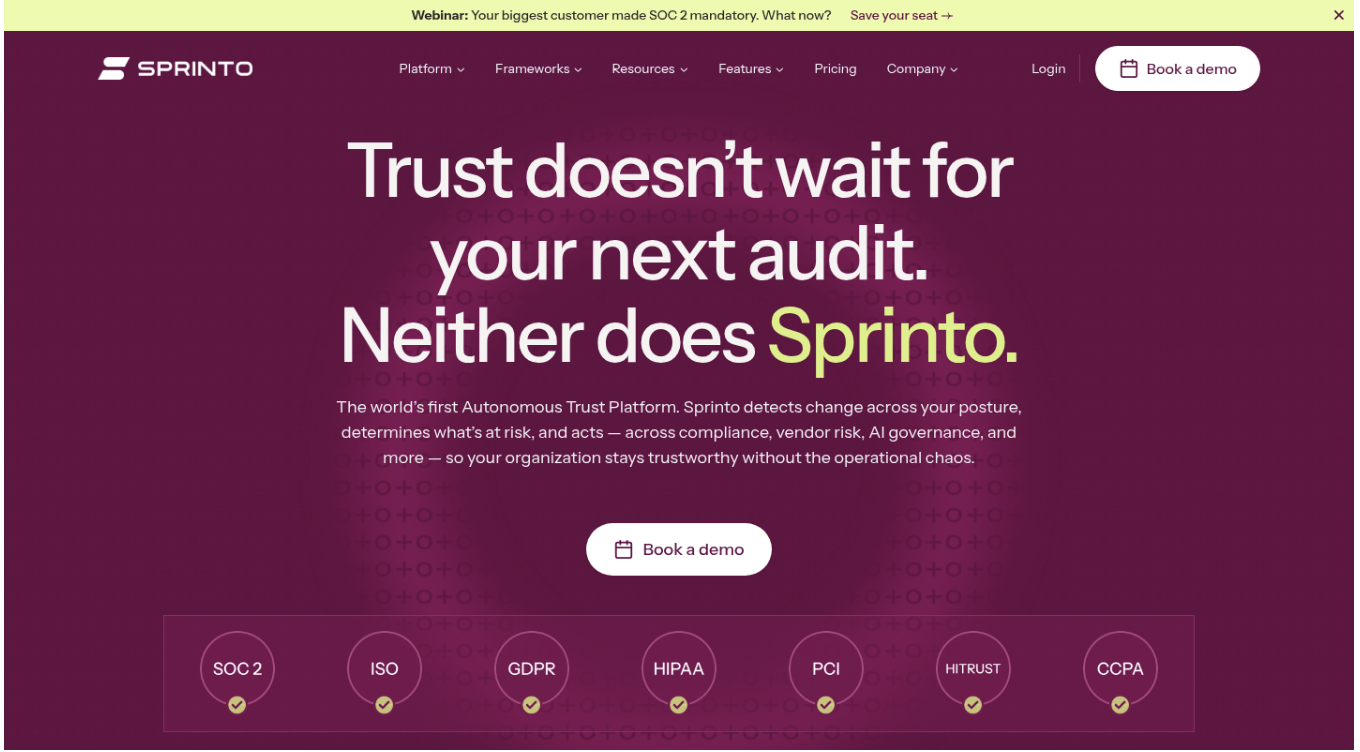
Best for: fast, high-automation SOC 2 for cloud-native startups.
Sprinto targets fast-growing cloud teams with deep automation, more than 200 native integrations, continuous monitoring, and guided onboarding that gets a first SOC 2 moving. It holds a 4.8 G2 rating from around 1,656 reviews and a reputation for responsive support.
Cost and coverage are the catches. Add-on pricing for extra framework layers such as ISO 27001 raises the price of a multi-framework program, and its integration catalog trails the largest incumbents.
6. Hyperproof
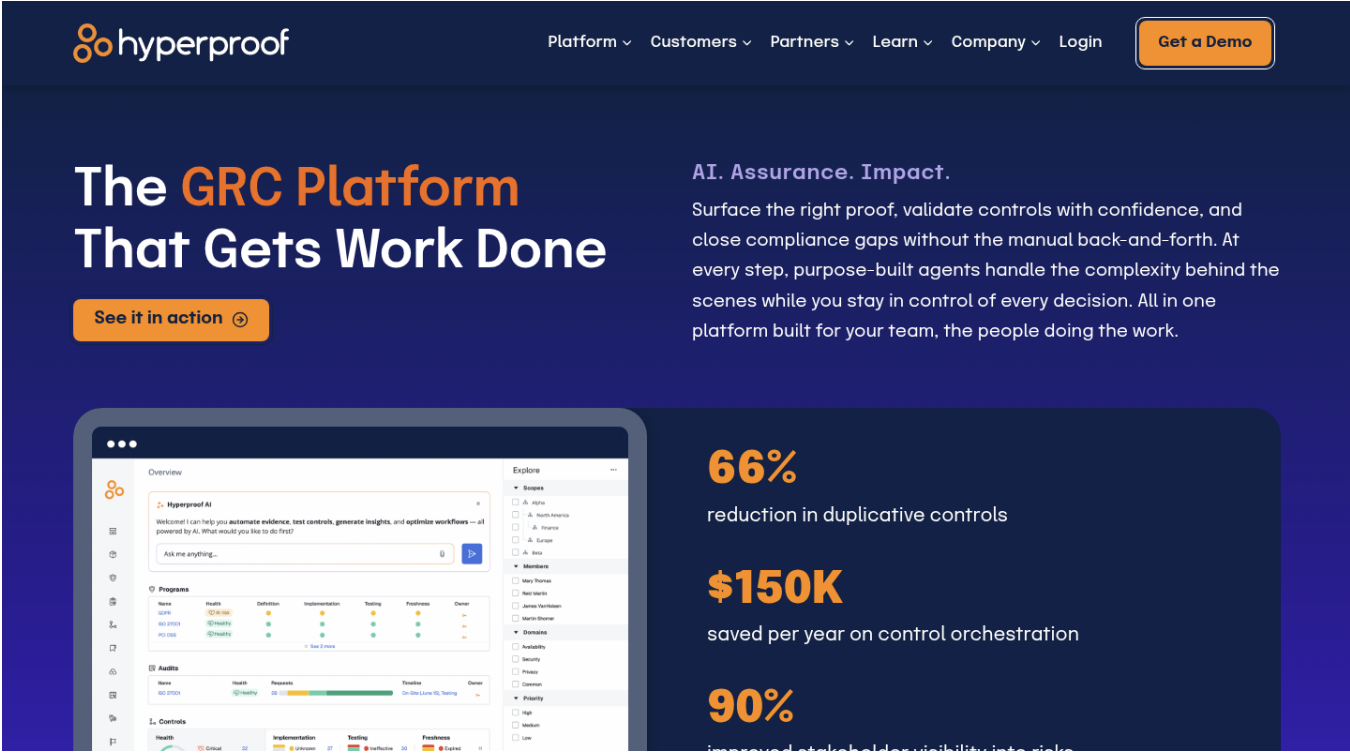
Best for: mid-market teams running multi-framework compliance operations.
Hyperproof leans toward compliance operations, mapping controls across 118-plus frameworks with risk-based workflows built for mid-market and enterprise programs. Evidence and audit collaboration draw praise in its 4.5 G2 rating from 217 reviews.
A steep learning curve dominates the complaints. A smaller integration set also means more manual SOC 2 evidence work than the automation-first platforms above it, which slows a first audit for a lean team.
7. Drata
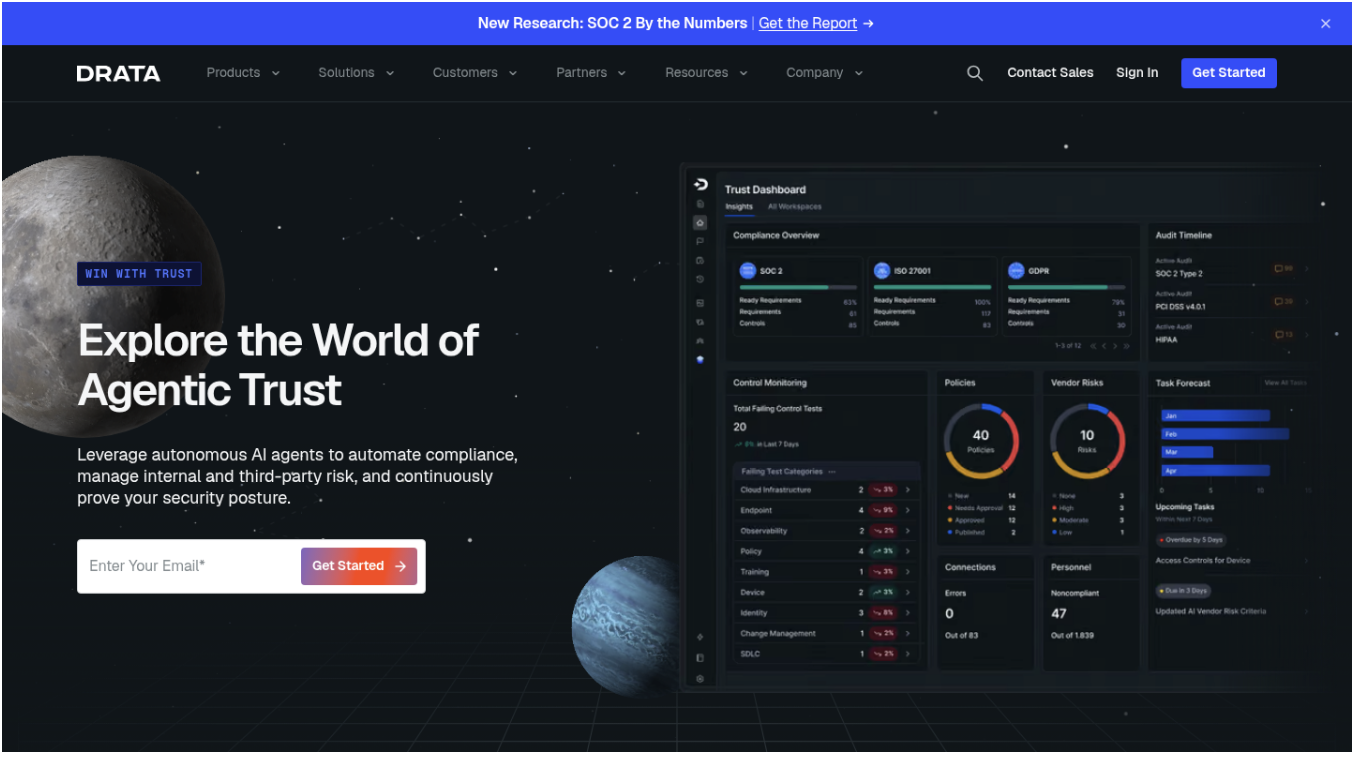
Best for: continuous control monitoring across a scaling SaaS stack.
Drata automates SOC 2 evidence collection and continuous control monitoring, and its autonomous agents handle compliance and risk tasks across more than 8,000 customers. The platform earns a 4.7 G2 rating from 1,331 reviews, with support and audit automation as the highlights.
Its self-serve model leaves the buyer to drive the program and source an auditor. Add-on fees for extra frameworks, reported near 5,000 dollars each, raise the cost of a multi-framework program, and reviewers still cite UI clarity and integration limits.
8. Vanta
Best for: broad-integration automation for a first SOC 2 report.
Vanta is the automation incumbent for a first SOC 2, with the broadest integration catalog in the category and continuous monitoring across 16,000-plus customers. Reviewers rate it 4.6 on G2 across 2,456 reviews and praise the interface and fast time to first evidence.
Pricing draws the loudest criticism, with hundreds of reviews flagging high cost for smaller companies. The self-serve approach also offers little proactive human guidance when a first audit gets hard.
9. Centraleyes
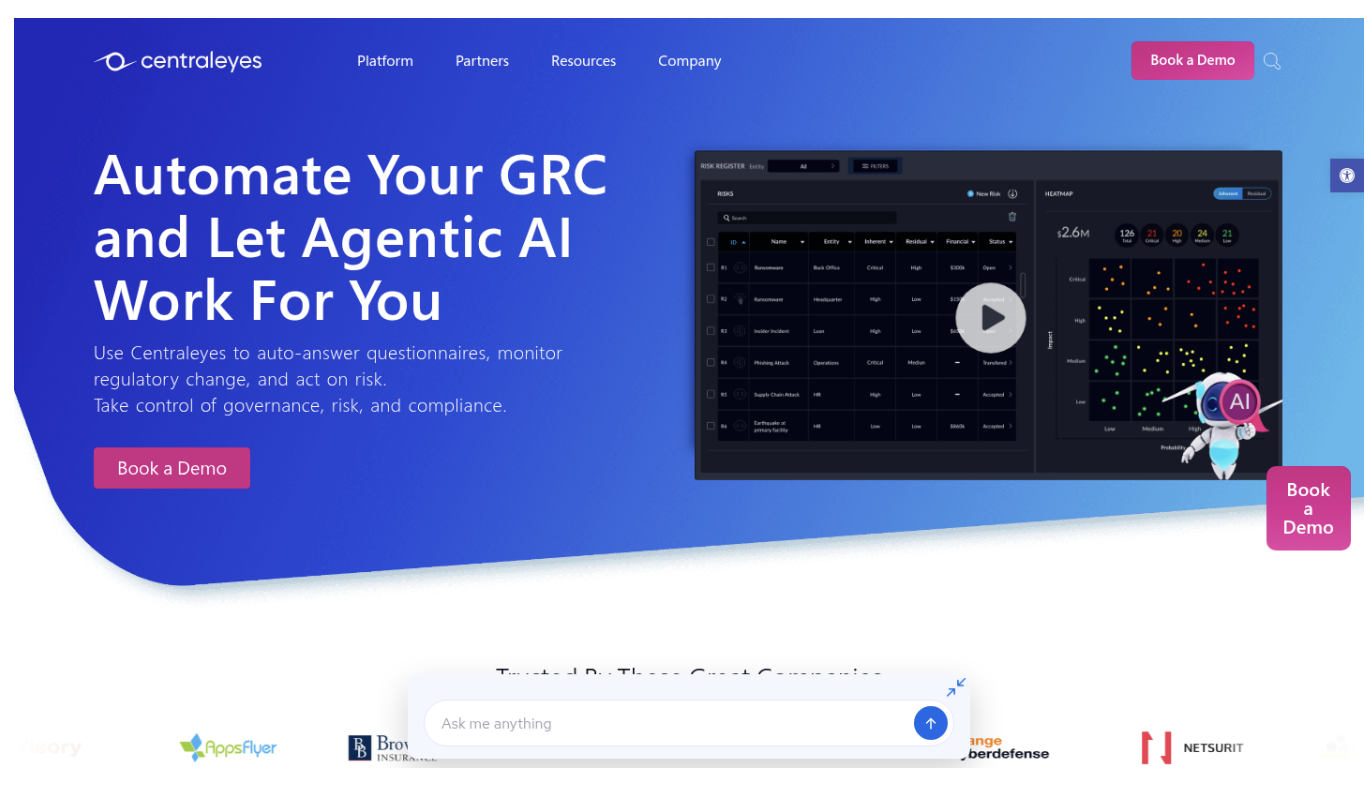
Best for: risk-first GRC across many frameworks for larger programs.
Centraleyes is an AI-powered GRC platform built around risk management, with automated risk registers and board-level reporting across 180-plus frameworks. It onboards in days and suits enterprise programs that treat SOC 2 as one framework among many.
Its G2 footprint is thin at 4.3 across three reviews, and users report weak reporting drill-down that struggles to serve varied stakeholder needs. The SOC-2-specific audit tooling is lighter than the dedicated automation platforms above it.
10. AuditBoard (Optro)
Best for: enterprise connected-risk and internal audit at scale.
AuditBoard, which now trades as Optro, anchors the enterprise tier with configurable connected-risk workflows and risk quantification used across much of the Fortune 500. It rates 4.6 on G2 from 1,596 reviews, with multi-module audit breadth as the draw.
For a straightforward SOC 2, the platform is heavy. Reviewers cite limited customization of roles and dashboards and an interface that isn’t intuitive, and an enterprise deployment overshoots a first attestation on both effort and price.
How we scored SOC 2 audit-readiness
Every platform earns a score from one shared rubric, so the ranking rests on the same axis top to bottom:
- Continuous control monitoring: real-time tracking of control status against the Trust Services Criteria, not a once-a-year snapshot.
- AI-driven evidence automation: how much evidence the platform collects and validates on its own, and how well its AI maps artifacts to controls.
- Audit readiness and auditor collaboration: a shared audit workspace and clean evidence exports that shorten the handoff to the CPA firm.
- Multi-framework coverage: cross-mapping that lets one SOC 2 control satisfy other standards and cut duplicate work.
- Guided expert support: access to GRC professionals who steer scoping and remediation where no in-house compliance function exists.
We weighted the first three highest, since audit-readiness is the outcome buyers pay for, and used current G2 ratings as a satisfaction check. The result is one order from 1 to 10.
What SOC 2 compliance software does, and what it can’t
SOC 2 compliance software automates the busywork of an audit. It pulls evidence from your cloud and identity systems and monitors control status, then organizes the results for the auditor. The report itself is an AICPA attestation, so an independent CPA firm performs the examination and signs off. No platform can issue it for you.
SOC 2 comes in two forms. A Type I report attests to control design at a single point in time, while a Type II report attests to how controls operated across an observation window of three to twelve months. That window, not the software, sets most of your timeline, so the value of a strong tool is keeping controls monitored and evidence current the whole way through.
How to choose SOC 2 software for your audit
Match the tool to your stack and your timeline. A few criteria separate the strong platforms from the rest:
- Evidence automation depth: the share of controls the platform checks without manual uploads.
- Continuous control monitoring: live alerts when a control drifts, not a quarterly review.
- Multi-framework cross-mapping: reuse of SOC 2 controls for ISO 27001 or HIPAA if you pursue them.
- Auditor collaboration: a portal your CPA firm accepts, with evidence exports in a format it can use.
- Integration coverage: native connectors for the identity and cloud tools you already run.
Smaller teams gain the most from guided onboarding and expert support, while larger programs weight configurability and framework breadth.
Choosing the best SOC 2 software for a faster attestation
The best SOC 2 software is the one that gets your team closest to a successful attestation, not whichever tool packs the most features. Leading SOC 2 platforms like Scytale combine AI-powered evidence collection with hands-on GRC expert support to simplify audit readiness. The observation window still sets your calendar, so the earlier you connect your stack and start monitoring controls, the sooner you reach the examination. Score each tool against your own systems and timeline before you commit.
SOC 2 software FAQs
Which SOC 2 software should top your shortlist?
The best fit depends on your stack, your audit timeline, and whether your team wants to run the program alone or with expert guidance. Weigh evidence automation and continuous control monitoring, then check how close each platform gets you to the CPA examination. On the audit-readiness axis scored here, Scytale ranks first for pairing AI-driven automation with GRC expert support, while Scrut and Secureframe follow for guided, all-inclusive readiness.
What does SOC 2 software cost in 2026?
Platform subscriptions run from the low four figures to five figures a year, scaling with company size and framework count. The independent CPA audit is billed on its own, so budget for both the tool and the auditor. Type II examinations cost more than Type I because they cover an observation window.
Can SOC 2 software stand in for your auditor?
No. SOC 2 is an AICPA attestation, and only an independent CPA firm can run the examination and sign the final report. Compliance software organizes controls and evidence and runs monitoring so the audit goes faster, but the firm still does the examination work.
Can SOC 2 software speed up your first report?
Preparation runs about one to three months, then a Type II observation window of three to twelve months sets most of the calendar. Software can’t shorten the window, though it keeps controls monitored the whole way through. Top SOC 2 platforms such as Scytale, which pairs automation with GRC expert support, helps a lean team reach audit-readiness without a dedicated compliance hire.
Should you start with SOC 2 Type I or Type II?
A Type I report attests that controls are designed to meet the criteria on the day of the review. A Type II report covers how those controls held up over an observation window, often three to twelve months. Most customers ask for Type II because it shows sustained control performance.