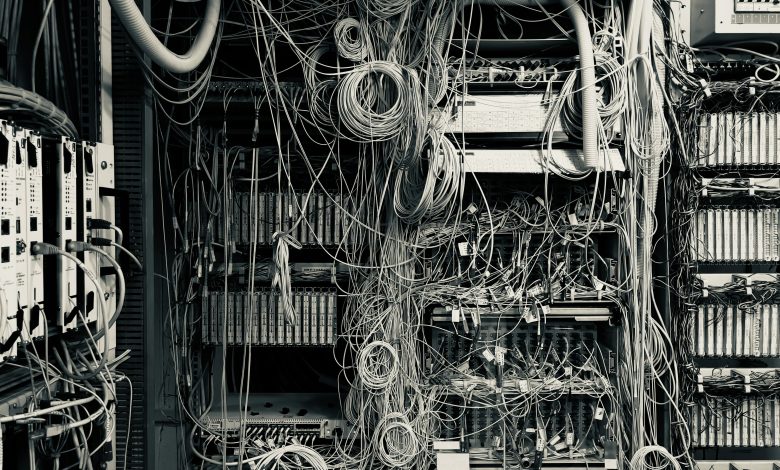
Much of today’s digital transformation is happening in environments that were never designed to support modern networked systems.
Across transportation networks, healthcare facilities, industrial plants, campuses, and public infrastructure, organizations are deploying increasingly sophisticated communications technologies into environments whose underlying architecture predates modern IP networking by decades. Real-time public address systems, surveillance platforms, emergency communications networks, building automation systems, operational technology environments, and connected sensors are all becoming part of a broader shift toward intelligent infrastructure.
The challenge is that these systems are often being introduced into facilities where reliability requirements remain far less forgiving than those of traditional enterprise IT.
In many environments, a network outage is not merely an inconvenience. It can disrupt operations, delay critical communications, affect safety systems, or impair the ability of organizations to respond during emergencies.
This distinction fundamentally changes how network engineering must be approached.
The Hidden Complexity of Modernization
Digital modernization initiatives are frequently discussed in terms of technology adoption. New devices are deployed, software platforms are upgraded, and communications systems become increasingly interconnected.
What receives far less attention is the engineering challenge of integrating these technologies into infrastructure that was never originally designed to support them.
Many legacy facilities were built around isolated systems operating independently. Communications, security, operations, and facility management often existed within separate technical domains with limited interaction between them.
Modern infrastructure increasingly requires the opposite approach.
Today’s systems exchange information continuously. Surveillance platforms interact with communications systems. Operational networks integrate with monitoring environments. Emergency response systems depend upon real-time connectivity across multiple technologies and vendors simultaneously.
As a result, the primary engineering challenge is no longer deploying individual systems. It is ensuring that interconnected systems remain reliable under real-world operating conditions.
Reliability Is an Architectural Decision
When engineers discuss network resilience, conversations often focus on hardware selection.
In practice, hardware is rarely the determining factor.
The more consequential decisions involve architecture.
Redundancy strategies, failover mechanisms, network segmentation, pathway diversity, switch design, and operational recovery procedures typically have a greater influence on system resilience than any individual device.
A resilient communications network must assume failure from the beginning.
Fiber links may be damaged. Equipment may fail unexpectedly. Maintenance activities may introduce temporary outages. Software updates may create unforeseen interactions between systems.
The question is not whether failures will occur.
The question is whether the architecture can absorb those failures while maintaining critical functionality.
This mindset becomes especially important in environments where communications systems support operational continuity or public safety functions.
The Challenge of Multi-Vendor Ecosystems
Modern infrastructure projects rarely involve a single technology platform.
Organizations often deploy solutions from multiple vendors across communications, networking, security, monitoring, and control systems. Each technology may operate effectively in isolation while introducing integration challenges when connected to the broader environment.
Interoperability becomes a significant engineering concern.
Differences in protocols, network requirements, software behavior, timing expectations, and operational assumptions can introduce complexity that is difficult to identify during initial deployment.
Many system failures do not originate from a single component malfunction. They emerge at the boundaries between systems.
The most resilient projects recognize this reality early and prioritize integration testing, interface validation, and end-to-end operational verification throughout the implementation process.
Commissioning Is Where Design Meets Reality
One of the most underestimated phases of infrastructure deployment is commissioning.
Design documents can model expected behavior. Simulations can validate assumptions. Individual components can pass factory testing.
Commissioning is where those assumptions encounter real operating environments.
Network pathways must be validated. Addressing schemes must function as intended. Redundant routes must fail over correctly. Communications must remain operational during maintenance scenarios. Multiple systems must behave predictably under concurrent operational conditions.
This process becomes exponentially more complex as deployments scale across multiple facilities, locations, or operational environments simultaneously.
The engineering challenge is no longer confined to technology.
It becomes a coordination problem involving stakeholders, contractors, operators, vendors, maintainers, and operational teams who must collectively ensure that systems function as intended over long service lifecycles.
Lessons Beyond Transportation
Although these challenges are highly visible in transportation infrastructure, the underlying lessons apply broadly.
Healthcare networks face similar requirements for communications reliability and operational continuity. Industrial facilities increasingly depend on interconnected operational technology environments. Smart buildings rely on integrated systems spanning security, communications, energy management, and automation platforms.
In each case, the technology itself is often only part of the challenge.
The larger challenge is designing systems that remain dependable despite evolving requirements, changing operational conditions, and decades of future maintenance activity.
As infrastructure becomes more connected, resilience becomes less about individual devices and more about system behavior.
Engineering for the Long Term
Perhaps the most important characteristic of critical infrastructure is longevity.
Many systems deployed today will remain operational for decades. During that time, technologies will evolve, vendors will change, operational requirements will expand, and new capabilities will be introduced.
Engineering decisions made during deployment therefore have consequences that extend far beyond initial implementation.
Network architectures must remain maintainable. Documentation must support future operators. Recovery procedures must remain understandable. Integration approaches must accommodate technologies that do not yet exist.
This long-term perspective often separates resilient infrastructure from infrastructure that merely functions.
The future of connected environments will not be defined solely by the sophistication of the technologies they deploy. It will be defined by the quality of the engineering decisions that allow those technologies to remain reliable under real-world conditions.
When communications systems support critical operations, resilience is not a feature added at the end of a project. It is an architectural principle that must be designed into the network from the beginning.
The most successful infrastructure programs recognize that reliability is not something organizations purchase. It is something they engineer.