What use does AI have outside of media buzz for actual business growth? 5 real stories overlooked by the mainstream media with real business problems and their solutions.
AI Avatars — Personality, Scaled Up
Personal Brand is notoriously hard to scale up — you have only 1 person and it’s you. Hire a team of marketers, SMM specialists, video production managers, but you’re still limited to 1 person frontrunning the brand. If that person has a bad day — you’re out of posting schedule. There’s workarounds for the task, namely doing pre-recorded videos and shots, but that’s it.
Shane Morand faced the same problem. Having 30 years of experience in scaling sales to $1B+ in 50+ countries he needed a way to scale personality without turning his life into a livestream show. So, he came up with the AI Avatars Framework: a solution for business and personal brands, that helps to automate most of the tedious Personality Brand parts.
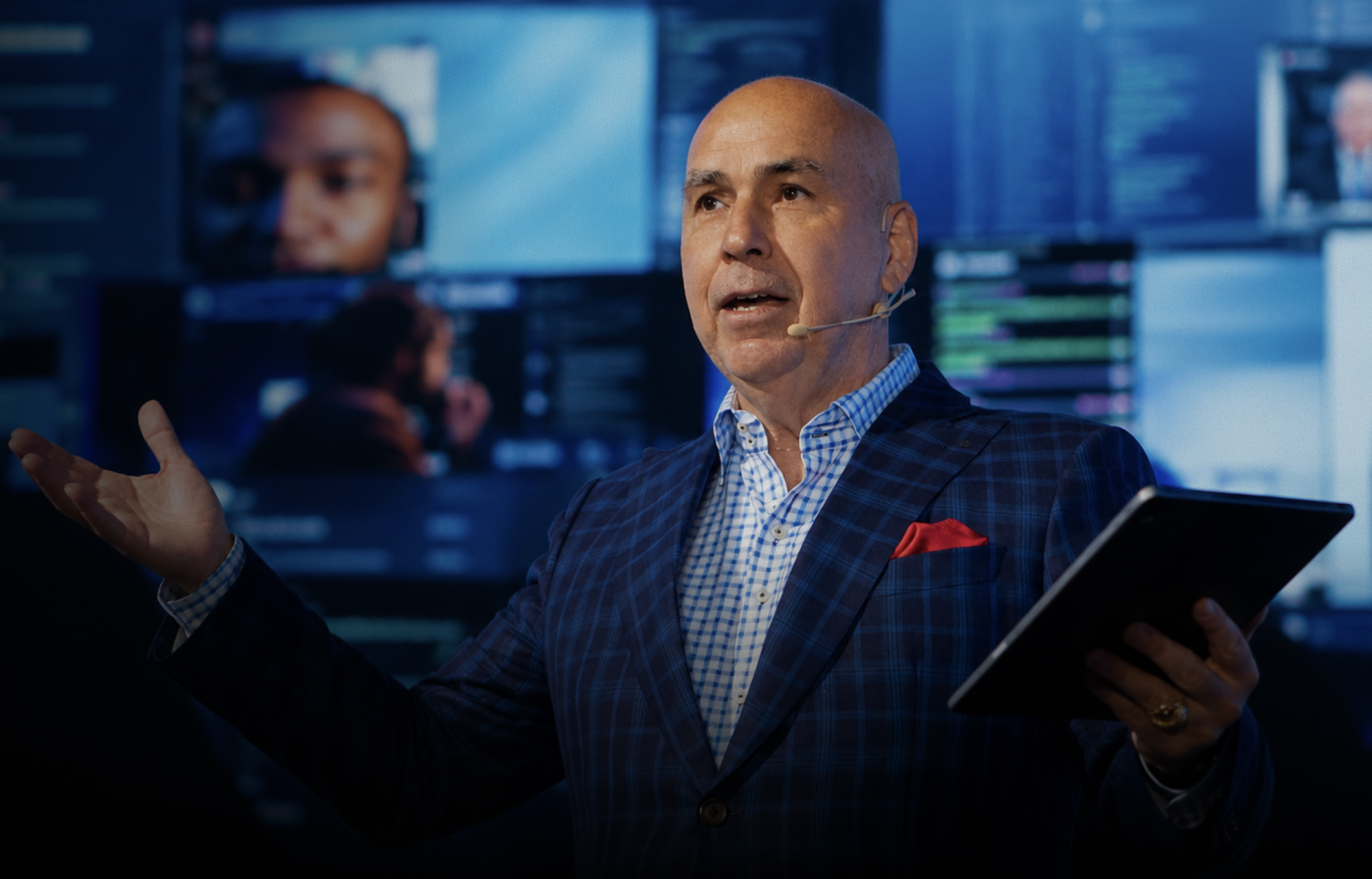
Shane Morand during speech | Credit ShaneMorand.ai
| “AI allows to scale what previously was either a closely guarded like Finances, or not thought to be scalable, like personality. Some tools can be used to broaden access to your specific expertise and finally allow people to be in multiple places at once, sharing their life experience and knowledge with others.” — Shane Morand. |
Using his experience in Network Marketing, Shane Morand developed the AI Avatars Platform. Because MVP of the product was a success, Shane scaled it up to help other marketers manage their personal brands with ease. Said software allows to navigate niche topics, provide 24/7 coverage, and help to save time on recording reaction videos to farm engagement.
AI Avatars allow to cut down costs associated with personal brands. All content produced by AI Avatars can be curated by SMM Manager on the client side. Since AI Avatars are adaptive, they can react to niche trends and produce relevant videos, content and social media posts, helping SMM managers react better to ongoing events.
According to Shane Morand, AI Avatars Framework helped him save costs on pushing his Personal Brand in social networks, while maintaining high engagement and modest conversion rates.
Spyce’s Infinite Kitchen — Retained Profit Margins during Crisis
Suppose you have to run a food business during a crisis, without increasing costs you also have to make profits. Restaurants are famous for thin profit margins — you make around 3% profits during hot seasons and almost 0% during less popular times. So what to do if your entire business model cripples under the weight of a market crisis?

Spyce Infinite Kitchen | Credit: bloomberg.com
Co-Founder & CEO of Sweetgreen Jonathan Neman acquired Spyce for $70M in 2023. Spyce was not without issues. The company faced a crippling job market and volatile supply chains. To fix it, Sweetgreen rolled out “Infinite Kitchen” automation, first for a few selected Spyce locations, then for the whole chain. The tech is impressive — it could make up salad out of any custom ingredients the user requests at the register.
According to earning calls, this change provided ~700 basis points of labor savings per store. In Q4 2025 per store sales dropped 11.5%, and there were less people coming to stores than average (~13%). These Infinite Kitchen automated makelines allowed them to retain the same level of profit margins without sacrificing quality. Later on, in 2025, Sweetgreen decided to cash out on tech, and sell tech out for $100M in cash and $86.4M in Wonder stock for $110M+ of profit.
Blueshift Anti-Churn ML Models
Credit: blueshift.com
“High Churn Rate” is the worst combination of words for any marketer looking to increase Long Term Value of the users they are working with. It means people are leaving, actively, and they won’t come back.
There were plenty of ways to solve the High Churn issue: targeted campaigns, personal offers, discounts, and even targeted ad campaigns. All with their own level of risk, but usually when a full churn report arrives the person already decided to leave.
To solve this issue Blueshift developed an ML-powered AI model that allows to track whether a person is about to leave for good, and intercept that with a pre-defined decision matrix. Simply put, when an ML model sees the user is about to leave they hit them with something that can influence the odds to a positive degree.
By the time static reports confirm churn, the consumer has already made the mental decision to leave. Blueshift deployed machine learning models to track behavioral decay indicators before cancellation occurs.
Embat — AI-as-a-Service for Finances
Finances love Excel and Spreadsheets. So much so, that majority of corporate data ends up in endless bins of spreadsheets updated manually. Ever heard of “spreadsheet guy” in the corporate world? Now imagine that person leaving with all the important data locked on their personal device.
To solve the “spreadsheet guy left” nightmare and make data transfer from Excel spreadsheets to corporate ERP journals easier Carlos Serrano founded Embat in 2021. The key idea is simple: finances have treasuries managed via spreadsheets, thousands of rows of data almost dominantly entered and managed by hand, so giving them a tool to solve this task would greatly speed up the process and save countless hours of work.
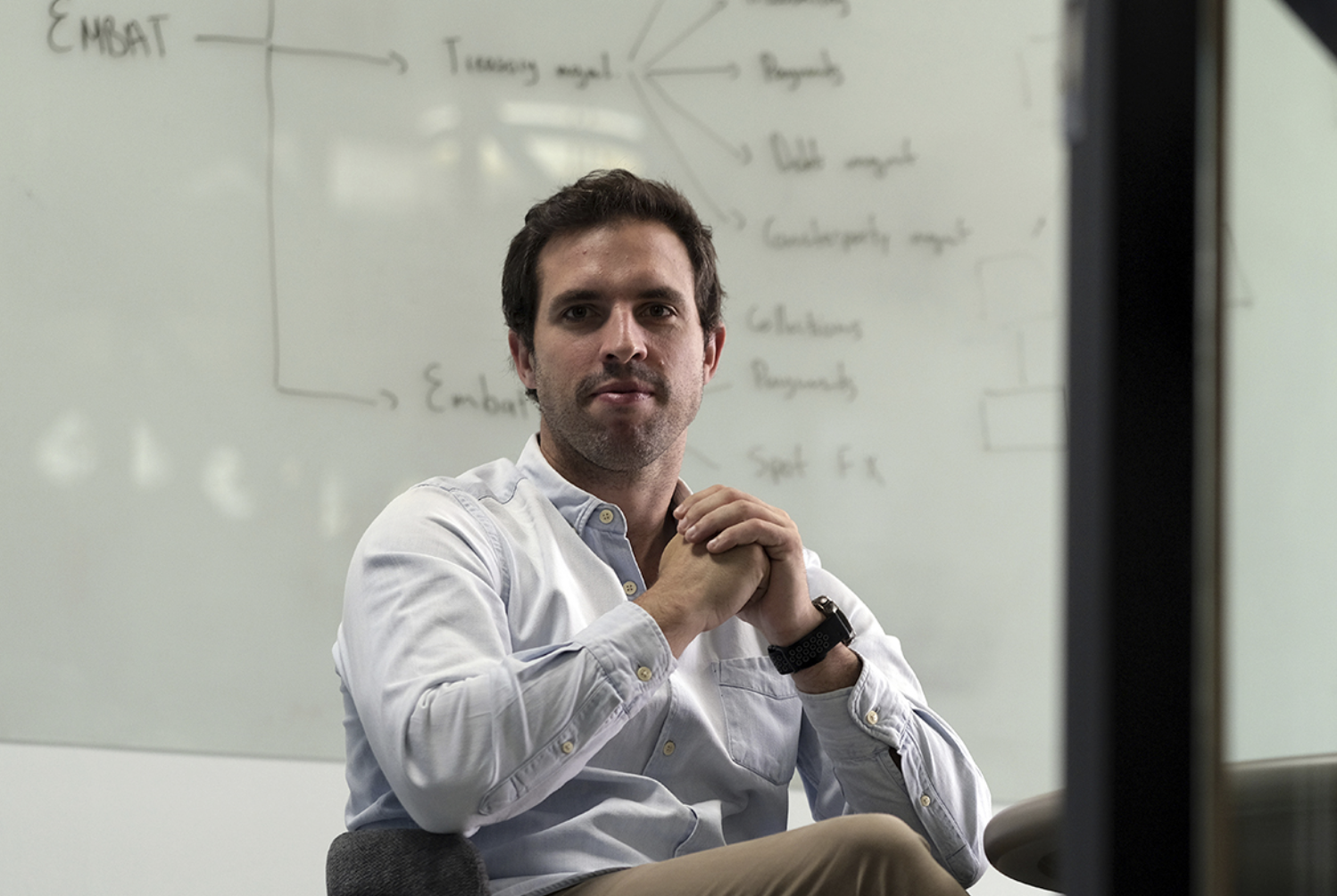
Carlos Serrano | Credit: elmundo.es
| “Corporate treasury management is at a turning point. The convergence of agentic AI, real-time payments and stablecoins is fundamentally reshaping the finance function.” — Carlos Serrano. |
Numbers are popping for Embat: 30 million Euro Series B led by Paris-based Cathay innovation in May 2026, 400 European mid-market and corporate clients, 150 employees, measurable ROI at 80% to 90% reduction in manual labour of working with treasuries and finances. Individual finance teams report closing their month-end books up to 4 days faster. The disruption part is that Embat is able to auto-reconcile bank transactions against said updated books.
PetXL — Masterclass in AI x Warehouse Management
Picture this: 15 physical stores, two e-commerce platforms, ~10000 SKUs, limited time to order new goods and high but volatile influxes of buyers.
The complexity of a PetXL task grows faster than the team’s ability to resolve it. SKUs run out faster than the team is able to track, calculate the size of the next batch, account for demand and order new goods. Account for ever growing and volatile demand and you have a team that has to work overtime just to keep up with the pace. And then the team has to also negotiate for new goods, delivery SLAs, and supply deals.
In 2023 PetXL started to look up how to solve the issue without scaling up the workforce and drowning in operational data.
Turns out, AI can handle dozens of inputs at once, which could solve the PetXL problem right away. In fall of 2023 integration kicks off, and by July 2024 system is fully online: AI automatically scans and manages 10000 SKUs, team refocused on negotiating better wholesale prices and delivery SLAs with suppliers. Inventory value drops 16%, turnover jumps from 5.9% to 7.1%, and parent company Pet Pawr Group immediately starts to capitalize on the solution calling it RELEX AI, scaling the story to bigger markets.
Bigger Takeaway for AI from these cases
In mathematics, NP-complete tasks are defined as complexity growing faster than the ability to resolve the said task. Business often faces NP-complete tasks without noticing it. Every example out of 5 has one issue in common: the task at hand was too complex to solve it in any meaningful time.
- In the PetXL case SKUs were becoming harder to manage with time;
- In Blueshift’s case high churn rate had to be remediated on the fly which isn’t possible with usual methods;
- In Embat’s case managing fragmented spreadsheet treasuries and budgets scaled costs without bringing more profits;
- In Spyce’s case crippling job market, volatile supply chains and growth in demand made it almost impossible to manually fix everything;
- In Shane Morand’s AI Avatars case personal brand scaling needs lots of effort and investment to actually work.
In real world application, AI can be used to solve tasks that are too complex, cumbersome or troubling to properly scale up. As seen in presented examples it can work if the task at hand can’t be solved by delegation or simple resource-management. Whether we like it or not, AI has become a tool to create shortcuts where previously there was none.